
Diamonds, often viewed as symbols of eternal value, are often misunderstood due to their depreciation in the secondary market. Resale prices typically fall between 25-50% of the original retail price, causing confusion for owners who mistakenly believe their gemstones hold investment-like value. Understanding the factors influencing a diamond’s resale potential is crucial, including factors like cut, colour, clarity, and carat weight, market conditions, and certifications like GIA Certification.
Online retailers and platforms have simplified the purchasing process, providing valuable industry insights and tools for consumers. By reviewing customer stories and expert advice, individuals can make informed choices and navigate the complexities of diamond purchases and resales.
For broader context, compare this point with the diamond value basics.
Understanding this market helps consumers appreciate the true nature of diamond value.
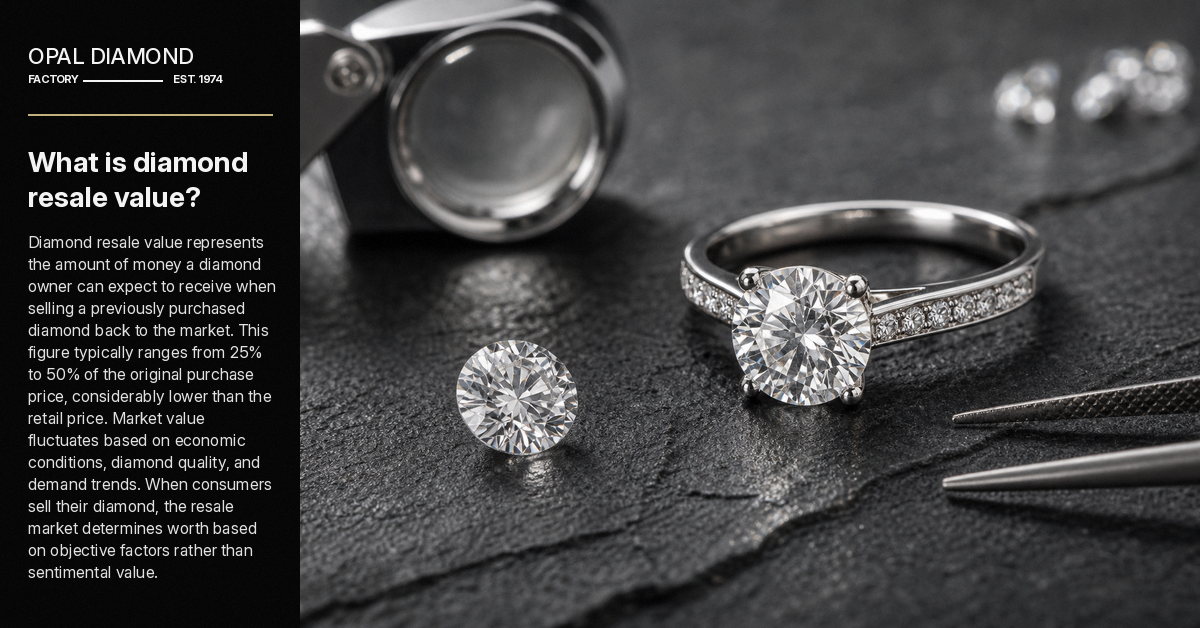
What is diamond resale value?
Diamond resale value represents the amount of money a diamond owner can expect to receive when selling a previously purchased diamond back to the market. This figure typically ranges from 25% to 50% of the original purchase price, considerably lower than the retail price.
Market value fluctuates based on economic conditions, diamond quality, and demand trends. When consumers sell their diamond, the resale market determines worth based on objective factors rather than sentimental value. The diamond’s worth depends on several factors, including its cut, clarity, carat, and colour. Diamond prices in the resale market also reflect changes in industry standards and consumer preferences since the initial purchase.
Why does a diamond’s origin matter?
The geographical and ethical origin of a diamond considerably impacts its resale value. While many consumers focus primarily on the 4Cs when purchasing diamonds, origin is also a significant factor.
Natural diamonds from renowned mining regions often command higher resale value than those with uncertain provenance. The diamond industry increasingly emphasises ethical sourcing and transparent supply chain documentation. Lab-grown diamonds, while chemically identical to mined diamonds, typically retain noticeably lower market value upon resale.
Consumers concerned with both financial investment and ethical considerations should research a diamond’s origin thoroughly. The diamond market generally places premium value on natural diamonds with certified ethical origins, while synthetic diamond alternatives continue to occupy a distinct secondary position.
What affects diamond resale value?
The resale value of a diamond is influenced by a variety of factors that determine its worth on the secondary market. Understanding these elements can help you make better decisions before purchasing or selling your diamond.
| Factor | Description |
|---|---|
| The 4Cs | The cut, colour, clarity, and carat weight significantly affect a diamond’s value; higher grades generally lead to better resale potential. |
| Market Conditions | Demand and supply in the diamond market fluctuate, influencing the price a buyer is willing to pay for a resale. |
| Rapaport Pricing | The Rapaport pricing method, widely used in the industry, sets benchmark pricing. Resale offers often follow or are discounted from these guidelines. |
| GIA Certification | Diamonds with certifications from trusted bodies like the Gemmological Institute of America (GIA) command better resale value due to verified quality. |
| Original Source | Diamonds purchased from reputable retailers or brands, whether online or offline, can be more desirable to buyers. |
| Ethics | Ethically sourced diamonds, such as those offered by companies like Ethica Diamond, are increasingly favoured, enhancing resale appeal. |
| Condition | Any wear, damage, or visible flaws can reduce the resale price, even for certified diamonds. |
| Buyer’s Network | Selling to experienced buyers, like Abe Mor, or leveraging online forms and platforms targeting diamond resales, can maximize returns. |
| Trends | Consumer preferences, such as demand for certain shapes or specifications, can influence the resale value. |
| Documentation | Independent appraisals and documentation, such as the Q Report, can instill confidence in buyers and support higher resale offers. |
How does clarity affect diamond value?
Clarity serves as one of the primary determinants of a diamond’s market value and resale potential. The Gemmological Institute of America (GIA) certification grades diamonds from Internally Flawless to Included, affecting their quality assessment and price considerably.
When determining the resale value, diamond clarity indicates the presence or absence of inclusions and blemishes. Higher clarity grades command premium prices, with Flawless and Internally Flawless diamonds fetching the highest returns. Professionals conducting diamond appraisals scrutinize these characteristics under magnification. Those looking to sell diamonds should understand that clarity impacts value proportionally-even slight improvements in clarity grade can greatly increase a diamond’s worth.
How does the cut influence resale value?
The cut of a diamond represents the most influential factor affecting its resale value, often outweighing even colour and clarity considerations. A well-cut diamond maintains higher intrinsic worth due to its superior light performance, which gemmological laboratories carefully grade.
Diamond shape also impacts marketability, with round brilliants typically commanding premium prices compared to fancy cut alternatives. Cut quality directly influences how the stone interacts with light, determining its brilliance and fire-characteristics buyers consistently prioritize. When using diamond prices calculators, cut grade substantially affects valuation algorithms. Experts recommend investing in excellent or ideal cuts, as these precision-crafted stones generally experience less depreciation in the secondary market.
What role does carat weight play in price?
Carat weight serves as the most visible driver of diamond price, often creating exponential rather than linear value increases. As diamonds increase in size, their market price rises disproportionately-a two-carat stone typically commands more than double the value of two one-carat diamonds of identical quality.
When selling diamonds, this relationship affects diamond resale considerably. Larger diamonds generally retain value better than smaller stones, particularly when accompanied by proper diamond certification. Savvy diamond buying requires understanding that while smaller loose diamonds may sell closer to wholesale price, premium-sized stones (over one carat) can command a more fair price proportionally, especially in markets where substantial gems are scarce.
How does colour impact diamond value?
Diamond colour, ranked on a scale from D (colourless) to Z (light yellow), considerably influences resale value with higher grades commanding premium prices. Colourless diamonds (D-F) retain value most effectively when investors sell diamond jewellery, while those with visible yellow tints experience steeper depreciation.
Fancy colour diamonds, such as pink diamond varieties, often appreciate differently than traditional stones. Colour clarity combinations profoundly impact marketability across various diamond shapes. A 1-carat diamond with superior colour will typically outperform larger stones with inferior grades. Natural diamond enthusiasts recognize that exceptional colour represents enduring value-making it a vital consideration when purchasing with future resale in mind.
How is diamond resale value calculated?
The resale value of a diamond is calculated by analysing essential factors and using industry-standard tools. Here are the 5 key considerations:
- The 4Cs: The diamond’s cut, colour, clarity, and carat weight directly influence its value.
- Rapaport Price List: This benchmark pricing tool determines the diamond’s baseline per-carat value, often discounted for resale.
- Certification (e.g., GIA): Certified diamonds are more valuable, as the grading ensures quality and authenticity.
- Market Trends and Conditions: Current demand and popularity of certain styles or shapes impact resale value.
- Resale Platform: Platforms like online retailers or direct buyers influence the final offer based on transparency and buyer trust.
How does demand affect resale value?
Diamond investment trends play a critical role in determining diamond resale value, with demand being one of the most significant factors. When market demand is high, resale prices tend to increase as potential buyers compete for available stones. Conversely, during economic downturns, diamond buyers become more selective, driving resale values down.
Current market conditions influence what jewellery buyers are willing to pay. Trends in diamond preferences-such as cuts, sizes, or ethical sourcing-affect which stones maintain value. Many sellers experience low resale returns when attempting to sell jewellery during unfavourable market trends, highlighting the importance of timing when seeking to maximize returns.
What affects appraisal accuracy?
The accuracy of a diamond appraisal depends on several factors, as it determines the precise valuation of the diamond. Understanding these factors can help ensure the appraisal reflects the diamond’s true worth.
| Factor | Description |
|---|---|
| Appraiser’s Expertise | The skill, qualifications, and experience of the appraiser play a crucial role in accurately evaluating the diamond. |
| Use of Certification | A reputable certification, such as GIA, provides key details about the diamond’s 4Cs, enhancing appraisal accuracy. |
| Market Fluctuations | An appraisal that does not account for current market trends may overestimate or underestimate the diamond’s value. |
| Purpose of the Appraisal | Valuations may differ depending on whether the appraisal is for resale, insurance, or replacement purposes. |
| Tools and Technology Used | Advanced tools and grading systems ensure precise measurements and accurate assessments of the diamond. |
| Documentation and Details | Comprehensive details about the diamond’s history, purchase receipt, and prior appraisals improve accuracy. |
| Bias or Conflict of Interest | Independent appraisers are more likely to provide an unbiased valuation compared to those directly linked to a sale or purchase. |
How are pavilion inclusions adjusted?
Pavilion inclusions are adjusted using specialized diamond imaging software that maps inclusion positioning and impact on light performance. Gemmologists employ clarity enhancement techniques, such as laser drilling and fracture filling, to minimize the visibility of these lower-facet imperfections.
Diamond resale value typically decreases 10-30% for pavilion inclusions visible under 10x magnification, with greater devaluations occurring when inclusions interfere with brilliance or structural integrity.
What tools adjust pavilion inclusions?
Adjusting or minimizing the visibility of pavilion inclusions in diamonds involves specialized techniques and tools. These are the main 4 tools and methods used:
- Laser Drilling Tools: Precision lasers are used to create tiny tunnels to reach and bleach dark inclusions, making them less visible.
- Fracture Filling Materials: Special glass-like substances are injected into surface-reaching fractures to conceal inclusions.
- Recutting Tools: Diamond cutting tools are utilized to reshape the diamond, removing inclusions near the pavilion. This technique is typically used when inclusions are close to the surface and can be eliminated without compromising the diamond’s integrity significantly.
- Polishing Machines: High-quality polishing tools are used to diminish the appearance of surface-reaching imperfections, though this is less effective for deep inclusions.
These processes and tools must be handled with care by experienced professionals to preserve the diamond’s integrity and value.
How do inclusions change resale value?
The presence and severity of pavilion inclusions markedly impact a diamond’s resale value, often reducing it by 15-30% compared to flawless specimens. Diamonds typically experience steeper depreciation when inclusions affect brilliance or are visible to the naked eye. GIA certified grading reports document these flaws, with lower clarity grades commanding greatly reduced retail prices.
When consumers attempt to sell the diamond, these inclusions become critical negotiation points. Loose diamond buyers scrutinize pavilion inclusions particularly carefully, as they can compromise structural integrity. For diamond engagement rings, even minor inclusions in real diamonds can considerably diminish secondary market value compared to their initial purchase price.
What is residual value fluctuation?
Residual value fluctuations in diamonds occur due to market demand shifts, economic conditions, and changing consumer preferences. These fluctuations are typically measured by comparing current secondary market prices against original retail prices or previous resale values. Financial institutions and diamond trade organisations track these metrics through price indices that monitor specific diamond categories over time.
What causes residual value fluctuations?
Residual value fluctuations occur due to various factors that impact the worth of an asset, such as a diamond, over time. Below are the 7 key causes:
- Market Demand: Changes in consumer preferences or economic conditions can increase or decrease the demand for certain items, directly influencing their value.
- Market Supply: An oversupply of similar assets can reduce value, while scarcity tends to increase it.
- Condition of the Asset: Wear, damage, or depreciation affects the asset’s remaining worth.
- Economic Conditions: Inflation, currency value changes, and global economic shifts can impact residual values.
- Technological Advancements: New alternatives or improvements, such as lab-grown diamonds, can reduce the value of older or natural options.
- Trends and Styles: Changing trends in design or preferences can cause fluctuations in the desirability and value of an asset.
- Ownership History: A documented or prestigious ownership history may preserve or enhance value over time, while lack of records can detract from it.
How are fluctuations in value measured?
Gemmologists and market analysts measure diamond value fluctuations through several standardized metrics and comparative analyses. The diamond registry tracks price indices comparing current resale values against historical benchmarks. These measurements contrast natural diamonds with lab-grown diamonds, which typically experience different depreciation rates.
Specialized indices monitor fancy colour diamonds separately, as these often maintain higher prices than colourless stones. Market researchers analyse De Beers’ pricing strategies alongside wholesale prices to identify emerging trends. Gold prices serve as comparative indicators, helping investors understand diamond performance relative to other precious assets. Thorough value assessments combine these metrics with regional market conditions and consumer demand patterns.
How does market demand change diamond prices?
Market demand plays a critical role in influencing diamond prices by affecting the balance between what buyers want and what is available. Here’s how demand impacts prices:
| Demand Impact | Description |
|---|---|
| High Demand | When demand for diamonds rises, such as during peak engagement or wedding seasons, prices tend to increase due to competition among buyers. |
| Low Demand | If consumer interest declines-due to economic downturns, changing preferences, or competition from alternatives like lab-grown diamonds-prices typically drop. |
| Preference Shifts | Trends toward specific cuts, carat weights, or coloured diamonds can drive up demand and prices for those items while reducing interest and value for others. |
| Economic Shifts | Strong economies boost consumer spending, increasing demand for luxury items like diamonds. Conversely, in weaker economies, demand drops, driving prices down. |
| Global Events | Events like natural disasters, supply chain disruptions, or geopolitical instability can decrease diamond demand in certain regions while increasing it elsewhere. |
Market demand is dynamic, constantly influencing diamond prices based on consumer behaviour, economic realities, and global trends.
Where can diamonds be sold?
Sellers looking to recoup their investment in diamonds have several options available in today’s market. Established jewellery stores often purchase diamonds through trade-in programs, particularly for engagement rings. Online platforms, such as Blue Nile and James Allen, offer buyback services with varying policies for natural and lab-grown diamonds.
Auction houses serve high-value pieces, while pawn shops provide immediate cash but at lower returns. Diamond specialists and private buyers represent additional channels. Before selling diamond jewellery, sellers should research customer reviews of potential buyers and understand how lab diamonds typically retain less value than natural stones.
What is secondary valuation?
Secondary valuation represents a critical assessment of a diamond’s worth in the resale market, distinct from retail appraisals, which typically reflect replacement value rather than liquidation value. This form of valuation occurs primarily in secondary markets, including pawnshops, auction houses, and diamond buying services that purchase directly from consumers.
Key factors influencing secondary valuation include market demand, diamond quality metrics (the 4Cs), brand provenance, and current economic conditions that affect luxury spending.
How does secondary valuation differ from appraisal?
When comparing the diamond market’s valuation methods, it is essential to distinguish between secondary valuation and appraisal. Secondary valuation reflects what buyers would actually pay for a diamond in the resale market, typically 20-40% of retail price. Appraisals, often provided by jewellery stores when purchasing an engagement ring, indicate replacement value for insurance purposes. These appraisals usually match or exceed retail prices of fine jewellery but do not represent realistic resale value.
This distinction matters tremendously when considering precious metals and various types of diamonds as investments. A thorough buying guide should emphasise this difference to help consumers understand the true secondary market worth of their diamond.
Where is secondary valuation used?
Understanding where and how secondary valuation operates creates context for diamond owners considering future sales. Secondary valuation applies in numerous contexts, including:
- Jewellery resellers examining round diamonds and rings for purchase.
- Insurance companies determining coverage for vintage jewellery.
- Estate liquidators evaluating inherited pieces of jewellery.
- Jewellery stores buying pre-owned items.
- Financial institutions accepting diamonds as collateral.
- Appraisers comparing solar diamonds to lab-grown stones created via CVD technique or HPHT technique.
- Auction houses specialising in vintage-style designs.
- Divorce settlements requiring fair division of assets.
- Pawn shops setting loan amounts against diamond value.
What factors influence secondary valuation?
The assessment of a diamond’s worth in the resale market constitutes secondary valuation, a process influenced by numerous market forces and gemmological characteristics. Diamond resale value fluctuates based on several key factors: quality metrics (cut, clarity, colour, carat), market demand, and origin. Natural stones typically retain value better than lab-grown diamonds, which face steeper depreciation.
Specialised diamonds, particularly rare red diamonds, command premium prices compared to standard jewellery collection pieces like rings and wedding bands. Economic conditions affect target market determination, similar to gold jewellery and watch advice markets. Lower price expectations (40-60% of retail) remain standard unless the piece possesses exceptional provenance or historical significance.
Do certifications affect resale value?
Diamonds, like most luxury goods, typically decrease in value over time as market conditions and preferences change. The rate of depreciation can vary based on factors such as initial quality, brand premium, and current economic climate. Even certified diamonds experience this downward price trajectory, though high-quality stones with prestigious certifications may depreciate more slowly than their uncertified counterparts.
How does time reduce diamond prices?
Time substantially erodes diamond values through market depreciation factors that begin immediately after purchase. Most diamonds lose 25-50% of their retail value upon leaving the store, similar to driving a new car off the lot. This immediate depreciation reflects the significant markup retailers apply to cover operational costs.
Changing fashion trends impact value as certain cuts and styles fall out of favour. Market fluctuations in diamond supply and consumer demand further affect prices over time. Older diamonds may also appear less brilliant compared to stones cut with newer technology, reducing their appeal to secondary buyers.
How do style trends influence resale?
Selling diamonds through specialized platforms, such as Worthy, The RealReal, and established jewellers, typically yields better resale prices than general marketplaces. Reselling through diamond exchanges or auction houses may attract serious buyers willing to pay premium prices for trending styles and cuts. Local jewellers sometimes offer trade-in options that reflect current style preferences, though online consignment services often provide wider market exposure for diamonds whose styles have retained popularity.
What platforms are used to sell diamonds?
There are several platforms available for selling diamonds, each catering to different needs, preferences, and audiences. Below are the 7 most commonly used options:
- Online Marketplaces: Websites like eBay, Etsy, or specialized platforms allow individuals to sell diamonds directly to buyers.
- Dedicated Diamond Buyers: Companies such as Abe Mor specialize in purchasing diamonds quickly and transparently.
- Jewellery Stores: Many local and retail jewellery stores offer resale options or buy back diamonds directly from customers.
- Auction Houses: High-value or unique diamonds can be sold through auctions, both online (e.g., Sotheby’s or Christie’s) and in-person.
- Pawn Shops: Pawn shops provide quick transactions but often at lower resale prices.
- Online Retailers: Reputable online platforms, such as Worthy or Blue Nile’s marketplace, facilitate the sale of diamonds by connecting sellers with potential buyers.
- Consignment Services: Some stores and online retailers allow you to sell diamonds on consignment, where they take a percentage of the sale.
Each platform has different benefits and drawbacks in terms of price, convenience, and trustworthiness.
How does a jewellery brand influence value?
A diamond’s brand association greatly impacts its resale value in the secondary market. Prestigious brands, like Tiffany & Co., Cartier, and Harry Winston, command premium prices due to their reputation and craftsmanship. Brand recognition creates perceived value beyond the stone’s intrinsic worth. Collectors and buyers often pay more for branded pieces, particularly those with distinctive designs or historical significance.
Do diamonds lose value over time?
Unlike many luxury purchases, diamonds generally lose 25-50% of their retail value immediately after purchase. This initial depreciation stabilizes over time, with quality stones maintaining relative value thereafter. Market conditions, changing fashion trends, and diamond characteristics like cut and clarity influence long-term value retention. Natural diamonds typically hold value better than lab-grown alternatives, especially those with certification.
Related diamond guides: What Are the 4Cs of Diamonds: the Ultimate Guide; How is diamond carat pricing calculated: the role of weight, clarity, and market dynamics.