
Diamond pricing is far more complex than a simple weight calculation. For instance, the price of a 1-carat diamond is not merely double that of a 0.50-carat stone; instead, natural diamond prices often increase exponentially with size due to their rarity. Key factors such as the 4 Cs (carat weight, cut, clarity, and diamond colour), market demand, and grading certificates significantly impact the price estimate. Industry tools like the Rapaport Price List are used in the wholesale market to establish a Fair Price Estimate, while modern technologies like machine learning analysis help online retailers and retail stores determine competitive pricing. Trends at psychological carat weight thresholds (e.g., 0.50, 0.75, and 1.00 carats) also shape pricing strategies.
For broader context, compare this point with the diamond value guide.
Consumers can better navigate diamond prices by consulting a diamonds price chart, leveraging features akin to real estate tools like Zillow Zestimate, and comparing offers across platforms. Alternatives like lab diamonds provide more affordable options, while bespoke designers of fine diamond jewellery and brands like Charles Rose cater to those seeking unique, high-quality pieces. Exploring a retailer’s diamond inventory and understanding the value of specific settings, like a halo setting, allow buyers to make informed choices. Whether shopping online or in-store, factoring in all aspects of the diamond, verified through tools like the Rapaport Price List and professional advice, ensures the best value for purchase.
What is a carat?
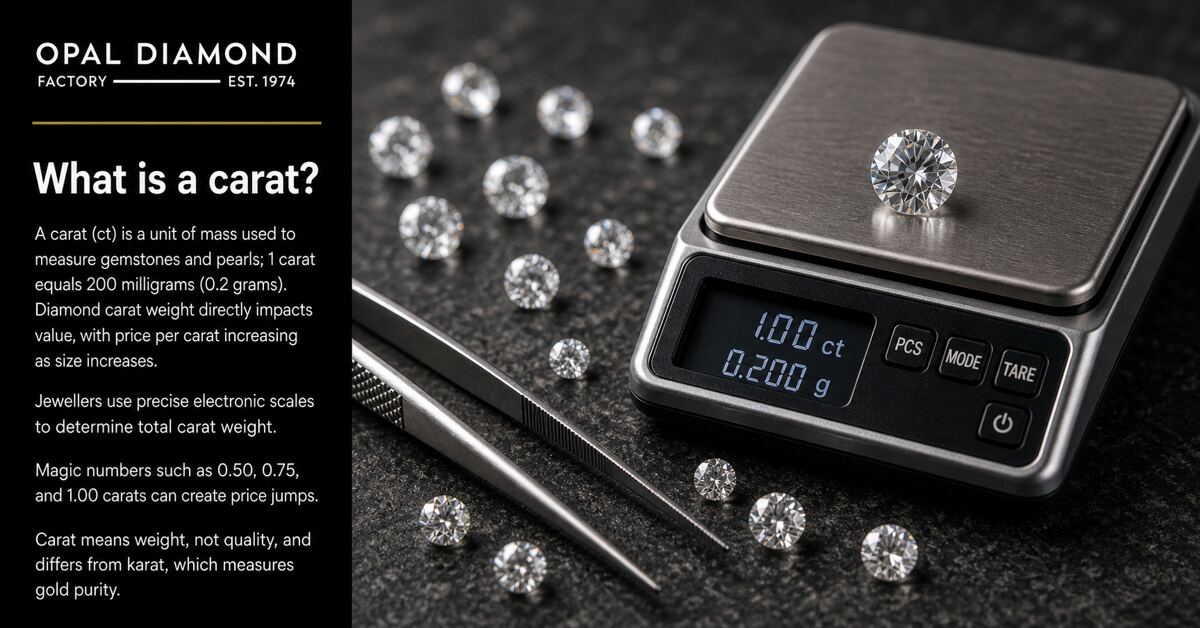
A carat (ct) is a unit of mass used to measure gemstones and pearls; 1 carat equals 200 milligrams (0.2 grams). Diamond carat weight directly impacts value, with the price per carat increasing exponentially with size. Jewellers use precise electronic scales to determine the total carat weight of a diamond. Carat size visibly affects a diamond’s appearance, although its weight distribution influences perceived dimensions.
The diamond industry recognizes “magic numbers,” such as 0.50, 0.75, and 1.00 carats, where prices significantly increase. A 1-carat diamond typically costs more than two 0.50-carat stones of equal quality combined. It is important to note that weight carat differs from karat, which measures gold purity. Consumers should understand that carat signifies weight, not quality.
What does a carat measure?
A carat measures the weight of a diamond, not its size, dimension, or volume; 1 carat equals 200 milligrams, forming the foundation for diamond pricing calculations. Diamond carat weight directly affects value, with prices increasing exponentially as weight increases. Diamond grading laboratories document this measurement on certificates for loose diamonds. A diamond price calculator factors weight alongside cut, clarity, and colour.
A diamond size chart illustrates how identical carat weights can appear different based on cut proportions. Consumers should understand that price based on carat represents mass, not visual size. Diamond quality assessment requires considering all attributes, not solely weight.
How is carat weight calculated?
The carat weight of a gemstone, particularly diamonds, refers to its weight measurement and is a key factor in determining the stone’s size and value. One carat equals 0.2 grams or 200 milligrams. You can calculate carat weight by following these steps:
- Weigh the gemstone: Use a specialized gemstone scale to measure the stone’s weight precisely in grams.
- Convert grams to carats: Multiply the gemstone’s weight in grams by 5 (since 1 carat = 0.2 grams). For example, a gemstone weighing 0.4 grams would be 0.4 × 5 = 2 carats.
- Ensure accuracy: Jewellers use precise carat scales or gem scales to measure carat weight accurately, including fractional values like 0.01 carats.
Carat weight, combined with other factors such as cut, clarity, and colour, helps determine a gemstone’s overall value.
How is weight distributed in a diamond?
Carat weight is calculated based on a gem’s total mass, and different diamond shapes distribute this weight uniquely. For example, round diamonds concentrate mass in their depth, while elongated shapes, such as marquise, spread weight across their length. Cut quality significantly affects weight distribution. Well-cut diamonds balance proportions ideally, while poorly cut ones may hide weight in excessive depth. Diamond clarity and carat price ranges correlate directly with proper weight distribution.
When buying diamonds, consumers should use a price calculator that considers how weight distribution affects appearance. A 1-carat diamond with optimal proportions often appears larger than poorly distributed diamonds of equal weight.
What is the link between carat and size?
The link between diamond carat weight and physical size is fundamental for understanding diamond pricing. While carat measures weight, not dimensions, a predictable size relationship exists where higher carat weight generally corresponds to larger physical dimensions, though cut grades significantly influence apparent size. Diamond buying decisions often incorporate this relationship when comparing loose diamond options.
Market dynamics reveal that prices increase non-linearly with carat weight; diamonds weighing 1 carat cost substantially more than two 0.50-carat stones of equivalent clarity grades combined. This exponential price chart pattern reflects both rarity and consumer preference, making carat-to-size understanding essential for informed diamond purchases.
What are per-carat premiums?
Per-carat premiums for gemstones and diamonds are calculated based on various factors, which directly influence the price per carat. Per-carat premiums increase exponentially with diamond size due to the rarity of larger stones, with each weight threshold (e.g., 0.50 ct, 0.75 ct, 1.00 ct) representing notable price jumps in the diamond market. These premium calculations reflect market scarcity.
How are per-carat premiums calculated?
Per-carat premiums for gemstones and diamonds are calculated based on various factors that directly influence the price per carat. Here are 5 key factors that determine per-carat premiums:
- Weight Dependence: Larger gemstones typically have a higher price per carat compared to smaller stones. As carat weight increases, the price per carat often rises exponentially due to the rarity of larger gemstones.
- Quality Factors (4Cs): The premium is significantly influenced by cut, colour, clarity, and carat weight.
-
- Cut: Superior cut improves brilliance and overall appearance, increasing value.
- Colour: Diamonds closer to “colourless” on the D-Z scale command higher premiums, though fancy-colored diamonds can have even higher values.
- Clarity: Stones with fewer inclusions or defects are more valuable.
- Rarity and Market Demand: Rare characteristics, such as specific shapes, unique colours, or high clarity grades, can increase the per-carat price significantly.
- Shape and Proportions: Gemstones with more desirable shapes or better symmetry often have higher per-carat premiums.
- Certification: A gemstone certified by reputable institutions, such as GIA (Gemmological Institute of America), can receive a higher per-carat price due to the assurance of quality and authenticity.
The total cost of a gemstone or diamond is calculated by multiplying the price per carat, which incorporates these premiums, by its total weight in carats, ensuring a fair assessment of its value.
What affects diamond pricing?
Diamond pricing is influenced by various key factors that determine their overall value. Here are 5 main factors that affect diamond pricing:
- The Four Cs: These are the primary factors of diamond pricing:
-
- Carat Weight: Larger diamonds are rarer, leading to higher prices as carat weight increases.
- Cut: A well-cut diamond has better brilliance, fire, and light performance, which increases its value.
- Colour: Diamonds closer to being colourless are more valuable, although fancy-colored diamonds, like pink or blue, also command premiums due to rarity.
- Clarity: Stones with fewer inclusions or blemishes are pricier, as clarity greatly affects visual appeal.
- Fluorescence: Diamonds with specific fluorescence traits, such as medium or strong blue, can either reduce or increase their price depending on demand and the diamond’s other qualities.
- Shape: The shape of a diamond influences its cost. For instance, round diamonds are typically more expensive than fancy-shaped diamonds, such as princess or cushion cuts, due to higher cutting losses and demand.
- Certification: Diamonds graded and certified by well-known organizations, such as GIA or AGS, are typically pricier due to the reliability and assurance these certifications provide.
- Market Trends: Supply and demand play a significant role in pricing. For example, consumer preferences, holidays, and cultural trends can temporarily drive up prices for specific diamond types or qualities.
Each of these factors contributes uniquely to determining the price of a diamond. However, the intricate interplay among these elements ultimately shapes its cost.
What is the cost per carat?
The price per carat for diamonds fluctuates dramatically based on several key factors. Diamond certification and grading reports profoundly influence valuation, with GIA certificates commanding higher prices than other laboratories. The Rapaport Price List and IDEX Diamond Price Report serve as industry benchmarks when buying a diamond.
Diamond price charts reveal that cost increases exponentially with size; a 2-carat stone typically costs more than twice a similar 1-carat diamond. Clarity grades create substantial price variations, with flawless stones demanding premium rates. Carat diamond pricing follows a non-linear curve, reflecting rarity as weight increases.
How do price tiers for carats work?
Most diamond pricing follows specific weight thresholds that create distinct price jumps at key carat milestones. These price tiers typically occur at 0.50, 0.75, 1.00, 1.50, and 2.00 carats, with the most significant increase at the 1.00-carat mark. The Rapaport list guides these price tiers, which interact with other value factors, including clarity grading, diamond colour, and cut grade. A 0.99-carat diamond may cost substantially less than a 1.00-carat stone with identical specifications. Market dynamics influence these thresholds, while certification validates the exact carat weight. Savvy buyers often target diamonds just below these pricing breakpoints.
What factors change carat prices?
Carat prices for diamonds and gemstones can vary significantly based on several key factors that influence their overall value. Here are 5 factors that change carat prices:
- Carat Weight: The price per carat increases as the carat weight goes up since larger stones are rarer. For instance, a 2-carat diamond will have a much higher price per carat than a 1-carat diamond, even if all other factors are identical.
- Quality (4Cs): Cut, colour, and clarity directly impact carat prices:
-
- Cut: A better cut enhances brilliance, increasing the price per carat.
- Colour: Stones closer to colourless (or highly sought fancy colours) command higher prices.
- Clarity: Fewer blemishes or inclusions lead to higher per-carat prices.
- Shape: The diamond or gemstone’s shape can influence the carat price due to market demand or cutting costs. For example, round diamonds often have higher carat prices than fancy shapes, such as oval or marquise.
- Rarity: Unique features, such as extremely rare colours like vivid pink or blue in diamonds, can significantly increase the price per carat.
- Fluorescence: In diamonds, strong or medium fluorescence can sometimes lower the price per carat, while in rare cases, it may increase the price of certain highly desirable stones.
- Certification: Certified gemstones or diamonds (e.g., from GIA or AGS) typically have higher carat prices because of the assurance of authenticity and quality.
- Market Trends: Economic conditions, trends in consumer preference, and supply-demand balance can also affect carat prices.
All these factors interact to determine the carat price of a diamond or gemstone, making it a complex and multifaceted evaluation process.
Why does carat price rise steeply?
Larger diamonds command exponentially higher prices due to their increasing scarcity in nature, with each size increment representing a substantially rarer find. This rarity-based pricing structure creates notable price jumps at key weight thresholds, such as 0.50, 0.75, 1.00, and 2.00 carats, often called “magic weights” in the industry. Savvy buyers sometimes target diamonds just below these thresholds (e.g., 0.90 instead of 1.00 carat) to maximize value while minimizing the premium paid for psychologically significant weight markers.
How does rarity change carat value?
Diamond prices increase exponentially rather than linearly as carat weight increases because of rarity. Larger diamonds occur less frequently in nature, creating scarcity that drives diamond pricing upward. A 2-carat diamond is not simply twice as expensive as a 1-carat diamond; it is typically three to four times more costly. This exponential value increase reflects the diamond industry’s reality: as weight increases, stones with excellent clarity and colour grades become exceptionally rare.
Market dynamics intensify this effect. Collectors and investors compete for these scarce specimens, particularly flawless diamonds of substantial size. The mathematical relationship between weight and value mathematically demonstrates diamond carat’s fundamental economic principle: rarity commands a premium.
What are the price changes at key weights?
Diamond pricing exhibits dramatic jumps at specific weight thresholds, known in the industry as “price cliffs.” These occur at popular benchmark weights: 0.50 ct, 0.75 ct, 1.00 ct, 1.50 ct, and 2.00 ct. The price jumps reflect psychological price points rather than actual diamond quality. For example, a 0.98 ct diamond might cost markedly less than a 1.00 ct stone with identical cut, colour, clarity, and diamond grading characteristics. Savvy buyers consult buying guides to identify stones just below key weights, often saving 15-30%. Market value increases disproportionately at these thresholds due to consumer demand, not intrinsic differences in carat weight.
Which carat weights are most common?
Certain carat weights are particularly popular due to their balance of size, visual appeal, and cost. Here are 5 of the most common carat weights for diamonds:
- 1 Carat: This is the most popular carat weight, as it offers a noticeable size while being affordable for many buyers. It is a classic choice for engagement rings.
- 0.50 Carat (½ Carat): Commonly selected for its balance between appearance and price, this is ideal for those seeking a smaller yet elegant diamond.
- 0.75 Carat (¾ Carat): A slightly larger size than ½ carat, this is a middle ground for buyers looking for a larger diamond while staying within a lower budget compared to a full carat.
- 1.50 Carats: Popular among buyers seeking a slightly larger stone than 1 carat. This size offers a significant presence while still being somewhat more affordable than higher weights.
- 2 Carats: A highly sought-after size for those wanting a more luxurious and bold look, especially for special occasions or significant milestones.
“Magic Weights”: Specific carat weights, like 0.50, 1.00, 1.50, and 2.00 carats, are considered “magic weights” because they represent milestones that are particularly attractive to buyers. Diamonds priced slightly below these weights (e.g., 0.98 carats instead of 1.00) may offer better value while appearing nearly identical in size. These weights are common because they align well with consumer preferences, budgets, and cultural trends in jewellery buying, especially for engagement rings.
How does clarity impact carat value?
When examining how clarity impacts carat value, it is important to understand the relationship between these critical diamond attributes. Diamond clarity refers to the absence of inclusions and blemishes. The Gemmological Institute of America and European Gemmological Laboratory grade diamonds with inclusions on a scale from Flawless to Included. Higher clarity diamonds command premium prices at any carat weight.
Large cut diamonds with visible inclusions suffer steeper price reductions than smaller stones with similar flaws. This affects diamond engagement rings particularly, as clarity becomes more noticeable in larger stones. Lab-grown diamonds follow similar clarity pricing patterns, though at lower overall costs. High-clarity diamonds maintain better resale value regardless of size.
How does cut affect carat pricing?
The relationship between cut and carat pricing represents another fundamental aspect of diamond valuation. Well-cut diamonds command premium prices regardless of carat weight, as superior craftsmanship maximizes brilliance and fire. Round brilliant cut diamonds typically cost more per carat than fancy diamond shapes due to higher demand and greater rough diamond wastage during cutting. Excellent cut grades elevate pricing within each carat bracket, often outvaluing larger stones with poor cuts. Cut quality becomes increasingly vital at higher carat weights where price jumps are substantial. While clarity affects value, a good cut can visually minimize inclusions, ultimately influencing a diamond’s market value more profoundly than weight alone.
How does demand elasticity affect fancy shapes?
Demand elasticity impacts the pricing and popularity of fancy-shaped diamonds (non-round shapes). Here’s how:
| Factor | Impact on Fancy Shapes |
|---|---|
| Price Sensitivity | Fancy shapes are often less expensive than round diamonds, appealing to budget-conscious buyers. |
| Trend Influence | Demand for specific shapes like oval or pear can rise with fashion trends or celebrity endorsements. |
| Supply Variation | Scarcity of certain shapes can make demand more sensitive to price changes. |
| Target Audience | Unique shapes appeal to niche buyers, often showing lower price sensitivity. |
| Round Diamond Alternatives | If round diamond prices rise, buyers may shift to fancy shapes for better value. |
Demand for fancy shapes is highly influenced by trends, price changes, and personal aesthetic preferences.
How do shapes affect carat costs?
Fancy-shaped diamonds often cost less per carat than round brilliant cuts, despite identical quality ratings. This price disparity exists because round brilliant diamonds maximize light reflection and are traditionally preferred for diamond engagement rings. Shape directly impacts the pricing hierarchy; round diamonds command premium prices, while princess cuts typically cost 25-35% less at equivalent carat weight. Oval, cushion, and pear shapes fall between these price points.
Manufacturing efficiency also influences costs. Round brilliant diamond production creates more rough diamond waste than fancy shapes. Additionally, lab-grown diamonds follow similar shape-based pricing patterns, though colour and clarity remain critical valuation factors regardless of shape.
What are the dynamics of market liquidity?
Market liquidity in diamond trading operates across three distinct tiers: high, medium, and low. High liquidity exists for standard diamonds with excellent cut, color, and clarity in the 1-carat range, such as those that sell quickly. Medium liquidity characterizes fancy-colored diamonds and premium diamond jewellery pieces, which attract specialized buyers. The Four Cs determine placement in this tier. Low liquidity applies to extremely large stones, those with unusual diamond fluorescence, or lab-grown diamonds outside mainstream preferences. Market dynamics show that as carat size increases beyond typical consumer demand, liquidity decreases proportionally, affecting how buyers approach these investments.
How are diamond values appraised?
Diamond values are appraised by evaluating several key factors to determine their worth. Here are 5 ways diamond values are appraised:
- 4Cs Analysis: Carat weight, cut quality, colour grade, and clarity are assessed to estimate value.
- Shape: The diamond’s shape and market demand for it influence its worth.
- Certification: Grading by institutions like GIA or AGS adds credibility and value.
- Market Trends: Appraisers consider current diamond market prices and demand.
- Fluorescence: The presence and intensity of fluorescence may increase or decrease value.
- Rarity and Unique Features: Rare traits, like fancy colours or exceptional clarity, significantly increase value.
Professional appraisals combine these factors to provide an accurate assessment of a diamond’s value.
How does colour change carat pricing?
The colour grade of a diamond markedly impacts its price per carat, creating value variations of up to 25% between adjacent grades. Colourless diamonds (D-F) command premium prices from diamond dealers, while those with slight tints (G-J) sell for progressively less. Fancy colour diamonds follow an inverse pattern, with intense natural colours fetching extraordinary sums. Diamond retailers typically use the GIA colour scale as a guide. Diamond certification confirms these assessments, ensuring transparent valuation. Brilliant diamond cuts can enhance perceived colour, sometimes improving value. Certified diamonds with exceptional colour grades represent both aesthetic preference and investment considerations for individuals exploring the natural diamond marketplace.
What are carat buying trends?
Consumers’ budgets remain the primary factor determining diamond carat choices, with most buyers settling at price points just below whole-carat thresholds. Diamonds priced at 0.9, 1.9, and 2.9 carats often deliver superior value compared to their slightly heavier counterparts due to disproportionate price jumps at full-carat marks. Strategic buyers can maximize value by targeting these “sweet spot” weights while considering other factors like cut quality and clarity that influence a diamond’s visual impact.
How do budgets shape purchase choices?
Inevitably, budgets dictate the carat weight and overall quality of diamonds that buyers can afford. Consumers often compromise on carat size, clarity, or opt for lab-grown diamonds to match financial constraints when purchasing engagement rings. Lower prices for lab-grown diamonds allow buyers to acquire larger carat weights within budget considerations. Ring size adjustments might help balance market value with available funds.
How to get the best value by carat?
Savvy diamond buyers can maximize value by targeting just-under benchmark carat weights. Purchasing 0.9, 1.9, or 3.9-carat diamonds offers significant savings compared to full-carat weights. Lab-grown diamonds provide better value than mined stones. Retailers like Blue Nile and James Allen offer transparency in diamond carat pricing. When considering a 4-carat marquise K IF diamond for wedding rings, balancing weight with clarity yields ideal market dynamics.
Related diamond guides: Diamond value pricing: understanding the factors that define value; Diamond resale value: understanding a diamond's worth.