
Diamond investment trends are shaped by 3 primary factors: shifts in specific consumer preferences, overall market stability, and the rising importance of ethical sourcing. The growing popularity of specific investment-grade diamonds and vibrant coloured diamonds, such as blue diamonds and pink diamonds, alongside the acceptance of increasingly popular lab-grown stones, has altered traditional diamond valuations. The closure of major diamond mines, such as Australia’s Argyle Mine, and specific geopolitical tensions contribute to economic uncertainty, making these dynamics crucial for savvy investors to understand. Limited supply and the finite resources of natural diamonds, particularly those with three exceptional qualities like near-flawless clarity grades and internally flawless stones, continue to fuel demand in the global luxury goods sector, even as the market for diamond jewellery remains robust.
For broader context, compare this point with the diamond investment guide.
In a climate of significant economic fluctuations, diamonds are increasingly viewed as a tangible alternative asset class that can provide stability amid severe financial crises. The emergence of innovative lab-grown diamonds and sustainable recycled diamonds, such as those recovered from existing jewellery, has added complexity to pricing and market dynamics, necessitating meticulous expert appraisals to ascertain authenticity. As many investors seek to diversify their portfolios beyond common traditional assets, such as stocks and bonds, the correlation between specific diamond investments and their long-term performance becomes vital.
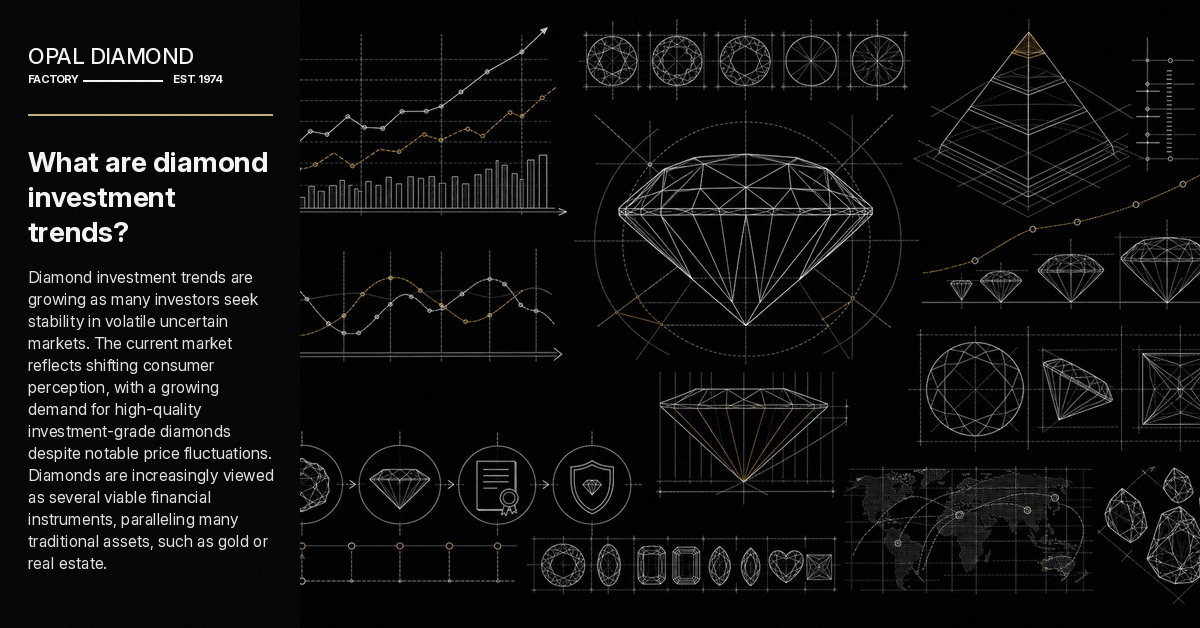
What are diamond investment trends?
Diamond investment trends are growing as many investors seek stability in volatile uncertain markets. The current market reflects shifting consumer perception, with a growing demand for high-quality investment-grade diamonds despite notable price fluctuations. Diamonds are increasingly viewed as several viable financial instruments, paralleling many traditional assets, such as gold or real estate. Many investors are drawn to diamonds as a hedge against inflation, and a well-balanced investment portfolio with specific diamond investments can mitigate financial risks and capitalise on specific emerging market trends, making them an appealing investment choice.
How do gemstone values change over time?
Gemstone values, particularly in the diamond investment market, change due to 3 key factors: market demand, gemstone rarity, and prevailing economic conditions. The allure of diamonds remains strong, with significantly larger and more expensive stones, such as vivid yellow diamonds, often commanding substantially higher prices. Fluctuations in global rough diamond prices can occur due to changes in available market supply and the performance of diamonds in the overall broader diamond market. During severe financial crises, when many traditional asset classes like real estate face significant extreme pressure, numerous investors may seek alternative financial assets, such as tangible physical diamonds, which can ACT as a hedge against prolonged economic uncertainty.
As specific trends evolve within the global luxury sector, demand for high-quality diamonds, such as brilliantly polished diamonds and carefully selected loose diamonds, may increase, impacting overall diamond pricing and delicate market price dynamics. Two main factors, such as the proven authenticity of diamonds and strict adherence to the Diamond Standard, like the GIA grading scale, play a significant role in precise expert appraisals. As continued economic volatility persists, particularly in specific European markets affected by the severe debt crisis, understanding inherent price volatility and the correlation between potential returns on profitable diamond investments becomes essential for many investors.
What types of diamonds are best for investment?
Certain types of diamonds stand out for investment due to their high potential for value appreciation and strong market demand; the right diamond choice can significantly influence investment returns over many years. Several diamond types are regarded as better options for investment:
| Diamond Type | Key Characteristics for Investment |
|---|---|
| High-Quality Investment-Grade | Possesses exceptional quality in 3 key areas (colour, clarity, cut); highly sought by serious investors. |
| Rare Fancy Coloured Diamonds | Exhibits rare colours (e.g., vivid blue, intense pink, bright yellow); appreciates significantly due to extreme scarcity and strong market demand. |
| Significantly Larger Diamonds | Commands higher prices, especially those meeting stringent quality standards; attractive for substantial investment. |
| Internally Flawless Stones | Has a flawless clarity grade (FL or IF); these diamonds are extremely rare and can yield impressive financial returns as many collectors seek them. |
| Diamonds with Documented Provenance | Features a known history or association with notable individuals; these stones can fetch higher prices due to unique stories and authenticity. |
| Select Lab-Grown Diamonds | Represents a more affordable investment option with rising acceptance; their long-term value currently remains uncertain for many. |
| Sustainable Recycled Diamonds | Offers a sustainable and ethical option; these diamonds appeal to a growing market segment focused on responsible ethical sourcing. |
By focusing on these 7 types of diamonds, many investors can position themselves to benefit from current market trends and significant potential appreciation in value.
How do lab-grown diamonds impact investments?
Lab-grown diamonds impact investments by making diamond ownership more accessible, particularly to the broader middle class and many younger buyers who prioritise sustainability. This increased consumer demand may influence long-term trends in the global jewellery sector and potentially lead to fluctuations in the entire broader diamond trade. Lab-grown diamonds, however, present both challenges and opportunities in highly volatile financial markets, such as during major financial crises or the prolonged European debt crisis.
Concerns about their true long-term appreciation and potential significant downward trends in value compared to mined natural diamonds arise among investors. Therefore, investors must analyse various diamond indices, such as the RapNet Diamond Index (RAPI™), and the complex supply chain to assess the growth rate and specific quality grades (4Cs) of both lab-grown diamonds and traditionally polished diamonds.
What are current trends in diamond prices?
Current diamond price trends are shaped by 3 main factors: the increasing acceptance of lab-grown diamonds, prevailing economic conditions, and shifts in specific consumer preferences. As many buyers become more interested in verifiably ethical and sustainable options, prices for many natural diamonds have seen volatility, particularly as competing lab-grown alternatives offer nearly identical gemological properties at substantially lower costs. Specific market dynamics also play a huge role, with critical supply constraints from recent mine closures, like Australia’s Argyle mine, and ongoing geopolitical uncertainties contributing to significant upward pressure on prevailing natural diamond prices.
There is a growing demand for exceptionally larger and truly rare diamonds, such as vibrant fancy-coloured stones like blue or pink diamonds, which often appreciate in value. The complex diamond market is experiencing a major transformation influenced by multiple economic factors and rapidly evolving consumer desires, making it important for numerous investors and buyers to stay informed on these 3 key trends.
What drives luxury asset market trends?
Six key factors drive trends in the global luxury asset market, influencing both available supply and consumer demand:
| Driving Factor | Impact on Luxury Asset Market |
|---|---|
| Prevailing Economic Conditions | Significant economic growth or sharp downturns directly affect consumer spending on various luxury goods, including high-end jewellery and rare collectibles. |
| Shifting Market Sentiment | Changing consumer attitudes and specific preferences can drive demand for particular luxury items, such as vintage watches or designer handbags, impacting their perceived market value. |
| Inherent Scarcity and Rarity | The limited supply of unique luxury assets, such as large flawless diamonds or museum-quality vintage collectibles, often leads to increased prices. |
| Evolving Cultural Trends | Noticeable shifts in popular culture, individual style, and global fashion can affect the desirability of certain luxury items, creating new trends. |
| Key Technological Advancements | Specific innovations in product production and global distribution channels can enhance or disrupt the established luxury market. |
| Ongoing Globalisation | The continued expansion of luxury markets into rapidly emerging economies, such as China and India, increases global competition and diversifies the consumer base. |
By understanding these 6 driving factors, many investors and consumers can better navigate the complex luxury asset market and anticipate potential changes in asset value and market trends.
Why is esg relevant in diamond investing?
ESG (Environmental, Social, and Governance) criteria are becoming important in the diamond investment landscape because consumers increasingly prioritise significant ethical considerations in their purchases. Many investors are seeking fully certified diamonds, like those with Kimberley Process Certification, that adhere to strict ethical sourcing standards, thereby avoiding known conflict diamonds.
This distinct shift towards more sustainable practices is reshaping current market trends, favouring some lab-grown diamonds as a perceived eco-friendly alternative. As public awareness grows, diamond investments aligned with strong ESG principles are becoming a more prominent trend, influencing many diamond mining operations and promoting greater transparency in the entire luxury asset market.
How is consumer demand for diamonds changing?
Consumer demand for diamonds is changing as buyers increasingly favour several alternative investments, including innovative lab-grown diamonds and diamond-backed funds. This specific trend influences overall diamond market growth, particularly in the domain of rare fancy-coloured diamonds, such as vivid blue diamonds or vibrant pink diamonds, which capture a higher market share among many discerning investors.
While classic traditional white diamonds remain popular, the appeal of verifiably sustainable and ethically sourced options is rising significantly. Consequently, investing in diamonds is progressing from a simple luxury purchase to a carefully considered personal investment strategy for many, reflecting rapidly changing consumer values and specific preferences.
What is the role of trends in diamond and gemstone valuation?
Trends play a crucial role in the complex valuation of diamonds and various gemstones, impacting their market prices, overall desirability, and diamond resale outcomes in 6 distinct ways:
| Trend Factor | Influence on Diamond and Gemstone Valuation |
|---|---|
| Evolving Consumer Preferences | Significant shifts in what many consumers find attractive, such as a preference for unique cuts or vintage styles, can considerably affect the value of certain gemstones. |
| Fluctuating Market Demand | Prevailing economic conditions and strong cultural influences, like celebrity endorsements, can spur demand for particular diamonds or various gemstones, leading to fluctuations. |
| Perceived Rarity and Actual Scarcity | As current trends highlight certain exceptionally rare stones, their valuation can increase significantly due to perceived uniqueness and genuinely limited global supply. |
| Ongoing Technological Advancements | Continuous improvements in synthetic diamond and lab-grown gemstone production methods can alter established market dynamics, affecting valuations of natural and lab-grown options. |
| Highlighted Historical Significance | Specific trends reflecting widespread nostalgia or important historical value can elevate the status and market price of certain gemstones linked to significant past events. |
| Increased Focus on Sustainability and Ethics | Growing consumer awareness surrounding responsible ethical sourcing is influencing valuations, with ethically sourced diamonds gaining appeal and potentially commanding higher prices. |
Understanding these 6 trends is essential for many buyers and astute investors as they navigate the complex global landscape of diamond and gemstone valuation.
What economic factors affect diamond investments?
Five significant economic factors influence diamond investments by shaping key market dynamics and overall consumer behaviour. During sustained periods of economic growth, general consumer confidence typically rises, leading to increased spending on various luxury items, such as diamonds, designer watches, and fine art. In contrast, sharp economic downturns or widespread financial crises can result in markedly reduced demand and significantly lower prices for these goods. Inflation and prevailing interest rates also play important roles; periods of high inflation may drive many investors to seek diamonds as a hedge against rapid currency devaluation, while persistently lower interest rates can stimulate spending in the entire luxury sector.
Specific geopolitical tensions that disrupt global diamond supply chains can temporarily create scarcity and consequently push prices higher. Strong trends toward verifiable sustainability and ethical sourcing are increasingly influencing many consumer preferences. These 5 economic factors create a highly dynamic environment for all diamond investments, requiring very careful analysis for all potential investors.
What role do diamonds play in investment portfolios?
Diamonds can serve as one strategic component of investment portfolios, primarily as a tangible alternative asset class that provides significant diversification beyond many traditional investments, such as stocks and bonds. Their inherent rarity and intrinsic value make them appealing during periods of economic uncertainty, acting as a hedge against excessive market volatility. Certain high-quality diamonds have the potential for appreciation over many years, particularly those that are rare or possess several desirable characteristics, like exceptional colour or historical provenance, which can positively impact positive overall portfolio returns.
As current consumer preferences shift towards verifiable ethical sourcing, certified responsibly mined diamonds may see genuinely increased demand, further enhancing their long-term investment value. Diamonds also provide a reliable hedge against inflation, as their worth may rise with the general cost of living. All investors should consider specific market nuances, actual liquidity, and inherent price volatility while conducting extensive thorough research or seeking professional expert advice.
How do millennials view diamond investments?
Millennials, individuals born between approximately 1981 and 1996, are transforming the common perception of diamond investments by emphasising 2 key aspects: strong ethical considerations and deep personal significance. This influential generation prioritises sustainability and complete transparency, often favouring verifiably ethically sourced diamonds or innovative lab-grown diamonds, which offer a more affordable and perceived environmentally friendly option.
Many Millennials view diamonds as investments in meaningful personal experiences rather than mere symbols of luxury. They actively seek truly unique designs and extensive customisation that reflect their individuality, while still recognising the potential for certain high-quality stones to appreciate over many years. Numerous millennials combine considerable financial savvy with a focus on ethics and profound personal meaning, driving several significant changes in the global diamond market and prompting the entire industry to adapt to their rapidly evolving preferences.
What are the risks of diamond investing?
Investing in diamonds comes with at least 6 main risks that all potential investors should be aware of:
| Risk Category | Description of Risk in Diamond Investing |
|---|---|
| Significant Market Volatility | Diamond prices can fluctuate considerably based on fluctuating market demand, prevailing economic conditions, and sudden changes in consumer preferences, leading to losses. |
| Potential Liquidity Issues | Unlike highly liquid assets such as stocks or bonds, diamonds can be challenging to sell quickly at full market value, making fund access difficult. |
| Minimal Market Regulation | The global diamond market is notably less regulated than many traditional financial markets, which can result in wide variations in pricing and potential for fraud. |
| Ongoing Storage & Insurance Costs | Safeguarding valuable physical diamonds requires secure storage and comprehensive insurance, adding to costs and potentially eroding net returns over time. |
| Risk of Quality Misrepresentation | The subjective nature of diamond grading by different labs can lead to critical inconsistencies in valuation, risking overpayment for stones. |
| Pronounced Economic Sensitivity | Diamond investments are often highly sensitive to broad economic cycles; during downturns, luxury goods may experience decreased demand and valuation declines. |
How does traceability shape diamond markets?
Traceability significantly shapes global diamond markets by enhancing 3 key areas: supply chain transparency, assurance of ethical sourcing, and overall consumer trust. As many buyers increasingly prioritise understanding the precise origins of their diamond purchases, the ability to trace a specific diamond’s journey from the original mine to the final market becomes essential. This level of transparency assures consumers that diamonds are genuinely sourced responsibly and verifiably free from conflict, directly impacting their purchasing decisions and aggregate market demand.
Utilising advanced technologies like blockchain for traceability creates immutable, secure, tamper-proof records of each individual diamond’s complete history, allowing all stakeholders, including consumers and jewellers, to verify authenticity and its claimed ethical status confidently. Numerous retailers that provide comprehensive clear traceability information can attract many consumers willing to pay a premium for certified ethically sourced diamonds, thereby gaining a distinct competitive advantage in the marketplace.
What are the best ways to invest in diamonds?
Investing in diamonds can be approached through at least 6 effective methods to maximise potential returns:
| Investment Method | Description and Key Considerations |
|---|---|
| Purchase High-Quality Individual Stones | Focus on acquiring certified investment-grade diamonds with excellent ratings in the 4Cs (cut, colour, clarity, carat weight); these tend to hold value and appreciate consistently. |
| Consider Rare Fancy Coloured Diamonds | Invest in exceptionally rare diamonds (e.g., natural pink, blue, green); these are often in high global demand and can offer significant appreciation potential over colourless diamonds. |
| Invest in Collectible Diamond Jewellery | Buy high-value designer or authenticated antique diamond jewellery, especially if it features top-quality stones and unique designs appealing to collectors and auction houses. |
| Engage with Reputable Diamond Dealers | Work exclusively with well-established, reputable jewellers or major auction houses (e.g., Sotheby’s, Christie’s) for expert appraisals and reliable authentication. |
| Explore Diamond-Focused Financial Instruments | Consider specialised diamond investment funds or publicly traded diamond indices that track diamond prices, offering more liquidity and easier diversification than physical stones. |
| Stay Continuously Informed on Market Trends | Educate yourself constantly about current diamond market trends, pricing fluctuations, and evolving consumer preferences to make consistently informed investment decisions. |
By employing these 6 primary strategies, many investors can effectively navigate the often complex diamond market and work to maximise their long-term investment potential.
How does resale value affect diamond investments?
Resale value is one critical factor in all diamond investments, significantly influencing 2 key areas: investors’ initial purchase decisions and overall long-term financial returns. An individual diamond’s resale value primarily depends on 3 main elements: its gemological quality, its verifiable rarity, and prevailing current market trends, with many investors often seeking stones that will retain or significantly appreciate in value over many years. The secondary resale market can be highly volatile, with prices fluctuating due to broad economic conditions and shifting consumer preferences, including increasing competition from lower-priced lab-grown diamonds.
Diamonds with genuinely strong resale potential typically showcase several exceptional qualities, such as very high gemological grades (e.g., D Flawless Type IIa), currently popular colours like vivid yellow, or unique documented provenance. Consistent, reliable grading systems from reputable labs, such as GIA or AGS, and their corresponding certifications are essential, as they establish a specific diamond’s precise quality and unquestionable authenticity, directly impacting its potential resale values. Investors must also carefully consider the actual liquidity of their diamond investments, as diamonds can be considerably less liquid than many traditional assets, such as stocks or bonds.
What innovations are changing the diamond industry?
At least 4 key innovations are reshaping the global diamond industry, primarily through significant advancements in technology and methods of consumer engagement. The commercial rise of lab-grown diamonds provides relatively affordable and often marketed as ethically produced alternatives to mined natural stones, appealing to many sustainability-conscious consumers. Distributed ledger technology, specifically blockchain, enhances both traceability and transparency in the complex global supply chain, allowing numerous buyers to verify the origins of their purchased diamonds.
Advanced AI algorithms and sophisticated machine learning models improve the overall accuracy and consistency of diamond grading, establishing more reliable and transparent market values. Furthermore, numerous sophisticated digital platforms and expanding e-commerce channels are also transforming how diamonds are globally marketed and directly sold, offering consumers unprecedented greater access and highly personalised shopping experiences. These 4 primary innovations are making the entire diamond industry more responsive to important ethical considerations and evolving consumer preferences.
How are sanctions influencing the diamond market?
Rising geopolitical tensions and the subsequent imposition of international sanctions on certain key diamond-producing nations, such as Russia, are causing several significant disruptions within the global diamond market. These specific sanctions primarily impact the global supply of rough diamonds, leading to quite notable price fluctuations. Many global investors are becoming increasingly cautious, causing discernible shifts in established market trends. The fluctuating demand for both traditional white diamonds and unconventional black diamonds, for example, reflects specific cultural trends, further influencing various investment strategies in this currently volatile landscape.
What is the future of diamond investments?
The future of global diamond investments appears poised for significant transformation, driven by 2 main forces: evolving complex market dynamics and ongoing several technological innovations. Many potential investors are increasingly drawn to rare fancy coloured diamonds, particularly investment-grade pink diamonds, as these gems exhibit exceptionally strong historical price performance. With the definitive closure of Australia’s Argyle mine, a primary source of pink diamonds, high-quality mined diamonds may see a continued rise in value, reinforcing their established status as premier luxury goods among the world’s largest diamond traders.