
Diamond clarity, one of the 4Cs of diamond quality, is a fundamental determinant of a diamond’s beauty and value, encompassing both natural inclusions and surface blemishes. Expert graders evaluate both natural diamonds and lab-grown diamonds using 10-power magnification, assessing everything from flawless grade specimens to those with visible imperfections. This grading process considers the type, size, and location of inclusions, which significantly impact diamond prices across various diamond shapes, from emerald cuts to accent stones.
For consumers making an engagement ring purchase or selecting any jewellery piece, understanding clarity is crucial as it affects the stone’s eye-clean appearance under normal light conditions. The diamond industry employs advanced diamond imaging and detailed clarity plots to assess these characteristics, helping buyers balance their desired specifications with their budget.
For broader context, compare this point with the diamond characteristics basics.
Whether dealing with white diamonds or specialty cuts, the visibility of inclusions remains a critical factor in determining a diamond’s overall value and appeal.
What is diamond clarity?
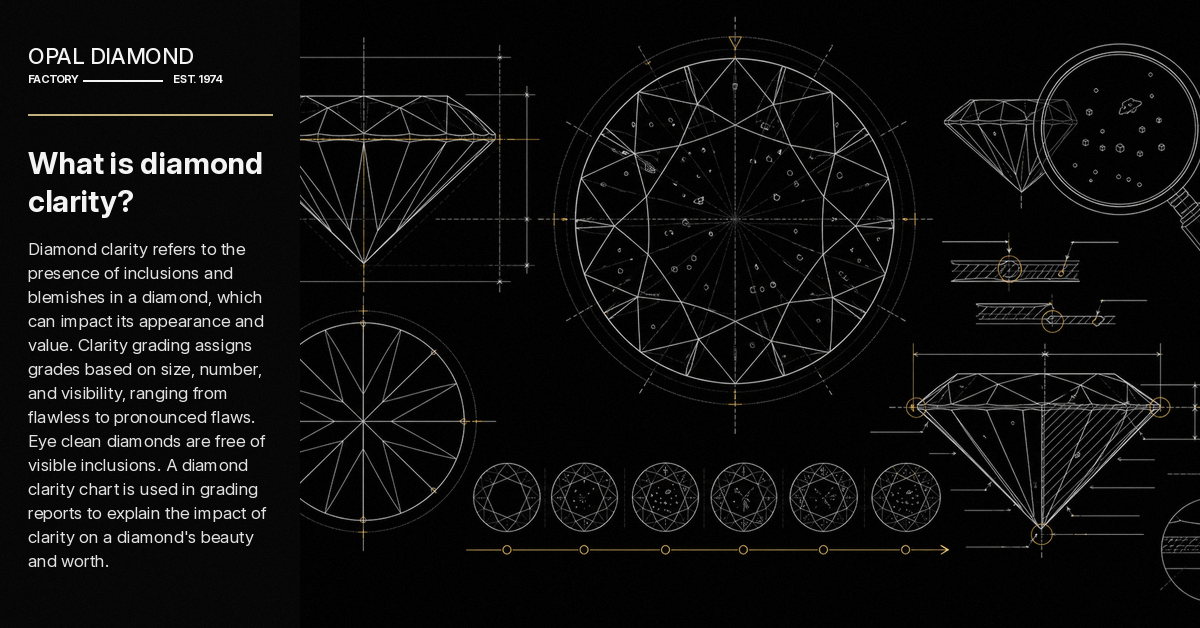
Diamond clarity refers to the presence of inclusions and blemishes in a diamond, which can impact its appearance and value. Clarity grading assigns grades based on size, number, and visibility, ranging from flawless to pronounced flaws. Eye clean diamonds are free of visible inclusions. A diamond clarity chart is used in grading reports to explain the impact of clarity on a diamond’s beauty and worth.
What are diamond clarity grades?
Diamond clarity grades, established by organisations like the International Diamond Council, are as follows:
- Flawless (FL): Absolutely no inclusions or blemishes visible under 10x magnification. Extremely rare and most valuable.
- Internally Flawless (IF): No internal inclusions; only minor surface blemishes visible under magnification.
- Very Very Slightly Included (VVS):
-
- VVS1: Extremely difficult to see inclusions under 10x magnification.
- VVS2: Very difficult to see inclusions under 10x magnification.
- Very Slightly Included (VS):
-
- VS1: Minor inclusions difficult to see under magnification.
- VS2: Minor inclusions somewhat easy to see under magnification.
- Slightly Included (SI):
-
- SI1: Noticeable inclusions under magnification.
- SI2: Easily noticeable inclusions under magnification. Some inclusions may be visible to the naked eye.
- Included (I):
-
- I1: Obvious inclusions visible to the naked eye.
- I2: Prominent inclusions that may affect brilliance.
- I3: Large inclusions that significantly impact appearance and durability.
What causes low diamond clarity?
Low diamond clarity is caused by various internal characteristics and surface defects that occur during the diamond growth process. These imperfections range from microscopic inclusions visible only through adjustable zoom magnification to eye-visible inclusions that affect a diamond’s actual beauty. Common imperfections can include irregular crystal growth patterns, visible marks, and abrasions on facet junctions, which experienced graders document in diamond grading reports using a diamond clarity plot.
When selecting a jewellery piece, whether it’s singular diamond pendants or larger diamonds, the visibility of inclusions can significantly impact value and appearance. While lab diamonds may offer better clarity at lower prices, both natural and synthetic stones are evaluated based on the same benchmark for diamond grading. The choice of diamond clarity often depends on factors like Crown Angle, diamond specifications, and how surface defects appear in different cuts, from VS2 diamond grades to emerald cut diamonds.
How is diamond clarity graded?
Diamond clarity grading is a standardised process performed by trained professionals using specific equipment and methodology to evaluate a diamond’s internal and external characteristics. Here’s how the process works:
• Professional Equipment Used: 10x magnification aplanatic loupe, controlled lighting conditions, clean diamond surface, multiple viewing angles.
• What Graders Examine: Internal characteristics (inclusions), external features (blemishes).
• Key Assessment Factors: Size of inclusions/blemishes, number of imperfections, location of flaws, nature of characteristics, relief (visibility of inclusions).
• Grading Process: Following strict laboratory protocols, assigning standardised clarity grades, creating detailed clarity plots, verification by multiple experts.
What are diamond inclusions?
Diamond inclusions are internal flaws that can affect a gemstone’s appearance and overall quality. Categorised as clarity features, they can range from minute inclusions, barely visible under magnification, to noticeable inclusions that greatly impact the stone’s beauty.
These internal inclusions are distinct from external blemishes, which are surface-level imperfections. Diamonds are graded using the diamond clarity grading scale, where SI1 diamonds possess slight inclusions visible under 10x magnification, while SI2 diamonds have more considerable flaws.
What are diamond blemishes?
Diamond blemishes are surface-level imperfections that can detract from a diamond’s overall appearance and brilliance. These external characteristics include scratches, nicks, or pits on the polished diamonds’ surface. While some may be minor blemishes, others can considerably impact the visual appearance of the stone.
The clarity of diamonds is assessed using diamond clarity ratings, which evaluate both internal features and external imperfections. Blemishes visible to the naked eye may lower a diamond’s value, illustrating the importance of understanding these structural imperfections when selecting a gem that meets one’s aesthetic and budgetary expectations.
How do inclusions affect value?
Clarity plays an essential role in determining a diamond’s value, as it directly correlates with the presence of inclusions-internal flaws that can affect the stone’s brilliance. Diamonds with higher clarity grades, showcasing minimal or no visible inclusions, typically command higher prices due to their superior diamond quality.
In contrast, included diamonds with noticeable inclusions can detract from value, impacting the overall appeal. Small inclusions may be less problematic, but any visible inclusions can greatly lower a diamond’s clarity grade. Clean diamonds, free of imperfections, are most sought after, highlighting the importance of clarity in the diamond grading scale.
How do blemishes change appearance?
Blemishes, such as polish marks and external features, can greatly affect diamond clarity and its overall appeal by impacting the visual allure of a diamond. These minor imperfections, alongside internal graining, influence clarity grades on the diamond grading chart. The visibility of inclusions and blemishes can vary; when they are eye-visible, they detract from the diamond’s brilliance. Diamond experts assess these factors carefully, as even subtle flaws can alter how light interacts with the stone.
What is eye-clean diamond clarity?
Eye-clean diamond clarity refers to a gemstone that appears free of inclusions or blemishes when viewed without magnification. Diamonds with this clarity grade often fall within the “flawless” to “slightly included” range on the clarity chart, ensuring minimal visibility of inclusions. Consumers value eye-clean diamonds for their high clarity, as they offer a pristine appearance that enhances sparkle and brilliance. This clarity standard is essential for buyers seeking quality without the distractions of noticeable flaws.
What is vs clarity in diamonds?
VS clarity in diamonds, standing for “Very Slightly Included,” indicates gems with minor inclusions that are difficult to detect without magnification. This clarity grade sits between VVS (Very Very Slightly Included) and SI (Slightly Included), highlighting a balance of quality and value. Understanding VS clarity provides insight into the nuances of diamond grading, including comparisons to VVS, SI, and I clarity levels.
What is vvs clarity in diamonds?
VVS clarity in diamonds, which stands for “Very Very Slightly Included,” denotes a high-quality classification featuring tiny inclusions that are difficult to detect, even under 10x magnification. This clarity grade signifies fewer inclusions compared to lower grades, enhancing the diamond’s brilliance and overall appeal.
A skilled grader evaluates these inclusions meticulously, ensuring that any minor flaws do not detract from the gem’s beauty. Buyers often seek VVS diamonds for their exceptional quality, reflected in their diamond certificate, making them a popular choice among those who appreciate superior diamond clarity.
What is si clarity in diamonds?
SI clarity, which stands for “Slightly Included,” represents a mid-range grade in diamond clarity, including diamonds with slight inclusions visible under magnification through loupes. SI1 clarity grades show minor imperfections that may not be apparent to the naked eye, while SI3 may present more obvious inclusions. Clarity refers to the presence of these inclusions, which can impact a diamond’s overall beauty. Diamond graders assess these different clarity grades to determine value. Although SI diamonds may feature slight inclusions, they can still be beautiful diamonds, offering an appealing balance between quality and affordability for discerning buyers.
What is I clarity in diamonds?
I clarity in diamonds, often referred to as “Included,” indicates a level where inclusions are more pronounced and can be seen without magnification. Diamonds with I clarity grades feature noticeable internal flaws that impact their overall appearance. These natural imperfections can affect the gemstone’s sparkle and brilliance. While diamonds with higher clarity grades are typically more sought after and command higher prices, I clarity diamonds may appeal to budget-conscious buyers seeking value.
How to read a clarity chart?
Reading a clarity chart is essential for evaluating diamond quality. Each grade, from Flawless to Included, denotes the presence of inclusions or blemishes, impacting overall appearance and value; the 4Cs guide explains how clarity fits beside cut, colour, and carat. Determining which clarity grade is best depends on personal preferences and intended use, guiding buyers in their selection.
What clarity grade is best?
The best clarity grade depends on personal preference and budget, though higher clarity grades like Internally Flawless and VVS feature minimal flaws difficult to detect.
These grades enhance diamond clarity, ensuring a brilliant sparkle. Buyers should examine a diamond plot to understand the specific flaws present in a stone, as some enhancements can improve appearance without compromising value.
How to choose diamond clarity?
Choosing the right diamond clarity involves understanding key factors that balance quality with value. Here’s a practical guide to making this important decision:
• Consider the Diamond Size: Larger diamonds show inclusions more easily, requiring higher clarity grades. Smaller diamonds can tolerate lower clarity grades. Optimal clarity varies by carat weight.
• Evaluate the Diamond Cut: Step-cut diamonds (emerald, asscher) show inclusions more readily. Brilliant cuts (round, oval) hide inclusions better. Consider cut style when selecting clarity grade.
• Set Your Budget Priorities: Balance clarity with other 4Cs. Focus on eye-clean appearance rather than perfect clarity. Consider VS2-SI1 for best value in most cases.
• Assess Viewing Distance: Consider normal viewing distance in everyday wear. Evaluate if inclusions are visible to naked eye. Remember that most inclusions are only visible under magnification.
• Match with Setting Style: Higher clarity for solitaire settings where diamond is more exposed. Lower clarity acceptable for complex settings that hide inclusions. Consider practical wear and usage.
What clarity gives best value?
The best value in diamond clarity typically lies in the VS2 to SI1 range, offering an optimal balance between visual quality and price. These grades provide an “eye-clean” appearance while costing significantly less than higher clarity grades. The sweet spot varies depending on the diamond’s size and cut style – smaller diamonds under 1 carat can achieve excellent value even with SI2 clarity, while larger stones or step-cuts may require VS1 or VS2 for the same eye-clean appearance.
Paying for grades above VS1 often yields diminishing returns, as these differences are typically only visible under magnification. The key is finding a clarity grade that appears clean to the naked eye while avoiding the premium prices of technically superior but visually identical higher grades.
What clarity suits engagement rings?
For engagement rings, VS1 or VS2 clarity typically offers an excellent balance of beauty and value, containing minor inclusions invisible to the naked eye. Clarity plays a significant role in both the aesthetic and emotional value of the diamond. Buyers often seek brilliant diamonds with high diamond clarity to guarantee minimal inclusions and flaws, enhancing sparkle. The choice may also depend on carat size; larger stones can emphasise imperfections.
Are low clarity diamonds bad?
No, low clarity diamonds are not necessarily bad; they can still hold value and appeal, possessing unique charm despite visible blemishes and inclusions. Their lower grades may feature extra facets, enhancing light return and brilliance. For some, the allure of a colour diamond with low clarity lies in its individuality, making it distinct.
While low clarity diamonds may lack the pristine appearance of higher grades, their structural integrity remains intact. Buyers should assess personal preferences and budget, recognising that beauty often transcends clarity.
What is inclusion microscopy grading?
Inclusion microscopy grading is a specialised process used to evaluate diamond clarity. Here’s a detailed explanation of this technical assessment:
• Equipment Used: Professional gemological microscope, 10x magnification aplanatic loupe, controlled lighting conditions, clean viewing environment
• Grading Process: Detailed examination of internal features, systematic plotting of inclusions, assessment of size and severity of flaws, documentation of specific inclusion types
• Features Evaluated: Crystal inclusions, feathers (internal cracks), pinpoints, clouds, twinning wisps, graining patterns, surface blemishes, laser drill holes
• Assessment Criteria: Location of inclusions within the stone, size relative to diamond dimensions, impact on structural integrity, effect on light performance, visibility under different angles
• Documentation Method: Creation of detailed clarity plots, photographic documentation when necessary, written descriptions of significant characteristics, standardised grading terminology
What is the blemish classification framework?
The blemish classification framework serves as an essential tool in gemology, enabling experts to assess the clarity of diamonds through systematic evaluation and categorisation of flaws like inclusions and blemishes. This framework impacts diamond clarity and overall value.
Using a microscope at standard magnification, gemologists identify crystal inclusions and other imperfections that may affect the diamond’s white appearance. Each inclusion’s size, type, and location are meticulously analysed against industry standards, helping to determine the diamond’s carat weight and clarity grade.
What is light obstruction quantification?
Light obstruction quantification plays a pivotal role in evaluating diamond clarity by measuring how inclusions affect light passage through the stone. This process is essential for determining the gem’s overall sparkle and brilliance. By using a jeweller’s loupe, experts can identify various inclusions and blemishes, including surface graining, that may hinder light flow.
Grown diamonds are scrutinised for these factors to establish their diamond grades. The degree of light obstruction directly influences a diamond’s value and visual appeal, making it vital for consumers to understand how clarity impacts their purchase.
How does clarity affect cut?
Clarity plays a major role in the perceived sparkle of a diamond because high clarity allows light to pass through more freely, enhancing brilliance and fire. Conversely, inclusions can obstruct light, diminishing the overall sparkle and visual appeal of the stone.
How does clarity affect sparkle?
A diamond’s clarity plays an essential role in its overall sparkle, influencing how light interacts with the stone because inclusions can distort light, causing a hazy appearance. When searching for loose diamonds, clarity is significant; higher clarity typically enhances brilliance. Different types of inclusions, formed under extreme heat or other chemical properties, can diminish a diamond’s radiance.
Larger diamonds may display flaws more prominently, which can impact their perceived value. Under times magnification, the effects of clarity become evident, revealing how a diamond’s sparkle is directly tied to its clarity grade.
Do clarity grades vary by lab?
Diamond clarity grades can vary between different grading laboratories. Here’s how and why these variations occur:
• Major Grading Labs: GIA (Gemological Institute of America) sets industry standard, AGS (American Gem Society) follows strict protocols, IGI (International Gemological Institute) grades both natural and lab diamonds.
• Grading Variations: Different labs may have varying standards, same diamond can receive different grades, one to two grade differences possible between labs, stricter labs typically assign lower grades.
• Contributing Factors: Individual grader interpretation differences, varying grading environments and equipment, different standards for inclusion significance, diverse approaches to borderline cases.
• Industry Recognition: GIA generally considered most consistent and reliable, top-tier labs maintain stricter standards, some labs known to be more lenient in grading, market values reflect lab reputation.
The key is choosing a diamond graded by a reputable laboratory with consistent standards and industry recognition.
How do jewellers grade clarity?
Jewellers employ a systematic approach to grade diamond clarity, utilising a standardised scale that ranges from Flawless to Included, assessing the presence of flaws that can affect the overall beauty and sparkle. This grading assesses the presence of flaws, which can affect the overall beauty and sparkle of the diamonds. Each grade reflects the clarity of the center stone, influencing its appeal and market value. Factors such as the size, type, and location of inclusions are essential in determining the final clarity grade.
How to check clarity at home?
Checking diamond clarity at home requires good lighting conditions – preferably natural daylight or bright white light. Hold the clean diamond face-up about 6-8 inches from your eye, looking through the table (top facet) for any visible imperfections or cloudy areas. Rotate the stone slowly to observe it from different angles, as some inclusions may only be visible from certain perspectives.
For a more detailed inspection, use a 10x jeweller’s loupe, focusing on the center first, then working outward. Look for dark spots, white spots, lines, or clouds. Remember that what matters most is how the diamond appears to the naked eye in normal viewing conditions – if you can’t see imperfections without magnification, the diamond is considered “eye-clean”.
What tools check diamond clarity?
Professional tools used for checking diamond clarity include specialised equipment and standard instruments.
Here’s what experts use:
• Primary Inspection Tools: 10x aplanatic loupe, binocular microscope, fiber optic lighting, diamond tweezers, cleaning cloth, white grading paper.
• Advanced Equipment: Digital microscopes with imaging capability, clarity scanning technology, specialised diamond viewers, proportion scopes with magnification.
• Lighting Equipment: Daylight-equivalent LED lamps, ultraviolet light sources, overhead lighting systems, focused beam lights, diffused light sources.
• Supporting Tools: Diamond holders and stands, cleaning solutions, grading trays, plotting diagrams, measuring devices, standardised grading charts.
• Modern Technology: Digital imaging systems, clarity mapping software, automated inclusion detection systems, high-resolution cameras for documentation.
Can inclusions be hidden by settings?
Yes, the visibility of inclusions in diamonds can often be masked by clever settings. This prompts a question about the true value of flawless clarity. Consumers must weigh the benefits of higher clarity against the potential for increased costs.
Is flawless clarity worth it?
Flawless clarity is not always worth the investment for every buyer. While many believe diamonds with perfect clarity offer superior beauty and longevity, the visual differences between flawless and slightly included diamonds can be minimal, often imperceptible to the naked eye.
How to balance clarity and cost?
Balancing diamond clarity and cost requires strategic decision-making based on practical considerations.
Here’s how to optimise your choice:
• Best Value Points: Focus on VS2-SI1 clarity grades, aim for eye-clean appearances, consider smaller carat weights with better clarity, prioritise cut quality over perfect clarity.
• Smart Trade-offs: Accept minor inclusions not visible to naked eye, choose brilliant cuts that hide inclusions better, consider slightly lower clarity in complex settings, opt for smaller but cleaner stones.
• Budget Optimisation: Avoid paying premium for flawless grades, invest more in aspects visible to naked eye, balance clarity with other 4Cs, consider laboratory-grown diamonds for better clarity at lower cost.
The key is finding a diamond that appears clean to the unaided eye while avoiding the premium costs of technically superior but visually identical higher clarity grades.
Related diamond guides: What is diamond fire: see what makes diamonds sparkle beyond brilliance; What is diamond luster: how cut, clarity, and polish shape the way a diamond catches the eye.