
Sapphires, members of the corundum family, present an excellent alternative to classic diamonds, featuring key differences that make them exceptional in the gem industry. With a scale of hardness of 9, making them one of the hardest materials on earth after diamonds, they’re ideal for everyday wear with minimal signs of wear. Their captivating allure stems from diverse sapphire colours, from royal blue to dark pink and even colour-change varieties, with their interaction with natural light creating vivid colour displays, especially when set in yellow gold or halo settings.
While the diamond industry focuses on colourless gemstones and complex diamond buying processes involving thousands of stones, sapphires embrace their diverse palette, including purple sapphires and various other hues.
This detail is part of the wider diamond alternatives quality guide.
Sapphire treatment and the presence of traces of chromium influence their value, with untreated sapphires commanding competitive prices. Their social impact and historical significance, including connections to the royal family, coupled with considerations like jewellery insurance and proper care requirements, make them a thoughtful choice for major purchases, with prices ranging from accessible to millions of dollars.
What is a sapphire?
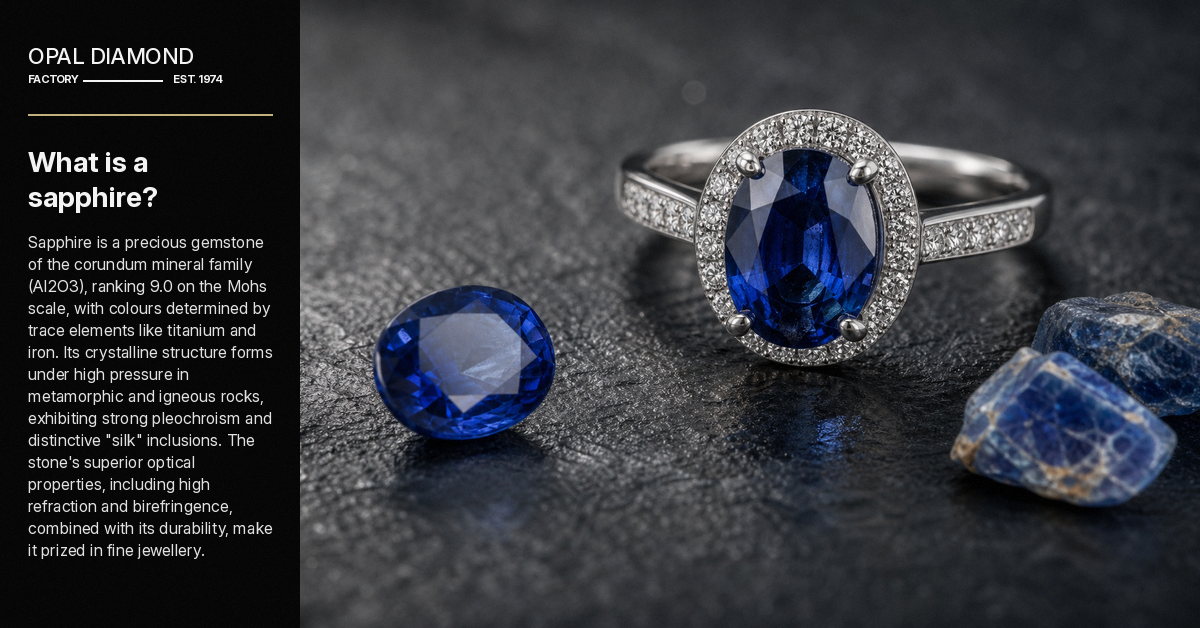
Sapphire is a precious gemstone of the corundum mineral family (Al2O3), ranking 9.0 on the Mohs scale, with colours determined by trace elements like titanium and iron. Its crystalline structure forms under high pressure in metamorphic and igneous rocks, exhibiting strong pleochroism and distinctive “silk” inclusions.
The stone’s superior optical properties, including high refraction and birefringence, combined with its durability, make it prized in fine jewellery. Premium specimens, particularly Kashmir-origin blue sapphires, display a distinctive velvety appearance due to light-scattering properties within the crystal structure.
What is sapphire’s hardness?
Sapphire’s hardness of 9.0 on the Mohs scale defines it as the mineral corundum’s most valuable form, surpassed only by diamonds (10.0) and moissanite (9.25). Unlike the complex diamond buying process focused on colourless gemstones, high-quality sapphires offer vivid colour variations and brilliant sparkle through proper angles, with natural stones displaying unique properties when exposed to white light.
The stone’s exceptional durability rivals diamond quality, making it a perfect choice for beautiful jewellery that requires minimal frequent cleaning. While diamond prices and diamond shapes dominate jewellery stores, sapphire colours, including rare colour-change sapphire varieties and phenomena like padma raga, offer ideal stones for collectors seeking expert advice on purchases and jewellery insurance. The densely packed crystal structure of these natural stones enables their remarkable resistance to scratching and abrasion, explaining their prominence in both ornamental and industrial applications.
How strong is a sapphire?
Sapphires are renowned for their beauty and durability, making them ideal alternatives to diamonds. With a Mohs hardness score of 9, they are highly resistant to scratches, making them ideal for engagement rings and other gemstone jewellery. They rival many precious stones and are popular center stones in various designs. Their strength and rich colour palette make them appealing in fine jewellery.
Do sapphires last long?
Sapphires are durable gemstones with a dense crystalline structure that resists scratches and everyday wear, ranking 9.0 on the Mohs hardness scale. They require only routine cleaning to maintain their brilliance and structural integrity. These gemstones are practical for daily wear in rings, necklaces, and other jewellery pieces, making them lifetime investments in fine jewellery.
What colours do sapphires come in?
Sapphires exist in every colour except red (classified as ruby), with hues determined by trace elements in their crystal structure. Blue results from iron and titanium, while chromium creates pink, and various combinations produce purple, yellow, and green. The most prized varieties include the rare pinkish-orange Padparadscha and color-change sapphires that shift between blue and purple under different lighting conditions.
What makes sapphires blue?
The blue colour in sapphires results from the presence of iron and titanium atoms within the crystal structure of the mineral corundum. When these elements substitute for aluminium in the crystal lattice, they create a charge transfer process that absorbs yellow light wavelengths, producing the characteristic blue hue.
The intensity of blue depends on the concentration of these trace elements – higher concentrations create deeper blues, while lower amounts result in lighter shades. Kashmir sapphires are particularly valued for their velvety blue appearance, caused by unique light-scattering properties within their crystal structure.
Where are sapphires mined?
Sapphires are mined across several continents, with each location producing stones with distinctive characteristics and qualities:
- Sri Lanka – World’s oldest source, produces wide range of colours
- Madagascar – Largest current producer, high-quality blue stones
- Myanmar (Burma) – Famous for royal blue stones
- Australia – Large deposits of dark blue and parti-coloured stones
- Montana, USA – Known for unique cornflower blue Yogo sapphires
- Thailand – Commercial quantities, medium-blue stones
- Cambodia – Dark blue sapphires
- Tanzania – Various colours, including rare orange-pink
- Kashmir (historic) – Legendary blue stones, mines now depleted
- Rwanda – Blue and fancy coloured sapphires
Are sapphires ethically sourced?
Sapphires can be ethically sourced, though standards vary by region and supplier. Unlike diamonds, sapphires generally have fewer conflict-related issues, but verification remains important. The most reliable ethical sources include Australia with strictly regulated mining and environmental protections, Montana USA with controlled mining practices, and Sri Lanka with traditional methods under government oversight.
Ethical sourcing depends on mine-to-market traceability, environmental practices, fair labour conditions, and supply chain transparency. Buyers should always request documentation of origin and verify suppliers’ ethical sourcing commitments through recognised certification programs.
What is a natural sapphire?
Natural sapphires are precious gemstones made of corundum, formed under high-temperature and pressure conditions. They come in various colours, including blue, pink, yellow, and green. Fancy sapphires display extraordinary hues. Mined in Sri Lanka, Myanmar, and Madagascar, each sapphire holds historical and cultural value. Blue sapphire jewellery symbolises wisdom and nobility, making it an excellent alternative to diamonds.
What is a lab-created sapphire?
Lab-created sapphires are a unique and affordable alternative to natural gemstones, derived from controlled environments. These sapphires, characterised by vibrant colours and white inclusions, are popular for sapphire jewellery. They offer similar brilliance and durability without mining concerns, while maintaining clarity and integrity. Lab-grown diamonds are also a viable option, but lab-created sapphires stand out for their unique hues and affordability.
What are famous sapphires?
These legendary sapphires are known for their exceptional size, historical significance, and royal connections:
• Logan Sapphire – 422.99-carat deep blue gem at the Smithsonian
• Princess Diana’s Ring – 12-carat Ceylon sapphire, now worn by Kate Middleton
• Stuart Sapphire – 104-carat royal gem in British Imperial State Crown
• Star of India – 563-carat star sapphire, world’s largest
• Blue Belle of Asia – 392.52-carat Ceylon sapphire, sold for $17 million
• Rockefeller Sapphire – 62.02-carat Kashmir sapphire with prestigious provenance
How are sapphires graded?
Sapphires are graded based on colour, clarity, cut, and carat weight, with deep blue being the most prized. Expert gem cutters enhance the stone’s brilliance through precise cuts. Carat weight significantly impacts value, with larger stones fetching higher prices. Sapphires can be used as center stones in diamond engagement rings and accent stones. Industry veterans offer valuable insights into sapphires and diamond jewellery.
How are sapphires certified?
Gemological laboratories conduct a rigorous evaluation process for sapphires, assessing factors like colour, clarity, cut, and carat weight. This ensures buyers understand their sapphires, whether natural, lab-grown, or Montana, and helps them compare them with other gemstones like white sapphire and colourless diamonds. Certified sapphires offer assurance of authenticity and quality, enhancing their appeal in the gemstone market.
What are sapphire cuts?
Sapphires are cut to maximise their colour, brilliance, and overall appearance, with each style serving specific purposes:
• Oval Cut – Most popular shape, optimises colour and brilliance
• Cushion Cut – Traditional square-rectangular cut with rounded corners
• Round Brilliant – Maximises light reflection, similar to diamond cuts
• Emerald Cut – Step-cut with rectangular shape, shows clarity well
• Cabochon – Smooth, domed top without facets, ideal for star sapphires
• Princess Cut – Square shape with sharp corners, modern style
• Pear Cut – Teardrop shape combining oval and marquise cuts
• Mixed Cut – Combines brilliant-cut crown with step-cut pavilion
What shapes do sapphires come in?
Sapphire shapes focus on enhancing natural beauty and colour retention, with oval cuts being most popular for coloured sapphires and transparent stones.
Unlike diamond jewellery, which prioritises brilliance in diamonds, sapphire cutting maximises both carat weight and colour intensity in natural and lab-grown specimens.
Common shapes include cushion, round brilliant, emerald, princess, and pear cuts, while star sapphires typically feature cabochon cuts. The choice between natural and synthetic sapphires, along with factors like chromium content and environmental impact, influences cutting decisions for both blue sapphire jewellery and other coloured varieties.
What is corundum lattice orientation?
Corundum lattice orientation is a major aspect of sapphires and rubies, affecting their optical properties, colour distribution, and durability. It is essential for natural diamonds and lab-grown sapphires. In coloured sapphires and blue sapphire jewellery, the lattice orientation influences the creation of various colours, from green to pink.
Proper orientation maximises colour saturation and minimises unwanted optical effects. It also influences diffusion treatments and the formation of distinctive rays in blue star sapphire specimens. Understanding this structure helps gemologists optimise cuts for loose gemstones for engagement ring settings and other gemstone jewellery applications.
What is trace element spectroscopy in sapphires?
This technique identifies elements like chromium, which imparts the vibrant pink hue of pink sapphires, enhancing their appeal as a diamond alternative.
By examining the Refractive Index and trace elements, gemstone experts can validate the authenticity of sapphires and differentiate them from other coloured gemstones.
Sapphire screens utilise this technology for validation purposes, ensuring customers appreciate the real colours and quality of their gemstones, making informed decisions in the competitive market of fine jewellery.
What is pleochroism variance in sapphires?
Sapphires display pleochroism variance, a phenomenon where they display different colours from different angles. This effect is particularly noticeable in purple and pink sapphires, which range from deep violet to soft pastel pink. This optical effect is due to the corundum lattice orientation, influencing light interaction. Sapphires are a beautiful alternative to diamonds, reflecting personal style and combining beauty with durability and uniqueness under incandescent light.
How do sapphires compare to diamonds?
Sapphires and diamonds offer distinct characteristics that set them apart in fine jewellery:
• Hardness: Diamonds rank 10 on Mohs scale, sapphires rank 9, making both excellent for daily wear
• Colour: Diamonds are typically colourless, while sapphires offer a range of natural colours (except red)
• Price: Sapphires generally cost less than diamonds of comparable size and quality
• Brilliance: Diamonds exhibit superior light reflection and sparkle, sapphires display richer colour depth
• Investment: Diamonds maintain standard market value, while rare sapphires (especially Kashmir) can appreciate significantly
• Durability: Both stones resist scratching and maintain brilliance over time, requiring minimal maintenance
Why pick sapphire over diamond?
Sapphires, despite their brilliance, offer a unique alternative to diamonds due to their diverse color palette, affordability, durability, and beauty. They are more affordable than diamonds and lab-grown diamonds, making them an accessible choice for wedding rings. Sapphires also shine in white gold settings and have a rich history, making them a distinctive choice among rings gemstones.
How do sapphires reflect light?
Sapphires, unlike diamonds, have a unique charm due to their exceptional cut and clarity, allowing them to reflect light and shine with deep, rich colours. Unlike diamonds, which have a superior brilliance due to their Refractive Index, sapphires’ vibrant hues and durability make them attractive for engagement rings. Although they may not sparkle as intensely, their fascinating colours and unique light reflection create an undeniable charm.
Who wears sapphire rings?
Notable figures throughout history have chosen sapphires for their symbolic value and striking beauty:
• Princess Kate – Wears Princess Diana’s 12-carat Ceylon sapphire engagement ring
• Princess Eugenie – Padparadscha sapphire ring from Jack Brooksbank
• Queen Victoria – Historic blue sapphire and diamond cluster ring
• Elizabeth Taylor – Owned several significant sapphire pieces, including Kashmir rings
• Princess Anne – Cabochon sapphire engagement ring
• Jackie Kennedy – Van Cleef & Arpels sapphire engagement ring
The trend continues among modern celebrities and royalty, who choose sapphires for their unique colour and historical significance. The stones remain popular for engagement rings, particularly after Princess Diana’s ring renewed public interest.
Are sapphire engagement rings common?
Sapphire engagement rings are gaining popularity as an alternative to traditional diamonds due to their striking colours, such as blue and pink. They symbolise individuality and elegance, and are often featured in wedding and eternity rings. The diamond registry now recognises sapphires as worthy contenders in modern bridal jewellery, making them a versatile option for couples looking for a unique and stylish engagement ring.
What do sapphires mean?
Throughout history, sapphires have held powerful symbolic significance across cultures and traditions:
• Wisdom – Ancient symbol of divine knowledge and spiritual insight
• Royalty – Traditional stone of kings and nobility, representing power
• Faithfulness – Symbol of loyalty and commitment in relationships
• Protection – Believed to guard against evil and negative energy
• Truth – Associated with honesty and clear communication
• Heaven – Blue sapphires traditionally linked to celestial connection
• Prosperity – Thought to attract wealth and good fortune
How are sapphires used in jewellery?
Sapphires feature prominently in fine jewellery, prized for their durability and versatility:
• Engagement Rings – Center stones with diamond halos or solitaire settings
• Wedding Bands – Channel-set or shared-prong designs with diamonds
• Necklaces – Pendants, chokers, and statement pieces
• Earrings – Studs, drops, and chandelier styles
• Bracelets – Tennis bracelets and bangles with mixed gemstones
• Brooches – Vintage and modern designs, often with multiple stones
• Tiaras – Royal and ceremonial headpieces
These gems work exceptionally well in both vintage and contemporary settings, with their durability making them ideal for everyday wear.
Can sapphires be personalised?
Sapphires offer exceptional personalization through their diverse colour range, cut options, and setting possibilities. Each stone can be customised through choice of colour, from traditional blue to rare padparadscha, while cut selection ranges from classic oval to modern geometric shapes. The gems work harmoniously with all precious metals and can be enhanced with diamond accents or creative setting designs.
The natural variations in each sapphire’s colour, pattern, and clarity ensure that every piece becomes uniquely personal, whether crafted into an engagement ring, pendant, or family heirloom. Custom cutting and setting options allow jewellers to create pieces that perfectly match individual style preferences and wear requirements.
How does colour affect sapphire value?
A sapphire’s value primarily depends on its color intensity, saturation, and rarity. Pure, vivid blue stones, especially those from Kashmir with their signature cornflower blue hue, command the highest prices. Rare varieties like Padparadscha (pinkish-orange) and color-change sapphires demand premium prices, while common colours like pale blue or dark green remain more affordable. Even colour distribution and strong saturation significantly increase value.
How to clean a sapphire ring?
Safe and simple cleaning methods include:
• Warm Water Solution – Mix mild soap with warm water, soak for 10-15 minutes
• Soft Brushing – Gently clean with a soft toothbrush to remove dirt
• Rinse – Use clean warm water to remove soap residue
• Dry – Pat dry with lint-free cloth
Avoid: • Harsh chemicals • Ultrasonic cleaners without professional advice • Steam cleaning • Abrasive materials
What are current sapphire trends?
Sapphire trends in 2025 are shifting from traditional blue stones to focusing on colour, with vivid colour sapphires gaining popularity. Contemporary designs are combining modern baroque pearls with sapphires, particularly in spring/summer collections. Maximalist jewellery featuring sapphires is gaining popularity, with mixed metals and creative settings becoming popular.
Royal blue remains classic, but pink sapphires and unique colour-change specimens are gaining market share. Sustainable and ethically sourced sapphires are also gaining interest due to consumer demand for transparency.
What myths surround sapphires?
Ancient cultures viewed sapphires as powerful stones with divine connections, believed to bring protection and wisdom to their wearers. Medieval clergy wore them to symbolise heavenly ties, while royalty trusted them as protection against poison and treachery. Persian mythology claimed the Earth rested on a giant sapphire that coloured the sky, while other traditions linked the stone to truth-telling and prophetic powers. These beliefs established sapphires as traditional engagement ring stones, representing faithfulness and sincere love long before diamonds became popular.
Are sapphires worth investing in?
Sapphires represent a strong investment opportunity, particularly high-quality natural specimens from Kashmir, Burma, and Ceylon with documented origins. Investment value depends on colour quality, size, treatment status, and origin certification. Rare varieties like Padparadscha and untreated stones above 5 carats show the strongest appreciation potential. Compared to diamonds, sapphires often offer a more accessible investment entry point while maintaining stable market value growth.
Related diamond guides: What Are Synthetic Diamonds: Explore the Differences, the Benefits, and the Future of Diamonds Made in a Lab; What is cubic zirconia: know the material, the uses, the value.