
Cubic zirconia, one of the most favorite diamond alternatives, is a versatile stone created in laboratories that rivals the distinctive appearance of a 1-carat diamond at an affordable price. While natural forms of diamonds are highly valued, the biggest difference lies in cubic zirconia’s accessibility as a perfect treat for budget-conscious consumers. Available in various forms, from Cubic Zirconia Necklaces to Plated Cubic Zirconia Floral Drop Earrings, this affordable option maintains the industry standard for synthetic gems.
The market offers extensive choices, including Sterling Silver Save options, Stainless Steel Cubic Zirconia Rings, and Gold Plated Surgical Steel Cubic Zirconia pieces.
For broader context, compare this point with the diamond alternatives guide.
Understanding the differences between diamond and cubic zirconia can help consumers make informed decisions while exploring options like Plated Brass Cubic Zirconia Hollow pieces or Plated Cubic Zirconia Medium Flower Vine Drops, ensuring they find the perfect balance of beauty and value in their jewellery selection.
What is cubic zirconia?
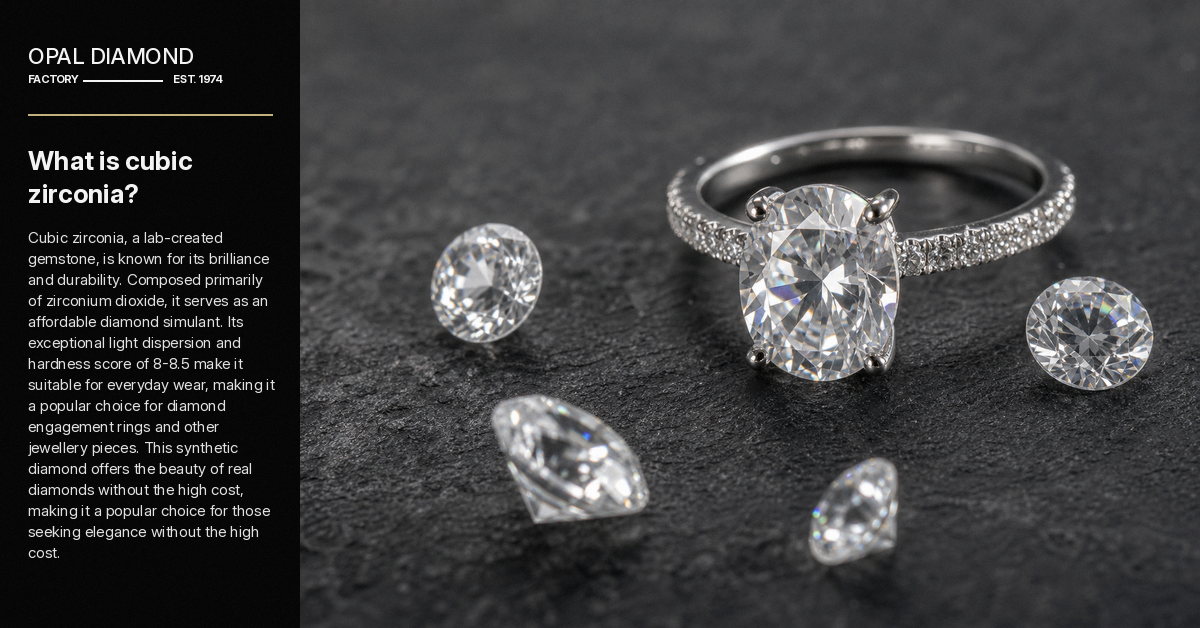
Cubic zirconia, a lab-created gemstone, is known for its brilliance and durability. Composed primarily of zirconium dioxide, it serves as an affordable diamond simulant. Its exceptional light dispersion and hardness score of 8-8.5 make it suitable for everyday wear, making it a popular choice for diamond engagement rings and other jewellery pieces. This synthetic diamond offers the beauty of real diamonds without the high cost, making it a popular choice for those seeking elegance without the high cost.
What is cubic zirconia made from?
Cubic zirconia is primarily made from zirconium dioxide (ZrO2), a crystalline form of zirconium oxide. During the manufacturing process, stabilizers such as calcium oxide or yttrium oxide are added to the zirconium dioxide to maintain its crystalline structure. The material is synthesised in laboratories using a process called skull melting, where the components are heated to extremely high temperatures (around 5000°F/2760°C) until they form a crystal structure that mimics the optical and physical properties of natural diamonds.
This lab-created gemstone’s chemical composition and controlled manufacturing process allow it to achieve its distinctive appearance and make it an affordable option compared to natural diamonds.
How is cubic zirconia made?
Cubic zirconia is manufactured through a precise laboratory process that creates brilliant, diamond-like gemstones.
• Raw Material Preparation High-purity zirconium dioxide powder is mixed with stabilising compounds like calcium or yttrium oxide.
• Skull Melting Process The mixture is heated to approximately 5000°F in a radio-frequency-activated container where the outer layer remains solid while the interior melts.
• Crystal Formation As the molten material cools under controlled conditions, crystal structures develop to form the gemstone.
• Cutting and Finishing The cooled crystals are cut and polished to create the final brilliant stone, following industry standards for quality.
What does cubic zirconia look like?
Cubic zirconia closely resembles natural diamonds, featuring exceptional brilliance and sparkle. Available in clear or coloured varieties, it appears flawless and completely transparent, lacking the natural inclusions found in diamonds. When properly cut and polished, it creates an attractive, diamond-like appearance that displays more dramatic light dispersion than natural diamonds, making it a popular and affordable jewellery choice.
What colours is cubic zirconia available in?
Cubic zirconia is available in an extensive range of colours, divided into regular and premium categories, offering versatile options for jewellery designs.
• Regular Colours (Basic Collection) White, Black, Pink, Rose Pink, Golden Yellow, Canary Yellow, Lavender, Amethyst, Champagne, Orange, Violet, Garnet Red, Olive Yellow, and Peridot.
• Premium Colors (Specialty Collection) Rhodorite/Smoky, Tanzanite, Emerald Green, Aqua, Swiss Blue, Apple Green, Light Pink, Coffee Brown, Blue Zirconia, and Diamond Imitated colours.
• Colour Intensity Options Each colour is available in three distinct shades – light, medium, and dark, with medium being the most popular choice.
• Most Popular Shades White cubic zirconia is the most sought-after as it best mimics diamonds, while champagne and tanzanite variations have gained significant market popularity.
Is cubic zirconia a gemstone?
Cubic zirconia is not a natural gemstone but rather a synthetic, lab-created crystal that serves as a diamond simulant. While it’s entirely man-made using zirconium dioxide, it has earned respect in the jewellery industry for its durability, brilliance, and aesthetic appeal, making it a popular and legitimate alternative to natural gemstones.
Is cubic zirconia hard?
Cubic zirconia is quite hard, ranking 8.5 on the Mohs hardness scale (compared to diamond’s 10), making it durable enough for everyday wear in jewellery. While it can withstand most daily activities, it’s slightly more susceptible to scratches and wear than natural diamonds but remains significantly harder than many other popular gemstones, including emeralds and sapphires.
Does cubic zirconia sparkle like diamond?
Cubic zirconia sparkles similarly to diamonds but with notable differences. It typically displays more fire (colorful flashes) than diamonds and can appear more brilliant in some lighting conditions. However, experienced jewellers can distinguish between the two because cubic zirconia’s sparkle tends to be more rainbow-colored and dramatic, while diamonds produce a more balanced mix of white light (brilliance) and colored light dispersion.
Cubic zirconia vs. diamond: what’s the difference?
Diamonds and cubic zirconia are often compared in the jewellery world, with cubic zirconia serving as a popular diamond alternative. While they may look similar at first glance, these stones have distinct characteristics that set them apart in quality, value, and longevity.
Here are their key differences:
- Material & Origin: , Diamonds are natural gemstones made of pure carbon formed over millions of years , Cubic zirconia is a synthetic crystal made from zirconium dioxide in laboratories
- Durability: , Diamonds rank 10 on the Mohs hardness scale and maintain clarity indefinitely , Cubic zirconia ranks 8.5 and typically becomes cloudy within 2-3 years of regular wear
- Appearance: , Diamonds produce balanced brilliance with predominantly white light reflection , Cubic zirconia creates more dramatic rainbow-colored sparkle
- Value & Investment: , A 1-carat diamond can cost thousands of dollars and maintains resale value , Comparable cubic zirconia costs under $20 with virtually no resale value
- Best Uses: , Diamonds are preferred for fine jewellery and heirloom pieces , Cubic zirconia serves as an affordable alternative for fashion jewellery and temporary pieces
How to tell cubic zirconia from diamond?
Here are the key ways to distinguish cubic zirconia from diamonds:
- Visual Signs: , Diamonds show subtle white light brilliance, while cubic zirconia has obvious rainbow sparkles , Natural diamonds usually have tiny flaws, but cubic zirconia appears perfectly clear , Cubic zirconia appears more glassy and transparent than diamonds
- Physical Tests: , Diamonds feel cooler to touch and stay cold longer , Cubic zirconia is noticeably heavier than a same-sized diamond , Real diamonds can easily scratch glass; cubic zirconia cannot
- Price Indicators: , If it’s extremely affordable for its size, it’s likely cubic zirconia , Genuine diamonds usually come with certification , Professional jewellers can confirm using specialised testing tools
What are chemical vapor deposition chambers used for in cubic zirconia?
Chemical vapor deposition (CVD) chambers are not actually used in cubic zirconia production – this appears to be a misconception. Cubic zirconia is created using a different process called skull melting, where zirconium dioxide is heated to extremely high temperatures (around 5000°F) in a specialised container. CVD chambers are instead used in the production of lab-grown diamonds, which is a completely different process and product from cubic zirconia. The skull melting process for cubic zirconia involves radio-frequency heating that melts the interior of the material while keeping the outer layer solid, hence the term “skull melting.”
What is high pressure high temperature synthesis in cubic zirconia?
High Pressure High Temperature (HPHT) synthesis is used in manufacturing cubic zirconia crystals, where zirconium dioxide powder mixed with stabilising compounds is subjected to pressures around 2.5 GPa and temperatures between 1370°C to 1610°C. This process accelerates production time and promotes better crystal formation, with optimal results occurring around 1530°C. The method produces high-quality cubic zirconia with improved structural stability and optical properties that buyers can compare with the four Cs of diamonds, though temperatures exceeding 1610°C can reduce the material’s hardness due to grain coarsening.
What are graphitization suppression techniques in cubic zirconia?
Graphitization suppression techniques in cubic zirconia production are specialised methods used to maintain crystal purity and prevent unwanted carbon contamination during the manufacturing process.
• Temperature Control Precise regulation of heating temperatures prevents the formation of graphite-like structures, typically maintaining temperatures between 1370°C and 1610°C during synthesis.
• Oxygen Environment Maintaining proper oxygen levels during crystal growth helps prevent carbon-based impurities from forming within the crystal structure.
• Stabilising Agents Adding specific stabilising compounds like calcium oxide or yttrium oxide helps maintain the cubic crystal structure and prevents unwanted phase transformations.
• Protective Atmosphere Using inert gases during production creates a protective environment that minimises the risk of carbon contamination and graphitization.
• Cooling Rate Management Controlled cooling procedures help prevent structural defects and maintain crystal clarity while reducing the risk of carbon-based impurities.
Is cubic zirconia good for fashion jewellery?
Cubic zirconia is an excellent choice for fashion jewellery, offering a perfect balance of affordability and visual appeal. Its diamond-like sparkle and ability to be produced in various colours make it ideal for trendy designs, while its durability (8.5 on the Mohs scale) ensures it can withstand regular wear. Although it may need replacement after a few years of constant use, its low cost and high aesthetic value make it particularly suitable for seasonal fashion pieces and costume jewellery where frequent style updates are desired.
Is cubic zirconia used in engagement rings?
Cubic zirconia is increasingly used in engagement rings as an affordable alternative to diamonds, particularly for couples on a budget or those who prefer ethical, lab-created stones. While it offers impressive sparkle and beauty at a fraction of a diamond’s cost, it’s important to note that cubic zirconia may need replacement every few years due to wear and doesn’t hold long-term value like diamonds. Many couples choose it as a temporary solution, planning to upgrade to a diamond later, or as a practical choice for those who prioritise affordability over longevity.
Can you wear cubic zirconia every day?
While cubic zirconia can be worn daily, it requires more care than diamonds to maintain its appearance. With a hardness of 8.5 on the Mohs scale, it’s durable but can accumulate scratches and become cloudy over time, typically lasting 2-3 years with regular wear. Daily activities, exposure to chemicals, and frequent contact with water can accelerate wear, so it’s recommended to remove cubic zirconia jewellery during household chores, swimming, or vigorous activities.
How long does cubic zirconia last?
With proper care, cubic zirconia typically lasts 2-3 years before showing noticeable signs of wear such as scratches or cloudiness. Daily wear, exposure to chemicals, and contact with water can significantly reduce its lifespan. While the stone itself is durable (8.5 on the Mohs scale), it’s more susceptible to damage than natural diamonds and may need replacement to maintain its original brilliance and clarity.
Does cubic zirconia fade?
Yes, cubic zirconia can fade over time, typically becoming cloudy or appearing less brilliant within 2-3 years of regular wear. This occurs due to surface scratches, exposure to chemicals (including soaps and cosmetics), and the gradual breaking down of the crystal structure. Unlike diamonds, which maintain their clarity indefinitely, cubic zirconia’s appearance can deteriorate through regular exposure to water, household chemicals, and everyday wear, causing it to lose its original sparkle and transparency.
How to clean cubic zirconia jewellery?
Proper cleaning of cubic zirconia jewellery helps maintain its brilliance and extends its lifespan. Here are the most effective methods for keeping your pieces sparkling.
• Basic Cleaning Method Mix mild soap with warm water, gently clean the jewellery with a soft brush, rinse thoroughly, and dry with a lint-free cloth to restore shine.
• Professional Cleaning Solution Use specialised jewellery cleaner designed for cubic zirconia, following manufacturer instructions carefully to avoid damage to both stone and setting.
• Ultrasonic Cleaning For thorough cleaning, use an ultrasonic jewellery cleaner with appropriate solution, but check first that your piece’s setting is suitable for this method.
• Steam Cleaning Professional steam cleaning can be effective but should only be done by a jeweller as excessive heat can damage some settings.
• Prevention Tips Remove jewellery before swimming, showering, or applying cosmetics. Store pieces separately to prevent scratching and clean regularly to maintain sparkle.
Can cubic zirconia be repaired?
Cubic zirconia itself cannot be repaired once damaged, as it’s a synthetic crystal that doesn’t respond to traditional gemstone repair methods. While surface scratches might be minimally improved through professional polishing, deep scratches, chips, or internal cloudiness are permanent. In most cases, it’s more cost-effective to replace the damaged cubic zirconia stone entirely rather than attempt repairs.
The good news is that the settings holding cubic zirconia stones (such as rings, necklaces, or earrings) can typically be repaired like any other jewellery piece. A professional jeweller can fix loose settings, broken prongs, or damaged metalwork, and replace the cubic zirconia stone with a new one if necessary, often at a relatively affordable price.
Is cubic zirconia worth anything?
Cubic zirconia has minimal monetary value, typically ranging from 5to100 per carat depending on quality and colour. Unlike natural diamonds, it doesn’t retain value or appreciate over time, and its worth primarily comes from its metal setting (if mounted in gold or platinum). While it lacks resale value, its true worth lies in providing an affordable, attractive alternative to diamonds for fashion jewellery.
Where can you buy cubic zirconia jewellery?
Cubic zirconia jewellery is widely available through multiple retail channels. Traditional jewellery stores often carry cubic zirconia collections alongside their fine jewellery, while department stores typically offer more affordable fashion pieces. Online marketplaces provide extensive selections at various price points, and many local jewellers create custom pieces using cubic zirconia stones. You can also find these pieces at fashion accessory stores, wholesale jewellery suppliers, and craft fairs, with options ranging from budget-friendly fashion jewellery to higher-end pieces set in precious metals.
Why buy cubic zirconia instead of diamond?
People choose cubic zirconia over diamonds primarily for its significant cost savings while maintaining a similar appearance. It’s an ethical, lab-created alternative that offers versatility in colours and sizes, making it ideal for fashion-conscious consumers and those who prefer to invest their money elsewhere. While it doesn’t match a diamond’s durability or value, cubic zirconia provides an attractive, affordable option for practical buyers who want beautiful jewellery without the high price tag.
Is cubic zirconia ethical?
Cubic zirconia is considered highly ethical as it’s completely lab-created, eliminating concerns about mining impacts, worker exploitation, or conflict stones that can be associated with natural diamonds. The manufacturing process is environmentally controlled, requires less energy than diamond mining, and doesn’t involve land disruption or habitat destruction. Its affordable price point also makes quality jewellery more accessible to a wider range of consumers, making it a socially responsible choice for those concerned about both environmental and humanitarian impacts.
What are the pros and cons of cubic zirconia?
Pros: , Significantly more affordable than diamonds , Lab-created and ethically produced , Available in various colors and sizes , Flawless appearance with excellent sparkle , Perfect for fashion jewellery and temporary pieces , Environmentally friendlier than mined stones
Cons: , Less durable than diamonds (8.5 vs 10 on Mohs scale) , Becomes cloudy after 2-3 years of regular wear , No investment or resale value , Requires more frequent cleaning and maintenance , More susceptible to scratches and damage , Can appear too perfect compared to natural stones
Who uses cubic zirconia?
Cubic zirconia is popular among various consumers including fashion-conscious individuals on a budget, travelers wanting secure alternatives to valuable jewelry, young professionals building their jewellery collection, couples seeking affordable engagement rings, jewellery designers creating trendy pieces, and anyone wanting attractive, ethical jewellery without the high cost of diamonds. Its affordability and versatility make it particularly appealing to those who enjoy frequently updating their jewellery style.
How popular is cubic zirconia?
Cubic zirconia is extremely popular in the fashion jewellery market, representing a significant portion of synthetic gemstone sales worldwide. Since its commercial introduction in 1976, it has become the most widely used diamond alternative due to its affordability, attractive appearance, and ethical production. The global market continues to grow as consumers increasingly prioritize cost-effectiveness and sustainable options in jewellery choices.
Related diamond guides: What do jewellers think about Moissanite: how jewellers view Moissanite’s value, durability, and sparkle; What makes sapphires a diamond alternative?: Hard facts, real colours, and why they shine like diamonds.