
The diamond market is undergoing a significant transformation due to the rise of engineered diamonds. Lab-grown diamonds, which include yellow, rose, or white gold lab-created diamond rings, match mined stones in hardness on the Mohs Scale and in the 4Cs of diamonds, specifically cut, clarity, colour, and carat. However, their origins differ. Mined diamonds form naturally over billions of years, while lab-grown versions are crafted in a matter of weeks.
This distinction influences pricing, ethical considerations, and consumer values. Brands such as De Beers and certifications like CanadaMark emphasise authenticity. Antwerp laboratories play a major role in verifying diamond quality.
For broader context, compare this point with the diamond types guide.
Modern buyers increasingly prioritize sustainability, leading to a redefinition of luxury that now includes lab-created options, while some consumers still prefer natural diamonds.
What is a lab diamond?
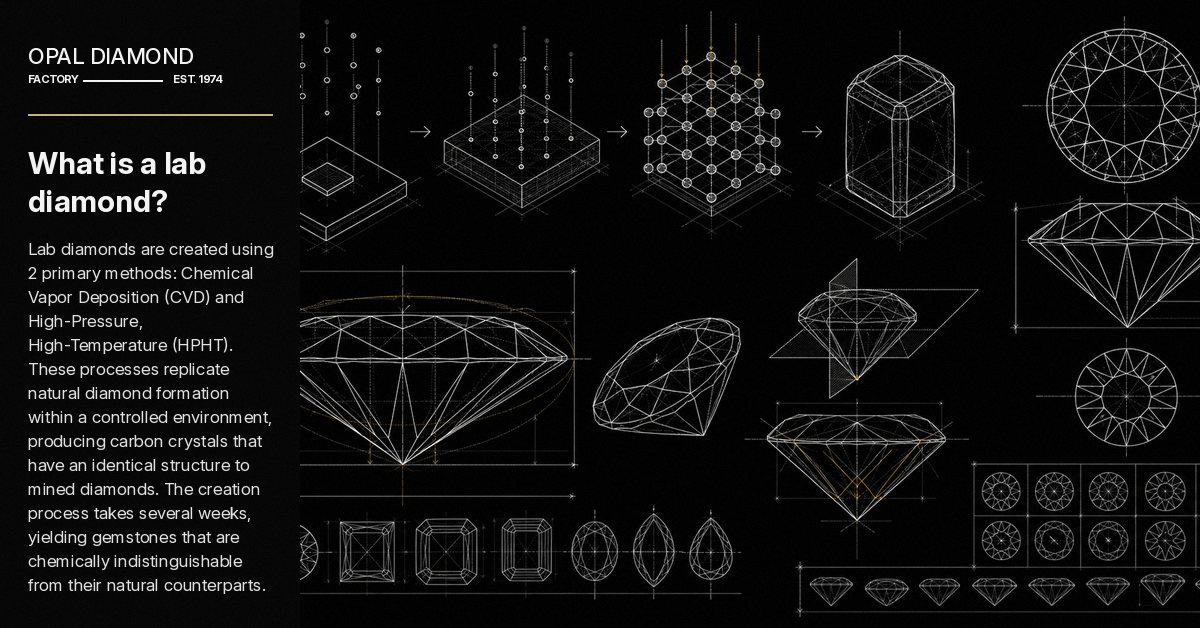
Lab diamonds are created using 2 primary methods: Chemical Vapor Deposition (CVD) and High-Pressure, High-Temperature (HPHT). These processes replicate natural diamond formation within a controlled environment, producing carbon crystals that have an identical structure to mined diamonds. The creation process takes several weeks, yielding gemstones that are chemically indistinguishable from their natural counterparts.
What is a mined diamond?
Mined diamonds form naturally in the Earth’s mantle over billions of years. These gems are extracted through various methods, each with its own environmental impact and carbon footprint. Ethical concerns include habitat disruption and the potential for conflict diamonds, which fund violence in war zones. This has led to increased scrutiny of diamond mining practices and a greater demand for transparent sourcing within the natural diamond market.
What is cvd growth plasma analysis?
CVD growth plasma analysis is a scientific method that examines lab-grown diamonds during their creation process. Lab diamonds appear identical to mined diamonds when viewed with the naked eye, as both exhibit the same optical properties and crystal structures. Only specialized equipment can detect subtle differences in growth patterns and trace elements that distinguish lab diamonds from their mined counterparts.
What does a lab diamond look like?
To the untrained eye, lab-grown diamonds appear identical to mined diamonds, displaying the same brilliance, sparkle, and physical properties. Both are real diamonds with identical optical properties, making differentiation impossible without specialized equipment. Lab-grown and mined diamonds exhibit the same brilliance under light. The lab appearance perfectly mimics mined appearance because both share the same carbon crystal structure. Even experienced jewellers typically cannot distinguish between them without technological assistance, as lab diamonds possess the same hardness, Refractive Index, and visual characteristics as natural diamonds.
What does a mined diamond look like?
Mined diamonds possess the same visual characteristics as lab-grown diamonds, displaying identical sparkle, fire, and brilliance to the naked eye. Both are real diamonds with identical chemical composition. Mined diamonds often contain distinctive inclusions formed during their billion-year development deep underground. Diamond grading techniques assess these natural clarity characteristics on the diamond grading scale. These natural imperfections can reveal the diamond mine source. When set in jewellery, these microscopic features remain invisible without specialised equipment, making visual differentiation nearly impossible for consumers.
What are the effects of post-growth annealing?
Post-growth annealing is a treatment process that enhances the properties of lab-grown diamonds created through HPHT or CVD methods. This process involves heating the diamonds to high temperatures under controlled conditions, which leads to 5 beneficial effects that improve the quality and appearance of the stones:
- Improved Colour: Annealing can enhance or alter the colour of lab-grown diamonds, removing unwanted brown or gray hues and achieving more desirable shades, such as colourless or fancy colours.
- Increased Clarity: The process can reduce or eliminate internal stress and certain defects, leading to fewer visible inclusions or imperfections.
- Enhanced Brilliance: By modifying the diamond’s crystal structure, annealing optimizes its optical properties, contributing to greater sparkle and brilliance.
- Stability of Properties: Annealing helps stabilize the physical and optical properties of the diamond, ensuring that the improvements are durable over time.
- Creation of Fancy Colours: In combination with certain treatments, annealing can produce vibrant fancy-colored diamonds, such as yellows, blues, or pinks, which are highly sought after in the market.
This process refines lab-grown diamonds, ensuring they meet industry standards and consumer expectations.
How is diamond lattice defect mapping done?
Precisely identifying and mapping defects within diamond lattices requires sophisticated analytical techniques that reveal the internal atomic structure of these gems. Lab technology employs spectroscopy and microscopy to visualize inclusions and structural anomalies in crystallized carbon networks. Diamond graders utilize these maps to distinguish lab-grown diamonds from natural ones, as each displays characteristic patterns of defects.
The Refractive Index and chemical properties remain identical between both types, though defect distribution differs extensively. Carbon-neutral lab processes create more predictable lattice structures, while natural diamonds exhibit random imperfections formed over millions of years. This mapping enables the authentication and quality assessment of diamonds.
How is a lab diamond made?
Lab diamonds are created in laboratories using 2 primary methods:
- High-Pressure, High-Temperature (HPHT): This method simulates the natural conditions under which diamonds form within the Earth.
- Chemical Vapor Deposition (CVD): This process involves growing diamonds layer by layer from a carbon-rich gas.
These processes yield gemstones that are chemically identical to natural diamonds.
How is a mined diamond formed?
Mined diamonds form naturally deep within the Earth’s mantle under extreme pressure and heat over billions of years. This formation begins with carbon atoms subjected to approximately 725,000 pounds per square inch of pressure at temperatures exceeding 2,000 degrees Fahrenheit. The carbon sources are trapped 90-120 miles beneath the Earth’s surface. Diamond structure develops as carbon atoms bond in a crystalline lattice. Eventually, volcanic eruptions transport these stones toward the surface through kimberlite pipes, making mined excavation possible. This natural creation process differs significantly from lab methods.
What are the properties of a lab diamond?
Lab-grown diamonds, created using methods like HPHT or CVD, possess identical physical, chemical, and optical properties to natural diamonds. These traits make them indistinguishable from mined diamonds without specialized testing.
|
Property |
Description |
|---|---|
|
Chemical Composition |
Lab diamonds are made of pure carbon, identical to natural diamonds, and have the same atomic structure. |
|
Hardness |
They score a perfect 10 on the Mohs Scale of Hardness, making them incredibly durable and scratch-resistant. |
|
Optical Properties |
Lab-grown diamonds exhibit the same brilliance, fire, and scintillation as natural diamonds. |
|
Thermal Conductivity |
Like natural diamonds, lab-grown diamonds are excellent thermal conductors. |
|
Density |
Lab diamonds have the same density as natural diamonds. |
|
Clarity and Colour |
They are graded on the same scale as natural diamonds and can achieve exceptional clarity and colour grades, including fancy shades. |
|
Fluorescence |
Lab-grown diamonds may or may not fluoresce under UV light, similar to mined diamonds. |
|
Crystalline Structure |
They form in the same cubic crystal structure as natural diamonds. |
These properties make lab-grown diamonds indistinguishable from mined diamonds except by advanced testing, such as using a Type IIa diamond tester.
What are the properties of a mined diamond?
Mined diamonds, formed naturally deep within the Earth’s mantle over billions of years, possess 8 unique physical, chemical, and optical properties that make them highly valued and prized. These properties define them as the hardest and one of the most brilliant substances on Earth.
|
Property |
Description |
|---|---|
|
Chemical Composition |
Mined diamonds are made of pure carbon atoms arranged in a crystal lattice structure. |
|
Hardness |
They score a perfect 10 on the Mohs Scale of Hardness, making them the hardest natural substance, resistant to scratches and wear. |
|
Optical Properties |
Mined diamonds exhibit exceptional brilliance, fire (dispersion of light into colours), and scintillation (sparkle). |
|
Thermal Conductivity |
They are excellent thermal conductors, which contributes to their use in industrial applications. |
|
Density |
Mined diamonds have a high density of approximately 3.52 grams per cubic centimeter (g/cm³). |
|
Clarity and Colour |
Natural diamonds can range from flawless to heavily included and come in a variety of colours, from colourless to fancy shades like yellow, blue, and pink. |
|
Fluorescence |
Some mined diamonds exhibit fluorescence under ultraviolet (UV) light, which may affect their appearance. |
|
Crystalline Structure |
They have a cubic or isometric crystal structure that contributes to their strength and symmetry. |
|
Natural Formation |
The journey of a mined diamond involves immense heat and pressure over billions of years, making each diamond a unique relic of Earth’s history. |
Mined diamonds are evaluated using the same 4Cs (cut, colour, clarity, carat) as lab-grown diamonds, but their natural origin and rarity add significant value and prestige to many consumers.
What is the price of a lab diamond?
Lab-grown diamonds typically cost 30-40% less than their mined counterparts. For example, a one-carat lab diamond alternative may cost $2,800-$4,200. This price differential is largely due to factors such as perceived value, marketing efforts by traditional diamond companies, and the controlled supply chain of natural diamonds.
What is the price of a mined diamond?
Mined diamonds typically come with a significant price premium compared to lab-grown alternatives. A one-carat mined diamond engagement ring may cost $4,000-$6,000. Natural diamonds’ cost varies based on the 4Cs-cut, colour, clarity, and carat weight-with high-quality stones commanding substantially higher prices.
What is the value of a lab diamond over time?
Mined diamonds typically retain about 50% of their original purchase price in resale value. The resale market for natural diamonds benefits from established valuation standards and a historical track record of stability. Factors such as stone quality, market conditions, and the original purchase location profoundly impact the actual resale value a consumer might receive. Lab-grown diamonds do not currently have the same established resale market or value retention as mined diamonds.
What is the resale value of a mined diamond?
Mined diamonds typically retain 40-60% of their original purchase price on the resale market, substantially outperforming lab-grown alternatives. The Gemological Institute of America (GIA) certification enhances resale prospects for natural diamonds, particularly for high-quality engagement rings. The established diamond resale market favours mined stones due to their perceived scarcity and traditional value.
How sustainable is a lab diamond?
The sustainability of lab-grown diamonds depends largely on the energy sources and practices used during production. While they are more environmentally friendly compared to mined diamonds, they are not entirely impact-free. Lab diamonds offer 4 key sustainability advantages:
- Reduced Land Impact: Lab diamonds eliminate the need for disruptive mining practices, avoiding deforestation, habitat destruction, and large-scale land displacement.
- Lower Carbon Footprint: Lab diamonds typically produce fewer greenhouse gas emissions, especially when renewable or carbon-neutral energy is used during production.
- Limited Water Usage: Lab diamonds require significantly less water than mined diamonds and often use closed systems for better water efficiency.
- Minimal Waste Generation: Unlike mining, which produces vast amounts of waste, lab-grown diamonds generate minimal byproducts.
Sustainability improves further when lab diamond producers transition to renewable energy sources and implement carbon-neutral practices.
How ethical is a mined diamond?
Many consumers question the ethical implications of mined diamonds due to concerns about environmental impact and labour practices. The industry has faced scrutiny over human rights violations, with “blood diamonds” funding conflicts in certain regions. The Kimberley Process was established to certify conflict-free diamonds, though critics argue its effectiveness remains limited. Some companies now offer sustainability-rated diamonds with transparent mined sourcing. Despite these improvements, environmental damage from mining operations continues to concern eco-conscious buyers. Lab-grown diamonds are increasingly viewed as an ethical alternative to traditionally mined stones.
What are conflict-free diamonds?
Conflict-free diamonds include those tracked through blockchain traceability systems, which create permanent digital records of each diamond’s journey from origin to consumer. These technological solutions allow buyers to verify that their diamonds were not sourced from conflict zones or associated with human rights abuses. Artisanal mining impact assessments complement these systems by evaluating the social, economic, and environmental effects of small-scale diamond mining operations on local communities.
What are blockchain traceability systems?
Tracking the journey of diamonds from mine to market has revolutionized the industry through blockchain traceability systems. These digital ledgers create permanent, tamper-proof records documenting each diamond’s path from extraction to retail. Blockchain technology helps combat the blood diamond trade by verifying mined certification and GIA certification authenticity. These systems provide transparency into sourcing practices. Blockchain platforms now authenticate both natural gems and lab-grown diamond market products, distinguishing them from diamond simulants while ensuring ethical standards throughout the supply chain.
What is artisanal mining impact assessment?
Artisanal mining impact assessment evaluates the environmental, social, and economic effects of small-scale diamond mining operations. These assessments examine how artisanal mining compares to industrial extraction and lab-grown diamond production with regard to ecological footprint and community benefits. The jewellery industry increasingly relies on these assessments to determine if a mined diamond better serves ethical standards than alternatives like eco-diamonds. Assessments also document flaws in governance and highlight sustainable practices, helping shape public opinion and inform fine jewellery consumers about their purchase implications.
How does certification differ for lab and mined diamonds?
Certification for lab-grown and mined diamonds shares the same grading principles, focusing on the 4Cs (cut, colour, clarity, carat). However, 4 key differences arise due to their origin:
|
Feature |
Lab-Grown Diamonds |
Mined Diamonds |
|---|---|---|
|
Origin Disclosure |
Certificates explicitly state their synthetic origin and creation method, such as HPHT or CVD. |
Certificates for naturally sourced diamonds may include ethical sourcing labels, such as CanadaMark. |
|
Terminology |
Certificates use terms like “synthetic” or “engineered.” |
Diamonds are described as naturally formed. |
|
Testing |
Advanced tests, such as identifying Type IIa diamonds, are more common due to their controlled production. |
Standard grading tests are used. |
|
Ethics |
Certifications often highlight sustainability and conflict-free production. |
Certifications may include ethical sourcing credentials. |
Both certifications ensure transparency and verify authenticity, but the emphasis on origin sets them apart.
What is the kimberley process certification protocol?
The Kimberley Process certification protocol was established in 2003 to prevent conflict diamonds from infiltrating the legitimate diamond trade. The protocol requires participating nations to certify that mined diamonds are conflict-free through documentation and rigorous controls. While this system has reduced conflict diamonds in the industry, critics note it does not address broader ethical sourcing concerns. Lab-grown diamonds bypass the Kimberley Process entirely as they are manufactured, not mined. This distinction offers consumers seeking diamonds without potential ethical complications an alternative option.
Which is better for engagement rings: lab or mined diamonds?
When choosing an engagement ring, couples often debate whether lab-grown or mined diamonds represent the better investment. Lab-created diamonds offer 3 key advantages:
- Cost-effectiveness: They are typically 20-40% less expensive.
- Ethical Sourcing: They are ethically sourced.
- Environmental Friendliness: They are more environmentally friendly than their mined counterparts.
Lab diamonds possess identical hardness and brilliance to natural stones, as they share the same chemical composition. Mined diamonds historically maintain better resale value. Both options have their merits: lab diamonds appeal to eco-conscious couples and those seeking larger stones for their budget, while mined diamonds attract those valuing tradition and long-term investment potential.
What is the environmental impact of lab and mined diamonds?
The environmental impact of lab-grown and mined diamonds significantly differs due to their distinct production processes, with lab-grown diamonds being widely regarded as a more sustainable option.
|
Environmental Aspect |
Mined Diamonds |
Lab-Grown Diamonds |
|---|---|---|
|
Carbon Emissions |
Diamond mining requires heavy machinery and fossil fuels, contributing significantly to greenhouse gas emissions. |
Have a much lower carbon footprint, especially when produced using renewable energy. |
|
Land Disruption |
Involve large-scale land excavation, leading to deforestation, habitat destruction, soil erosion, and biodiversity loss. |
Are created in laboratories, eliminating the need for land disruption. |
|
Water Usage |
Mining operations consume excessive water, often straining local communities and contaminating water sources. |
Require significantly less water and often utilize efficient recycling processes. |
|
Waste Generation |
Mining generates vast quantities of waste material. |
Generate negligible waste. |
|
Air Pollution |
Mining releases harmful chemicals, including sulfur oxide and nitrogen oxide. |
Production avoids these emissions, further improving air quality. |
Lab-grown diamonds cause minimal environmental harm compared to the extensive ecological degradation associated with mined diamonds, making them a more sustainable and responsible choice.
How do people view lab diamonds?
Public perception of lab-grown diamonds has evolved significantly in recent years, with environmental impact being a major factor in their growing acceptance. Consumers increasingly question whether mined diamonds are better, especially for engagement rings, as awareness of lab diamond production methods grows. Many now view lab-created diamonds as ethically superior. The lab carbon source and manufacturing processes appeal to environmentally conscious buyers. While traditionalists may still prefer mined diamonds for their perceived authenticity, public opinion continues shifting as younger generations prioritize sustainability alongside the identical appearance these alternatives offer.
How do people view mined diamonds?
Mined diamonds carry a more complex public reputation than their lab-grown counterparts. While traditional diamonds maintain a strong luxury status and value perception in the market, they face increasing scrutiny over ethical concerns. The diamond industry has worked to address issues surrounding conflict diamonds through certification programs. Environmental impact represents another significant concern, as diamond mining can cause habitat destruction and soil erosion. Despite these challenges, many consumers still prefer mined diamonds for their heritage, perceived authenticity, and established resale value. The debate between tradition and ethics continues to shape how consumers view these natural gemstones.
What are the trends in lab and mined diamond sales?
Recent market data reveals a significant shift in consumer preferences, with lab-grown diamonds steadily gaining market share while traditional mined diamond sales face challenges. Lab-created diamonds now represent approximately 10% of the engagement ring market, with annual growth exceeding 15%. Meanwhile, mined diamonds have seen modest declines, particularly in lower-quality segments. Fancy-coloured diamonds, especially lab-grown yellow diamonds, have experienced rapid adoption due to their affordability compared to rare mined equivalents. Unlike cubic zirconia, lab-grown diamonds maintain value perception for wedding rings. Public opinion increasingly favours lab-grown options, with younger consumers particularly drawn to their environmental claims and competitive pricing.