
The diamond industry has faced numerous issues, including worker exploitation, child labor, unsafe conditions, environmental damage, and the trade of conflict diamonds. These diamonds have historically funded conflicts and harmed civilians, particularly in African nations. Ethical sourcing and sustainable practices are now prioritized by consumers and experts. These priorities are supported by certification processes, international standards, and initiatives like the Diamond Development Initiative and Mwadui Community Diamond Partnership. Efforts to reduce conflict diamond flow, improve fair working conditions, and promote renewable energy and sustainable mining practices are reshaping the diamond business.
For broader context, compare this point with the diamond mining guide.
Ethical alternatives, such as lab-grown diamonds and cultured diamonds, are available from reputable suppliers like Brilliant Earth, Blue Nile, and James Allen. Consumers can now choose certified, conflict-free diamonds or lab-grown options, ensuring they originate from legitimate sources under strict environmental and fair labour standards. Artisanal diamond miners, responsible environmental initiatives, and fair trade programs foster positive economic development and protect biodiversity. Informed choices and reputable suppliers like Kalfin Jewellery and Adelaide Jewellery Studio ensure diamonds positively impact local communities and the planet.
What is ethical diamond sourcing?
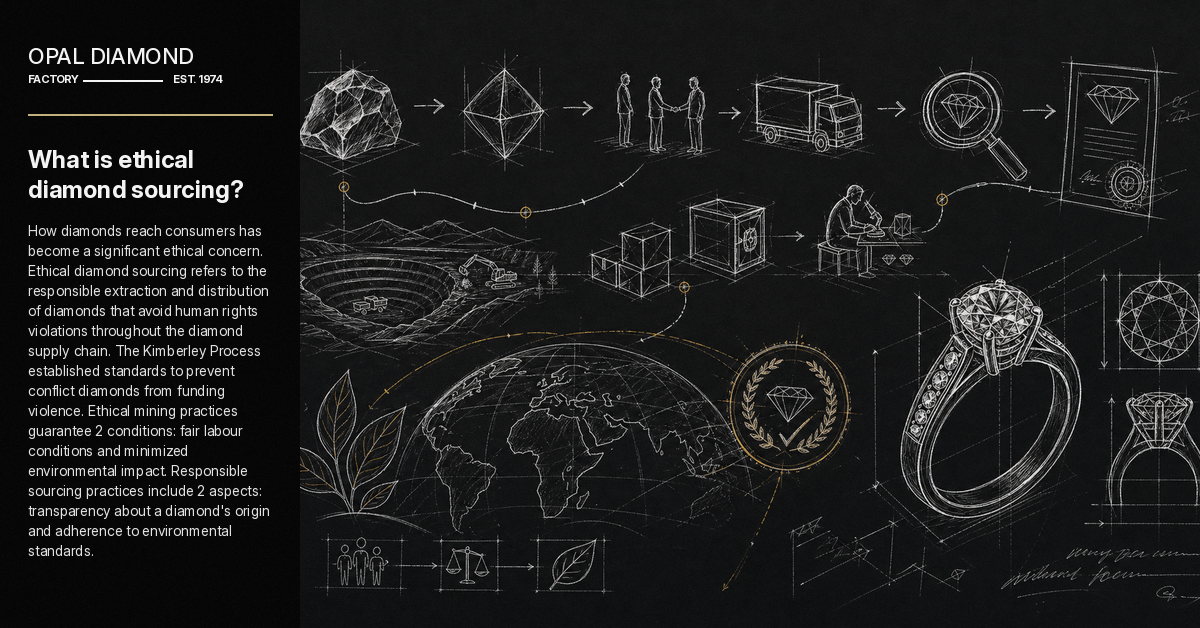
How diamonds reach consumers has become a significant ethical concern. Ethical diamond sourcing refers to the responsible extraction and distribution of diamonds that avoid human rights violations throughout the diamond supply chain. The Kimberley Process established standards to prevent conflict diamonds from funding violence. Ethical mining practices guarantee 2 conditions: fair labour conditions and minimized environmental impact.
Responsible sourcing practices include 2 aspects: transparency about a diamond’s origin and adherence to environmental standards. Ethical jewellery brands verify their diamonds originate from mines that respect 2 groups: workers’ rights and local communities. Consumers increasingly demand diamonds obtained through methods that protect 2 entities: both people and the planet.
How are ethical diamonds certified?
The Kimberley Process Certification Scheme and the Responsible Jewellery Council are certification systems that verify ethical diamond sourcing. The Kimberley Process prevents conflict diamonds from entering the market, while the Responsible Jewellery Council certifies companies adhering to ethical standards throughout the supply chain. Diamond certification includes documentation proving origin and ethical sourcing, which consumers can request when purchasing diamonds. These systems ensure transparency and maintain ethical standards in the diamond industry.
What could conflict-free crystallography symboliae?
Conflict-free crystallography represents a shift in the diamond industry towards ethical practices, sustainable sourcing, and strict standards. It addresses issues like child labour, environmental harm, water usage, and conflict financing. Initiatives in diamond sourcing aim to eliminate unethical practices like the trade in conflict diamonds and unsafe traditional mining. Certification processes, renewable energy sources, and community programs supported by the United Nations and international community enhance transparency and reduce harm in the diamond supply chain.
The diamond sector offers a wide range of options for consumers, from natural diamond formation in primary and secondary deposits to lab-grown diamonds crafted under art laboratory conditions. Leading brands like DX Diamonds and the Diamond Exchange advocate for informed jewellery purchases that prioritize ethical origins and biodiversity protection. By doing so, the industry can shift from funding conflicts and environmental harm to building a more beautiful and responsible future.
What are conflict-free diamonds?
Consumers increasingly prioritize conflict-free diamonds. Conflict-free diamonds are mined and traded without funding armed conflicts or human rights abuses, unlike blood diamonds. Transparency in the diamond industry has improved through 2 initiatives: the Kimberley Process Certification Scheme and retailer documentation verifying ethical origins. This shift addresses 2 concerns: ethical issues and growing demand for diamond jewellery from responsible diamond sources, including 2 types of diamonds such as lab-grown diamonds and diamonds from natural primary deposits.
Sustainable practices by diamond producers focus on 3 actions: reducing dirty water, managing water usage, and protecting biodiversity. Three alternatives: Artisanal mining, ocean floor mining, and lab-grown alternatives created with art technology, offer more ethical options while reducing the trade of diamonds tied to 2 outcomes: violence or military action. Two leaders, Leonardo DiCaprio and responsible exporters, advocate for industry reforms, ensuring that diamonds, whether black diamonds or beloved pieces, contribute to a beautiful earth instead of funding conflicts. Consumers support sustainable practices and oppose 2 harmful activities: harmful mining and trade practices, by choosing ethically sourced diamonds.
What defines transparent gem provenance?
Transparent gem provenance requires sustainable lapidary practices throughout the supply chain. These practices include using environmentally friendly cutting and polishing techniques that minimize 2 resources: waste and energy consumption.
Responsible lapidaries also maintain fair labor conditions and avoid harmful chemicals that endanger 2 groups: workers or local ecosystems.
What are sustainable lapidary practices?
Sustainable lapidary practices aim to minimize environmental harm and promote 3 ethical standards in the cutting, processing, and polishing of gemstones. These practices support 3 broader goals: environmental conservation, fair labour, and responsible sourcing within the gemstone industry. Below are 7 key elements of sustainable lapidary practices:
| Element | Description |
|---|---|
| Ethical Sourcing of Gemstones | Using stones from 2 sources: conflict-free sources or legitimate mining operations that prioritize 3 factors: fair wages, safe working conditions, and human rights. |
| Minimizing Waste | Reducing waste generated during the cutting and shaping process by 2 methods: maximizing gemstone yield and repurposing leftover materials. |
| Use of Renewable Energy | Powering equipment with 2 renewable energy sources, such as solar or wind energy, to lower the carbon footprint of the lapidary process. |
| Water Conservation | Implementing techniques to recycle and reuse water during gemstone cutting and polishing, minimizing 2 things: water usage and dirty water discharge. |
| Non-Toxic Materials | Avoiding hazardous chemicals in the polishing process and instead using environmentally friendly alternatives safer for 2 entities: craftsmen and the planet. |
| Supporting Community Programs | Partnering with or purchasing from 2 groups: artisanal miners and cutters who operate under fair-trade practices to encourage local economic development. |
| Responsible Disposal | Ensuring proper disposal of 2 items: lapidary byproducts and waste materials to avoid environmental contamination. |
The gemstone industry can significantly reduce its environmental impact and promote more ethical and environmentally conscious jewellery production, by adopting these 7 sustainable lapidary practices.
What are ethical carbon trade metrics?
Ethical carbon trade metrics measure the greenhouse gas emissions generated throughout the diamond supply chain using standardized carbon accounting protocols. These calculations factor in 5 processes: extraction processes, transportation, cutting, polishing, and retail distribution to determine a diamond’s total carbon footprint.
Three groups: Jewellery companies, mining operations, and certification bodies, increasingly utilize these metrics to demonstrate environmental responsibility and attract sustainability-conscious consumers.
How are carbon trade metrics calculated?
Carbon trade metrics in diamond sourcing involve measuring carbon emissions throughout the diamond production process, including machinery fuel consumption and land disturbance. Processing facilities quantify energy usage and carbon atoms released, while transportation contributes to the environmental footprint. These measurements are compared against sustainability benchmarks, incorporating both direct and indirect emissions. Ethical diamond sourcing requires extensive ecological footprint documentation, enabling verification of sustainability claims and consumer transparency about the environmental impact of their diamond purchases.
What industries use ethical carbon trade metrics?
Ethical carbon trade metrics are used by 8 industries to measure, report, and offset their carbon emissions in a responsible and transparent manner. These metrics aim to promote 3 goals: sustainability, reduced environmental impact, and support for global efforts to combat climate change. Below are 8 industries that commonly use ethical carbon trade metrics:
| Industry | How Ethical Carbon Trade Metrics Are Used |
|---|---|
| Renewable Energy | Tracks and trades carbon credits generated from 3 project types, such as wind, solar, and hydro projects, to promote clean energy adoption. |
| Manufacturing and Industrial | Implements 2 actions: carbon accounting and trading to offset emissions from production processes while adopting greener technologies. |
| Transportation and Logistics | Reduces carbon footprints by offsetting emissions from fuel usage in 3 areas, such as aviation, shipping, and trucking, through carbon credit purchases. |
| Agriculture and Forestry | Measures emissions from farming activities and supports 2 project types: reforestation or sustainable land management projects to balance emissions. |
| Technology and Data Centers | Adopts energy-efficient systems and purchases renewable energy credits to offset the high energy consumption of 2 items: servers and operations. |
| Construction and Real Estate | Tracks embodied carbon in buildings and mitigates impacts by 2 methods: using sustainable materials or purchasing offsets. |
| Financial Services | Invests in carbon markets and funds 2 project types: renewable energy or sustainability projects to meet ethical and environmental objectives. |
| Retail and Consumer Goods | Monitors supply chain emissions and promotes products with lower carbon footprints through 2 methods: sustainable sourcing and offsets. |
These 8 industries take measurable steps toward achieving 3 sustainability goals: reducing global emissions, and supporting environmental projects that benefit the planet, by employing ethical carbon trade metrics.
What is the kimberley process?
The Kimberley Process establishes conflict gem certification to verify diamonds originate from legitimate, non-conflict sources.
This international certification scheme requires participating countries to implement 2 safeguards on shipments and use sourcing certifications to document diamonds as “conflict-free.”
Refractive trade regulation, a complementary framework to the Kimberley Process, focuses on monitoring 2 aspects of diamonds: diamond quality and authenticity through light refraction properties to prevent fraudulent trading practices.
What is conflict gem certification?
Established in 2003, the Kimberley Process Certification Scheme serves as the main global framework for conflict gem certification. This system aims to prevent conflict diamonds, also known by the term blood diamonds, from entering the legitimate diamond market. Process certification requires that rough diamonds cross international borders with a Kimberley Process certificate verifying their moral origin.
The diamond origin report assists consumers in identifying ethically sourced gems. The diamond sourcing industry has adopted these highest ethical standards to guarantee transparency. The Kimberley Process Certification represents a significant step toward an ethical diamond industry that protects 2 groups: both communities and consumers, though it is imperfect.
What is refractive trade regulation?
Refractive trade regulation is a system that manages diamond movement across international borders, such as the Kimberley Process Certification Scheme. It tracks natural diamonds from mines to markets, distinguishing legitimate trade from unethical practices. Suppliers must document ethical diamond mining operations. The regulations protect artisanal miners and verify fair labour practices, preventing exploitation and holding the industry accountable. These controls provide consumers with confirmation that their purchases do not fund conflict, despite imperfect progress.
What are fair labour practices in mining?
Fair labour practices in mining ensure 3 conditions for miners: safe, ethical, and equitable working conditions while reducing exploitation within the industry. These practices promote 3 values: human rights, dignity, and environmental stewardship.
Below are 10 key components of fair labour practices in mining:
| Component | Description |
|---|---|
| Fair Wages | Providing workers with wages that meet or exceed living wage standards, ensuring 2 outcomes: financial stability and fairness. |
| Safe Working Conditions | Implementing stringent safety protocols to protect miners from 2 things: injury and illness, including 3 elements: proper equipment, emergency procedures, and training. |
| No Child or Forced Labour | Prohibiting the use of 2 types of labour: child labour or forced labour, ensuring all workers participate voluntarily and meet legal working age requirements. |
| Reasonable Working Hours | Establishing limits on working hours, providing adequate rest breaks, and preventing excessive overtime to protect 2 aspects: worker health and well-being. |
| Freedom of Association | Allowing workers to join 2 types of organizations: trade unions or other organizations and collectively bargain without fear of retaliation. |
| Gender Equality | Promoting the inclusion of women in mining roles while addressing 3 issues: gender-specific challenges, harassment, and discriminatory practices. |
| Health and Welfare Support | Providing access to 4 necessities: health care, clean drinking water, sanitation, and adequate housing where necessary. |
| Transparency and Legal Compliance | Complying with 2 standards: labor laws and international standards, while promoting accountability through 2 methods: independent audits and certifications. |
| Community Investment | Supporting local communities through 3 avenues: infrastructure, education programs, and sustainable development projects tied to mining activities. |
| Environmental Responsibility | Ensuring mining operations minimize ecological damage and protect biodiversity to maintain harmony among 3 entities: labour, communities, and the environment. |
Adhering to these 10 fair labour practices in mining builds trust, improves worker satisfaction, and ensures a more ethical and sustainable mining industry.
Why are fair wages important in mining?
Miners often earn meager wages for dangerous work, while diamonds sparkle in jewellery stores worldwide. Fair wages in diamond mining create economic stability for 2 groups: workers and their communities. Miners can afford 3 essential services: healthcare, education, and housing, when they receive proper compensation.
Ethically mined diamonds require strict ethical labour standards that prioritize fair payment for dangerous work. Sustainable practices in diamond mining must include fair wages to be truly ethical.
Safe working conditions paired with adequate compensation form the foundation of responsible sourcing.
Companies selling ethical engagement rings increasingly recognize that working conditions include 2 aspects: both physical safety and economic justice. Fair pay reduces exploitation in mined diamonds.
What rights do miners have under fair labour practices?
Miners possess 7 rights under fair labour practices:
- To receive equitable compensation that meets or exceeds living wage standards.
- To work in an environment that prioritizes their health and safety with proper equipment and protocols.
- To work voluntarily and without coercion, ensuring no child labour is involved.
- To have regulated hours with adequate rest breaks and manageable workloads.
- To join trade unions or associations and negotiate for better terms without fear of retaliation.
- To work without facing discrimination or harassment based on 3 factors, such as gender, race, or other factors.
- To receive basic benefits, medical care, and support systems for their well-being.
These 7 rights ensure 3 outcomes: dignity, equity, and safety for miners while fostering ethical mining practices.
How are fair labour practices enforced in mining?
The enforcement of fair labour practices in mining requires multiple oversight systems. International monitoring organizations conduct regular inspections of large-scale diamond mining companies. These groups verify that workers receive 2 things: fair wages and operate in safe conditions.
The Kimberley Process tracks rough diamonds; however, critics note it does not fully address fair labour practices in alluvial mining. Non-ethical diamonds often emerge from operations lacking oversight.
For sourced diamonds from African diamonds regions, certification programs document ethical engagement throughout the supply chain. Independent auditors verify compliance.
Consumers choosing ethical options should seek diamonds with documented labour standards. The diamond industry continues developing stronger enforcement mechanisms despite 3 implementation challenges.
Where are ethical diamonds sourced?
Ethical diamonds originate from regions and practices that ensure 3 standards: fair labour standards, environmental responsibility, and conflict-free origins. Seven key locations and sources for ethical diamonds include:
- Canada: Known for 3 strengths: its strict environmental regulations, labour protections, and conflict-free certification, Canadian diamonds are some of the most ethical in the market.
- Botswana: Recognized for 2 commitments: its commitment to sustainable development and ethical mining practices, Botswana is a major exporter of diamonds with significant economic benefits for local communities.
- Namibia: Known for 2 features: marine diamond mining with advanced environmental practices and fair labour standards, Namibia supplies ethically sourced gems.
- South Africa: Provides conflict-free diamonds under government oversight with efforts to align with responsible sourcing standards.
- Australia: The Argyle Mine previously offered ethically mined diamonds with transparent sourcing, particularly 2 types of diamonds: pink and brown diamonds.
- Lab-Grown Diamonds: Produced in controlled environments with advanced technology, lab-grown diamonds provide an ethical, sustainable alternative to mined diamonds.
- Recycled Diamonds: Diamonds repurposed from 2 sources: vintage jewellery or previous uses eliminate the need for new mining and represent a sustainable choice.
These 7 regions and methods ensure that diamonds come from legitimate and transparent sources aligned with 2 types of practices: ethical labour and environmental practices.
Why are ethical diamonds needed?
Numerous mining communities in conflict zones have suffered from 2 problems: exploitation and violence linked to diamond extraction. These “blood diamonds” fund 2 issues: armed conflicts and human rights abuses. Natural diamond companies often operate with minimal oversight, causing 2 types of environmental damage: environmental destruction and biodiversity loss in diamond-rich regions.
Ethical diamonds emerged as a solution to these 2 problems. Diamond certification through the Gemological Institute of America helps verify conflict-free diamonds. Sustainable practices include 2 elements: proper worker treatment and environmental protection. Two alternatives, such as lab-grown diamonds and recycled gold, reduce negative impacts.
Consumers increasingly demand transparency about diamond sourcing to guarantee their purchases do not support 2 outcomes: conflict or exploitation.
How can buyers verify ethical diamonds?
Ethical diamonds typically cost 10-20% more than conventional diamonds due to 2 factors: rigorous certification processes and fair labour practices. These diamonds differ from others through their 3 documented characteristics: chain of custody, conflict-free status, and adherence to environmental standards.
Buyers can verify authenticity through 3 recognised certifications, such as Kimberley Process, Fairtrade, or Responsible Jewellery Council documentation that legitimate retailers should readily provide.
What are the costs of ethical sourcing?
Consumers should understand the associated costs, while pursuing ethically sourced diamonds offers moral benefits.
Ethical sourcing often commands premium prices. Natural diamonds with proper certification typically cost 10-30% more than alternatives. Two types of diamonds: Lab-grown diamonds and lab-created diamonds, provide ethical options at lower price points, though still requiring verification through reputable jewellers.
For engagement rings, consumers face tradeoffs between 2 considerations: ethics and budget. High-quality diamonds with ethical sourcing documentation increase expenses. Synthetic diamonds offer cost savings while maintaining ethical standards.
The true cost extends beyond money-3 factors: research time, verification efforts, and possibly accepting fewer options contribute to the overall investment in ensuring diamond purchases align with personal values.
How do ethical diamonds differ from others?
Ethical diamonds face scrutiny across 2 major dimensions. Diamond mining operations can cause 3 environmental problems: habitat destruction, soil erosion, and water pollution, if not managed responsibly.
The complex diamond supply chain must maintain 2 qualities: transparency and accountability at each stage to guarantee ethical standards are upheld from mine to market.
How does mining affect the environment?
Diamond mining operations leave substantial environmental footprints across the globe. Extracting natural diamonds requires 3 actions: removing tons of earth, disrupting ecosystems, and consuming vast water resources.
Lab-grown diamonds offer a greener alternative for engagement rings, such as those in rose gold settings. Ethical diamond sourcing includes additional practices that reduce habitat destruction. Companies selling diamonds now highlight 3 characteristics: clarity, colour, and environmental impact to guarantee diamonds meet sustainability standards.
How does the supply chain influence ethics?
The supply chain directly impacts ethical sourcing, because every diamond changes hands multiple times. The jewellery industry now tracks sparkling diamonds from mines to retailers.
Certified diamonds possess documentation verifying they are not linked to 2 entities: the Russian government or conflict zones. Ethical sourcing requires transparency for all 3 product types, such as loose diamonds, antique diamonds, and diamond lab grown alternatives.