
Diamond jewellery encompasses an array of elegant adornments, such as rings, necklaces, and earrings, featuring various diamonds, including classic white diamonds, striking Black Diamond options, and other exceptional gemstones. The desirability of these pieces is determined by 5 key factors: the diamond’s size, its inherent quality characteristics, the expertise of diamond mounters, the intricacy of designs like Diamond Jhumki, and the overall appeal of sets such as the Radiance Diamond Necklace Set.
Reputable boutique showrooms and specialised retailers present a wide selection, from everyday diamond pieces to exclusive collections that include items like diamond stud earrings, elegant pear-shaped diamonds, and ethically sourced lab-grown diamonds.
For broader context, compare this point with the diamond planning guide.
Customers can find suitable pieces, including traditional Designer peacock kadas or innovative diamond ashes jewellery, with assurances like special offers and diamond price-match guarantees, all crafted from high-quality materials.
What is diamond jewellery?
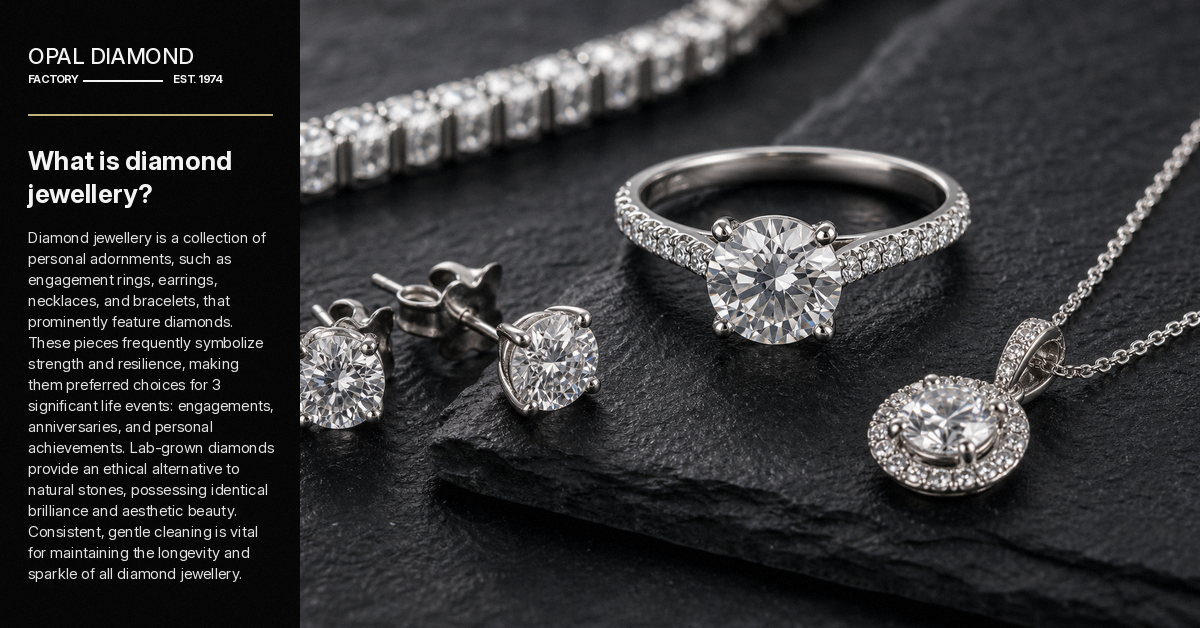
Diamond jewellery is a collection of personal adornments, such as engagement rings, earrings, necklaces, and bracelets, that prominently feature diamonds. These pieces frequently symbolize strength and resilience, making them preferred choices for 3 significant life events: engagements, anniversaries, and personal achievements. Lab-grown diamonds provide an ethical alternative to natural stones, possessing identical brilliance and aesthetic beauty. Consistent, gentle cleaning is vital for maintaining the longevity and sparkle of all diamond jewellery.
What materials make diamond jewellery?
Diamond jewellery is primarily constructed from diamonds combined with 1 of 4 precious metals.
The 3 main categories of materials are:
- Diamonds: These carbon-based gemstones are the central elements, selected based on 4 specific characteristics known as the 4Cs: Cut, Colour, Clarity, and Carat weight.
- Precious Metals: These metals form the settings and structural components. The 4 most common precious metals are:
-
- Gold: Frequently used in 3 purities (14K, 18K, or 22K) and available in 3 main colours: yellow gold, white gold, and rose gold.
- Platinum: A highly durable and hypoallergenic metal, recognised for its substantial feel and inherent silvery-white luster.
- Silver: Primarily sterling silver, an alloy composed of 92.5% pure silver combined with other metals for durability.
- Palladium: A lightweight yet robust metal, similar in appearance to platinum, often utilised in contemporary jewellery designs.
- Other Gemstones: Occasionally, other gemstones, such as sapphires, rubies, and emeralds, are integrated to introduce colour and design variety.
- Additional Elements: Some designs incorporate materials like enamel or pearls to augment the overall aesthetic.
These components are meticulously chosen and artfully combined to produce beautiful and durable diamond jewellery.
How is diamond jewellery crafted?
The creation of diamond jewellery involves 6 key steps: designing the piece, selecting appropriate diamonds, fabricating a metal framework, securely setting the diamonds, and applying finishing touches for beauty and durability, followed by a final quality inspection.
This process merges artistic vision with precise execution.
The 6 detailed steps in crafting diamond jewellery are:
- Design: This initial stage involves developing a detailed concept and sketch for the jewellery piece.
- Diamond Selection: Diamonds are carefully chosen based on 5 criteria (their shape, size, colour, clarity, and cut) to best suit the intended design.
- Framework Creation: The jewellery’s foundational structure, or mounting, is produced using 1 of 2 principal techniques (casting or hand-fabrication) with precious metals such as gold, platinum, or silver.
- Setting: Diamonds are precisely placed and secured within the mounting using 1 of several setting techniques, such as prong, bezel, or pavé, to ensure stability and optimise brilliance.
- Finishing: The piece undergoes multiple finishing processes, including polishing, and sometimes engraving or specific surface treatments, to enhance its visual appeal and structural integrity.
- Inspection: The completed jewellery item is thoroughly inspected to verify its quality and craftsmanship, with any necessary refinements made.
What shapes are used in diamond jewellery?
Diamonds in jewellery are fashioned into 12 common shapes, each possessing distinct characteristics. These shapes include:
| Shape | Key Characteristics | Common Uses |
|---|---|---|
| Round Brilliant | Features 58 facets for exceptional brilliance and fire. | Engagement rings, solitaire pendants |
| Princess Cut | Square or slightly rectangular with pointed corners and high brilliance. | Engagement rings, stud earrings |
| Oval | Elongated round shape offering brilliance similar to round; creates illusion of length. | Rings, pendants |
| Marquise | Elliptical with pointed ends; maximises perceived carat size. | Rings, pendants |
| Pear | Teardrop shape, a hybrid of round and marquise. | Pendants, earrings |
| Cushion Cut | Square or rectangular with rounded corners and larger facets; soft, romantic look. | Engagement rings, fashion rings |
| Emerald Cut | Rectangular with step-cut facets and cropped corners; emphasises clarity. | Rings, pendants |
| Asscher Cut | Square version of emerald cut with a high crown; vintage appeal. | Art Deco-inspired designs, rings |
| Radiant Cut | Square or rectangular with cropped corners and brilliant-cut facets. | Rings |
| Heart | Distinctive heart silhouette; symbolises love. | Pendants, special occasion jewellery |
| Trillion | Triangular with slightly rounded sides. | Side stones, unique designs |
| Baguette | Small, rectangular step-cut shape. | Accent stones, side stones |
The selection of a diamond shape often depends on 2 main factors: personal preference and the specific jewellery design.
What settings are used for diamonds?
Diamonds are secured in jewellery using 8 common types of settings, each designed to hold the stone safely while enhancing its visual properties.
These settings include:
- Prong Setting: Features small metal claws holding the diamond, maximising light exposure. Common variations are 4-prong and 6-prong (often called the Tiffany setting).
- Bezel Setting: A metal rim encircles the diamond, either fully or partially, providing robust protection.
- Channel Setting: Diamonds are set in a row between 2 parallel metal walls, popular for wedding bands.
- Pavé Setting: Multiple small diamonds are set closely together, creating a continuous sparkling surface.
- Halo Setting: A central diamond is encircled by a ring of smaller diamonds, enhancing its apparent size.
- Tension Setting: The diamond appears to float, held in place by the pressure of the metal band on 2 sides.
- Invisible Setting: Diamonds are set adjacent to each other with no visible metal, creating a seamless diamond surface.
- Gypsy Setting: The diamond is set flush with the metal surface, often used in men’s rings.
- Cathedral Setting: Metal arches rise from the shank to support the diamond, resembling architectural arches.
Each setting offers a distinct aesthetic and level of security.
What metals are paired with diamonds?
Diamonds are frequently paired with 3 primary precious metals: gold, platinum, and silver, to augment their brilliance and structural integrity. Gold, available in 3 popular hues (yellow, white, and rose), is a favoured choice for items such as engagement rings and wedding bands. Platinum offers durability and a naturally white sheen, while silver provides an affordable option that effectively showcases diamonds. The careful selection of metal is a critical aspect in crafting diamond jewellery.
What is ornamental refractivity?
Ornamental refractivity describes the interaction of light with a gemstone’s facets, producing its characteristic sparkle and visual appeal.
It is defined by 3 key optical effects:
- Brilliance: The amount of white light reflected from the gem’s surface and interior.
- Fire (Dispersion): The splitting of white light into its spectral colours, creating rainbow-like flashes.
- Scintillation: The pattern of light and dark areas and the sparkle observed when the gem, light source, or viewer moves.
A high degree of ornamental refractivity contributes significantly to a diamond’s captivating appearance.
What are ornamental preservation protocols?
Ornamental preservation protocols are a set of 4 primary practices designed to maintain the condition and beauty of valuable decorative items, such as diamond jewellery.
These protocols include:
- Regular Cleaning: Gently cleaning items with appropriate solutions, for example, a mild soap and water mixture for most diamond jewellery, to remove dirt and oils.
- Proper Storage: Storing items individually in soft pouches or lined boxes to prevent scratches and damage from contact with other pieces.
- Avoiding Harmful Exposure: Protecting ornaments from harsh chemicals (like chlorine or abrasives), extreme temperatures, and physical impacts.
- Periodic Inspection: Regularly examining pieces, especially settings and clasps on jewellery, for any signs of wear or damage to address issues promptly.
Adherence to these protocols helps ensure the longevity and sustained appeal of ornamental possessions.
What is gem-laden accessorisation?
Gem-laden accessorisation refers to the practice of incorporating gemstones into jewellery and fashion accessories, such as rings, necklaces, earrings, and watches, to enhance their aesthetic value and luxuriousness. This involves adorning these items with various precious or semi-precious stones, often utilising intricate craftsmanship in settings like prong, pavé, or bezel. This form of accessorisation has been valued across numerous cultures for centuries, symbolising opulence and personal style.
What is wearable prismatic geometry?
Wearable prismatic geometry involves the application of geometric principles and prismatic light effects to the design of jewellery, particularly pieces featuring diamonds and other gemstones. This design approach often results in innovative and contemporary diamond jewellery, such as engagement rings, earrings, and pendants, characterised by intricate, angular patterns and faceted surfaces that maximise light interaction. The use of lab-grown diamonds is one option that aligns with this modern aesthetic, providing eco-conscious choices. These designs aim to elevate the visual impact of each diamond and gemstone.
What are the types of diamond jewellery?
Diamond jewellery encompasses 7 main categories of items, each designed to showcase the distinct elegance of diamonds for various occasions.
These types include:
- Diamond Rings
- Engagement Rings
- Wedding Bands
- Solitaire Diamond Rings
- Pavé Diamond Bands
- Three-Stone Rings
- Diamond Earrings
- Stud Earrings
- Hoop Earrings
- Drop Earrings
- Halo Diamond Earrings
- Cluster Earrings
- Diamond Necklaces
- Pendant Necklaces
- Diamond Tennis Necklaces
- Statement Necklaces
- Diamond Bracelets
- Tennis Bracelets
- Bangle Bracelets
- Chain Bracelets with Inset Diamonds
- Diamond Brooches
- Vintage Brooches
- Modern, Minimalist Brooches
- Diamond Anklets
- Chain Anklets with Diamond Accents
- Diamond Timepieces
- Bezel-Set Diamond Watches
- Full Pavé Diamond Watches
- Other Diamond Accessories
- Cufflinks
- Hairpins
- Tiaras
Each category offers diverse styles, from everyday pieces to elaborate statement accessories.
What materials enhance diamond jewellery designs?
Several key materials enhance diamond jewellery designs, primarily 3 precious metals and various gemstones. Precious metals, such as gold (in yellow, white, and rose varieties), platinum, and silver, provide durable and visually appealing settings. Gold offers warmth or a contemporary look, while platinum provides strength and a neutral colour. Other gemstones, for example, sapphires, emeralds, and rubies, introduce vibrant colour contrasts or complementary hues.
Pearls can add classic elegance. 3 other elements-innovatively textured metals, enamel work, and ceramic accents-contribute to unique aesthetics, while specific setting styles, such as pavé, bezel, or halo, are chosen to maximise a diamond’s brilliance.
How to pick quality diamond jewellery?
To select quality diamond jewellery, you should focus on 3 primary aspects: the diamond’s characteristics, the craftsmanship, and the seller’s reputation.
Consider these 5 steps:
- Use the diamond 4Cs guide to understand the Cut (which affects brilliance), Colour (aiming for near colourless for white diamonds), Clarity (fewer inclusions are better), and Carat weight (size).
- Examine Craftsmanship: Inspect the setting for security and precision.
The metalwork should be smooth and well-finished.
- Consider Diamond Type: Choose between natural diamonds and lab-grown diamonds based on preference and budget. Look for options such as tennis bracelets, diamond hoop earrings, or solitaire rings.
- Verify Authenticity: Request a grading report from a reputable gemological laboratory, for instance, the Gemological Institute of America (GIA), for significant diamonds.
- Choose a Reputable Jeweller: Select jewellers with industry experience, positive customer reviews, and transparent practices, especially for bespoke designs or significant purchases like engagement gifts.
Exploring collections that include diverse styles, from diamond bangles to intricate cluster designs, allows for a comprehensive choice.
What are the most popular diamond cuts?
The 10 most popular diamond cuts each offer unique aesthetic qualities and levels of brilliance. These cuts include:
| Cut | Description |
|---|---|
| Round Brilliant | Classic, most popular for its unmatched sparkle due to 58 precisely angled facets. |
| Princess | Modern square or rectangular shape with sharp corners, offering excellent brilliance. |
| Cushion | Square or rectangular with rounded corners and larger facets, a “pillow” look. |
| Oval | Elongated round shape that can appear larger and make fingers look slimmer. |
| Emerald | Rectangular step-cut with long, elegant lines, emphasising clarity over sparkle. |
| Asscher | Square emerald cut with deeper cropped corners, creating a “hall of mirrors” effect. |
| Radiant | Square or rectangular, combining the brilliance of a round cut with an emerald shape. |
| Marquise | Long, boat-shaped cut with pointed ends, maximising carat weight appearance. |
| Pear (Teardrop) | Hybrid of round and marquise shapes, with one rounded and one pointed end. |
| Heart | Distinctive romantic shape, a modified brilliant cut. |
These cuts provide a range of styles, from timeless to contemporary.
What is the history of diamond jewellery?
The history of diamond jewellery spans several millennia, evolving from mystical talismans to symbols of love and luxury through 3 main stages. Initially, ancient civilisations revered diamonds for their perceived mystical powers and strength. The second stage involved advancements in diamond cutting techniques, beginning around the 14th century, which significantly enhanced their brilliance and led to their incorporation into royal regalia and pieces like bangles and early rings.
The third stage, marked by discoveries of major diamond deposits in locations such as South Africa in the 19th century, made diamonds more accessible, expanding collections to include items like tennis bracelets, diamond engagement rings, and elaborate diamond jewellery sets featuring drop earrings and studs. Modern innovations include sophisticated designs with Australian diamonds, various colored gemstones, and bespoke creations.
How to care for diamond jewellery?
To care for diamond jewellery effectively, you should follow 4 primary maintenance practices to preserve its brilliance and integrity.
These practices are:
- Clean Regularly: Gently clean pieces using a solution of warm water and mild dish soap, scrubbing softly with a soft toothbrush. Rinse thoroughly and pat dry with a lint-free cloth.
- Store Properly: Keep diamond jewellery, for example, solitaire rings or bold diamond designs, in separate soft pouches or fabric-lined jewellery boxes with compartments to prevent scratching from other items.
- Avoid Chemical Exposure: Remove jewellery before activities like swimming (chlorine damage), applying lotions or perfumes (residue buildup), or using household cleaning agents.
- Inspect Periodically: Have pieces, especially those with intricate settings like diamond halo rings, professionally checked by an expert jeweller at least once a year to ensure settings are secure and there is no damage.
Following these steps will help maintain the beauty of your diamond jewellery.
What is faceted gem maintenance?
Faceted gem maintenance involves 4 key practices to preserve a gemstone’s brilliance and structural integrity. These are: regular gentle cleaning with mild soap and warm water using a soft brush; protecting the gem from physical damage such as scratches and impacts, and from exposure to harsh chemicals or extreme temperature changes; storing gems individually in soft pouches or lined compartments; and periodically inspecting settings, for instance, prong or bezel arrangements, to ensure the stone remains secure. Specific gems, such as emeralds, may require additional specialised care due to their softer nature.
What is polished refractive preservation?
Polished refractive preservation refers to 4 primary methods for maintaining a gemstone’s polished surfaces to protect and enhance its brilliance and light-refracting qualities. These methods include: cleaning the gemstone with appropriate non-abrasive solutions to remove accumulated dirt and oils; storing it properly to prevent scratches and abrasions; protecting it from impacts and exposure to damaging chemicals; and conducting regular inspections, with occasional professional repolishing if necessary, to ensure the gemstone’s optical clarity and visual appeal endure.
What are the trends in diamond jewellery?
Current diamond jewellery trends reflect a blend of timeless appeal and modern sensibilities, with 10 key trends shaping preferences:
- Bold Diamond Designs: Featuring oversized statement pieces, for instance, substantial diamond bangles and glamorous diamond drop earrings.
- Everyday Diamond Jewellery: Emphasising minimalist styles suitable for daily wear, such as delicate diamond line bracelets, classic diamond studs, and understated diamond hoop earrings.
- Coloured Diamonds: Incorporating gems like champagne diamonds, black diamonds, and other fancy coloured diamonds into various pieces, including rings and pendants.
- Nature-Inspired Designs: Showcasing jewellery with organic motifs, for example, intricate diamond clusters resembling flowers or leaves.
- Stackable Jewellery: Layering multiple pieces, such as stackable brilliant diamond bands, slender diamond tennis bracelets, and several diamond rings worn together.
- Vintage and Heirloom-Inspired Pieces: Drawing inspiration from past eras, featuring designs like antique-style diamond bangles and solitaire rings with vintage settings.
- Mixed Metals: Combining different gold tones, such as yellow gold, white gold, and rose gold, within a single piece of diamond jewellery.
- Lab-Grown Diamonds: Increasing adoption of ethically sourced and environmentally conscious options, for example, Floating Petal Lab-Grown Diamond Hoops.
- Bespoke and Personalised Jewellery: Creating custom diamond jewellery sets with specific central stones, unique side stone arrangements like baguettes, or entirely original designs.
- Halo and Pavé Settings: Utilising settings that enhance sparkle, such as brilliant halo diamond engagement rings and pavé diamond bands.
These trends highlight a balance between classic elegance, contemporary style, and sustainable choices.
What trends shape the popularity of diamond jewellery types?
The popularity of diamond jewellery types is shaped by 5 primary trends: increased demand for personalisation, a move towards everyday elegance, the appeal of bold statement designs, a growing focus on sustainability, and the versatility offered by vintage-inspired and stackable pieces.
Custom-designed jewellery, minimalist items such as diamond studs and delicate pavé bands, and prominent pieces like bold bangles are highly sought after. The use of coloured diamonds and lab-grown diamonds reflects the sustainability trend, while stackable items and vintage styles offer diverse aesthetic options. Halo and pavé settings continue to be popular for maximising the brilliance of engagement rings.
Why is diamond jewellery considered luxurious?
Diamond jewellery is considered luxurious due to 5 key attributes: the intrinsic rarity and beauty of diamonds, the high level of expert craftsmanship involved, the use of precious metal settings, its historical association with status and wealth, and the emotional significance it often carries. Pieces such as solitaire diamond rings with brilliant cut diamonds and elegant diamond bracelets exemplify exceptional brilliance.
Collections featuring alluring diamond earrings, champagne diamond hues, and bespoke designs cater to significant events like engagements and also offer options for everyday elegance. The bespoke experience offered by jewellery boutiques, supported by expert teams, further enhances this perception of luxury.
How is diamond jewellery valued?
Diamond jewellery is valued based on 6 primary factors, with the diamond itself being assessed by the “4Cs”. These factors are:
- The 4Cs of Diamond Quality:
-
- Cut: The precision of the diamond’s angles and facets, which determines its brilliance and sparkle.
- Colour: The absence of colour in a white diamond (graded D-Z, with D being colourless and most valuable) or the intensity and rarity of fancy coloured diamonds.
- Clarity: The degree to which a diamond is free from internal inclusions and external blemishes (graded from Flawless to Included).
- Carat Weight: The physical weight of the diamond, where one carat equals 0.2 grams.
- Diamond Certification: A grading report from a reputable gemological laboratory, such as GIA or AGS, authenticates the diamond’s characteristics.
- Jewellery Setting: The type and quality of the precious metal (e.g., platinum, 18K gold) used in the setting, and the complexity of its design.
- Craftsmanship and Design: The skill involved in creating the piece, the intricacy of the design, and whether it is a unique or designer piece. Examples include intricate diamond clusters or bespoke jewellery.
- Rarity: The uncommonness of the diamond’s characteristics, such as large size, exceptional clarity, rare fancy colours like natural pink or blue diamonds, or historical significance.
- Brand and Retailer: The reputation and prestige of the jewellery brand or designer can add a premium to the value.
These elements collectively establish the monetary worth of a piece of diamond jewellery.
What affects the price of diamond jewellery?
The price of diamond jewellery is influenced by 10 principal factors, many of which relate directly to the diamond’s qualities and the jewellery’s construction. These factors include:
- The 4Cs: The diamond’s Cut, Colour, Clarity, and Carat weight are the most significant determinants.
- Diamond Quality and Certification: Diamonds with higher quality grades and certifications from respected entities, for example, GIA, command higher prices.
- Setting Material and Craftsmanship: The type of precious metal (e.g., platinum, 18K gold) and the intricacy of the setting’s craftsmanship affect cost.
- Diamond Shape and Style: Fancy shapes (e.g., pear, marquise) and complex designs, such as brilliant cut solitaire diamonds or detailed diamond clusters, can influence price.
- Rarity: The scarcity of certain diamond characteristics, such as large size, high clarity, or specific fancy colours like champagne diamonds, increases their value.
- Brand and Designer: Jewellery from established luxury brands or renowned designers typically has a premium price.
- Market Demand and Trends: Current consumer preferences, for instance, the demand for lab-grown versus natural diamonds, influence pricing.
- Economic Factors: Global economic conditions, including inflation and currency exchange rates, impact the cost of sourcing diamonds and manufacturing jewellery.
- Customisation: Bespoke pieces tailored to individual specifications usually incur higher costs due to unique design work and specialised labour.
- Condition and Provenance: For pre-owned or antique jewellery, its condition and documented history can significantly affect its price.
What is the resale value of diamond jewellery?
The resale value of diamond jewellery is typically between 20% and 60% of its original retail price due to factors such as initial retail markups and current market demand. This value primarily depends on 4 key elements: the diamond’s 4Cs (Cut, Colour, Clarity, Carat), its overall condition, the presence of original certification from bodies like GIA, and the current market desirability for that particular style or diamond type. While diamonds of exceptional quality or pieces from highly sought-after designer brands may retain a higher percentage of their value, resale prices are generally influenced by prevailing industry practices and secondary market buyer demand.
What influences celebrities’ choices in diamond jewellery?
Celebrities’ choices in diamond jewellery are primarily influenced by 4 main factors: current fashion trends, their individual personal style, the specific high-profile event they are attending, and relationships with luxury jewellers or brands. They often select custom-designed pieces, exceptionally bold items, or rare diamonds, such as large carat weight stones or fancy coloured diamonds, to make a significant statement and enhance their public image. Collaborations with prestigious jewellery houses play a crucial role, providing access to exclusive and often loaned high-value jewellery that complements their attire and status for red carpet appearances or photo shoots.
How is custom diamond jewellery created?
Custom diamond jewellery is created through a collaborative 5-step process involving the customer and a skilled jeweller. The process typically includes:
- Design Consultation: The customer discusses their ideas, preferences for style, desired gemstones (such as specific diamond shapes or sizes), choice of precious metals (e.g., platinum, 18K gold), and budget with the jeweller or designer.
- Sketching and Modelling: The jeweller translates the concepts into detailed sketches or, increasingly, 3D computer-aided design (CAD) models, allowing for visualisation and refinement of the design.
- Diamond and Material Sourcing: Once the design is approved, the jeweller sources the specific diamonds and other materials, for example, gemstones or metals like gold or platinum, that meet the quality and aesthetic requirements.
- Crafting the Piece: Skilled artisans then handcraft or use advanced manufacturing techniques to create the jewellery setting and meticulously set the chosen diamonds and any other gemstones.
- Finishing and Quality Control: The completed piece undergoes final finishing processes, such as polishing, and a thorough quality control inspection to ensure it meets all specifications and standards before being presented to the customer.