
Diamonds offer unique opportunities for portfolio diversification and potential long-term appreciation, similar to investments in physical assets like gold. The intrinsic value of diamonds is linked to three primary factors: their inherent rarity, demonstrable quality, and prevailing market demand. To maximise potential returns, investors should develop a comprehensive understanding of diamond valuation, including the 4Cs (carat weight, colour, clarity, and cut) and the specific degree of rarity, particularly for naturally coloured diamonds.
Current market dynamics, asset liquidity, and verifiable ethical sourcing are also crucial factors that can significantly impact the sustained value and future marketability of a diamond investment.
For broader context, compare this point with the diamond value context.
Prospective investors should also consider ongoing insurance costs and the implications of evolving market dynamics, such as the rise of lab-grown alternatives, on their long-term value. Seeking professional financial advice is essential for making informed decisions, especially when considering investments in high-value diamonds for significant special occasions or as part of a larger investment strategy.
What is diamond investing?
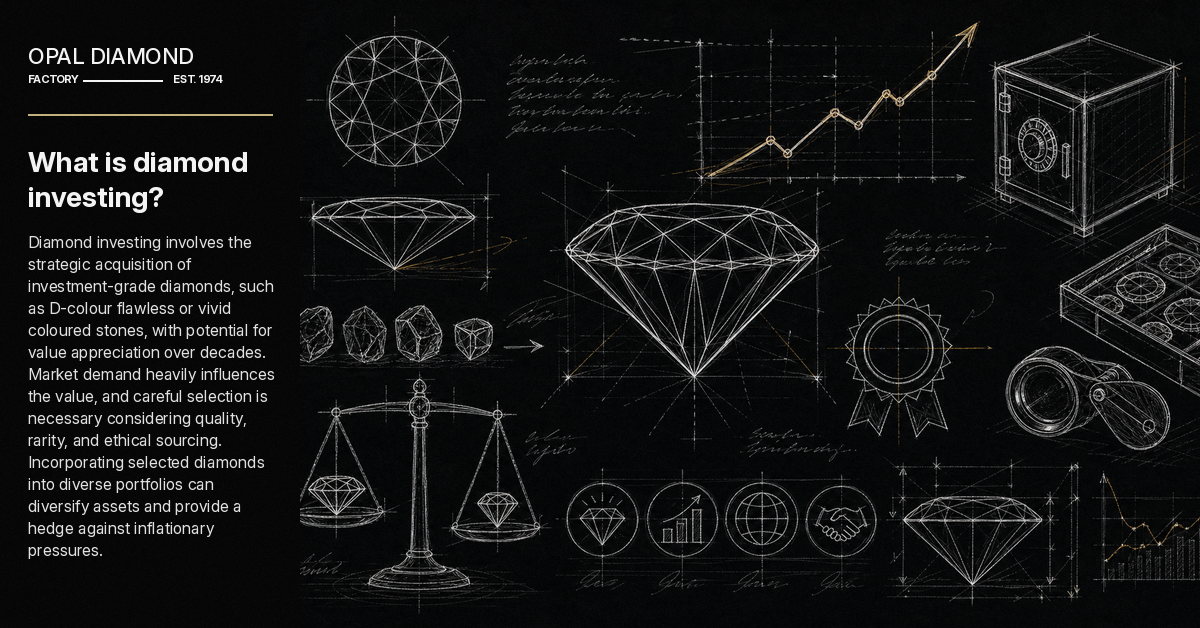
Diamond investing involves the strategic acquisition of investment-grade diamonds, such as D-colour flawless or vivid coloured stones, with potential for value appreciation over decades. Market demand heavily influences the value, and careful selection is necessary considering quality, rarity, and ethical sourcing. Incorporating selected diamonds into diverse portfolios can diversify assets and provide a hedge against inflationary pressures.
Why are diamonds valuable?
Diamonds are highly prized globally due to 6 key factors that establish their value in both fine jewellery, like engagement rings, and investment contexts, such as diversified portfolios.
Six Reasons for Diamond Value:
- Exceptional Rarity: The pronounced scarcity of natural diamonds, particularly gem-quality coloured diamonds like red or blue diamonds, substantially enhances their intrinsic value.
- Outstanding Durability: The extreme hardness of diamonds, ranking 10 on the Mohs scale, makes them perfectly ideal for durable everyday jewellery and for creating timeless heirloom jewellery pieces.
- Captivating Beauty: The unique sparkle, intense fire, and scintillation of a diamond, meticulously evaluated using the 4Cs (cut, colour, clarity, carat weight), contribute significantly to its widespread aesthetic appeal.
- Profound Cultural Significance: Symbolising enduring love, significant commitment, and notable achievement, diamonds are a consistently popular choice for momentous special occasions, including weddings, anniversaries, and major milestones.
- Strong Investment Potential: Specific diamonds, particularly high-quality natural stones, are widely considered a secure investment class, offering demonstrable potential for long-term value appreciation.
- Versatile Industrial Applications: The unparalleled hardness of diamonds makes them exceptionally useful in a variety of demanding industries, for example, in precision cutting tools, effective abrasive materials, and specialised electronic components.
These 6 combined factors create the enduring high value and broad appeal of diamonds across global markets.
What drives diamond prices?
Diamond prices are influenced by at least 7 key factors that collectively affect their market value and consumer appeal.
Key Drivers of Diamond Prices:
- Supply and Demand Balance: The dynamic balance between the global supply of mined diamonds and consumer demand significantly impacts diamond prices.
- Inherent Rarity and Assessed Quality: The degree of rarity, especially for fancy coloured diamonds, and the assessed quality determined by the 4Cs (carat, colour, clarity, cut), greatly influence overall pricing.
- Evolving Market Trends: Shifting consumer preferences, for example, the growing acceptance of lab-grown diamonds, can directly affect natural diamond prices.
- Global Economic Factors: Broad global economic trends, including currency exchange rate fluctuations and rates of inflation, impact diamond prices significantly.
- Comparative Production Costs: Mining natural diamonds incurs substantially higher operational costs compared to producing lab-grown diamonds, which benefit from progressively reduced production costs due to ongoing technological improvements.
- Significant Geopolitical Events: The political stability and notable events in major diamond-producing regions, such as Botswana or Russia, can directly impact supply chains and, consequently, diamond prices.
- Effective Marketing and Strong Branding: Strategic marketing campaigns from major industry players, like De Beers, enhance the desirability of diamonds and support their established price levels.
What is refractive asset valuation?
Refractive Asset Valuation is a specialised method employed to determine the current market value of unique or exceptionally rare assets, such as investment-grade diamonds, fine art pieces, or valuable antiques, which characteristically do not generate consistent cash flows. This particular approach involves meticulously assessing numerous qualitative and quantitative factors, such as the 4Cs for diamonds, verifiable rarity, prevailing market demand, and historical price trends. It necessitates expert knowledge from certified gemologists or appraisers and considers at least 4 crucial elements: current market sentiments, documented provenance, official certification from labs like GIA, and potential future appreciation or depreciation.
The term “refractive” in this context signifies the process of examining the asset from multiple analytical perspectives to gain a comprehensive and nuanced understanding of its total value. This sophisticated method is widely utilised in specialised industries, including the high-value jewellery and art auction markets, where the unique intrinsic nature of the assets demands a detailed and multifaceted approach to accurate valuation.
What are capital gemology metrics?
Capital Gemology Metrics are several key indicators used to thoroughly evaluate gemstones, particularly high-value diamonds, when considered as capital investments. These specific metrics assist investors in assessing at least 3 critical aspects: potential returns, associated risks, and practical liquidity. This is achieved by considering a minimum of 6 factors, such as historical price performance data, current market demand and supply dynamics, confirmed rarity, assessed quality (like the 4Cs for diamonds), official certification from reputable laboratories, and prevailing market sentiment.
They effectively bridge the analytical gap between the qualitative aesthetic aspects of gemstones and the quantitative financial requirements of rigorous investment evaluation, thereby enabling more informed decision-making for serious investors considering this alternative asset class.
What is gem investment taxonomy?
Gem Investment Taxonomy is a structured classification system specifically used to categorise and meticulously evaluate various gemstones, such as diamonds, rubies, and sapphires, as potential investment assets. This detailed taxonomy standardises the comprehensive assessment of gemstones based on several key attributes that directly influence their current market value and overall marketability. By systematically organising gemstones according to at least 4 specific criteria, such as geological type, assessed quality, degree of rarity, and prevailing market demand, this taxonomy facilitates more accurate and readily comparable evaluations across different stones.
This systematic valuation approach helps at least 3 groups of professionals (investors, appraisers, and financial advisors) make well-informed decisions regarding potential gemstone investments. It ensures a consistent analytical framework for thoroughly analysing and objectively comparing different gemstones, thereby enhancing transparency and reliability within the broader gemstone investment market.
Which diamonds are best for investment?
When considering diamond investments, 5 specific types of diamonds typically stand out due to their established intrinsic value, consistent market demand, and significant potential for long-term appreciation.
Five Best Diamond Types for Investment:
- Round Brilliant Diamonds: These are highly popular and maintain consistent demand, making them ideal for investment purposes. Optimal sizes generally range from 1.01 to 1.49 carats, with preferred D-H colour grades and IF to VS2 clarity grades for maximising value and ensuring liquidity.
- Fancy Coloured Diamonds: These diamonds are highly prized for their exceptional rarity and unique visual characteristics, especially those in vibrant hues like pink, blue, and yellow. These particular diamonds offer strong potential for substantial long-term appreciation.
- High-Clarity Diamonds: Diamonds possessing IF (Internally Flawless) to VVS2 (Very, Very Slightly Included 2) clarity grades are generally preferred by investors for their superior quality and consequently higher resale value, ensuring a more secure investment.
- Certified Diamonds: Diamonds accompanied by official certifications from reputable gemological laboratories, such as GIA (Gemological Institute of America), IGI (International Gemological Institute), or AGS (American Gem Society), guarantee authenticity and quality, thereby enhancing their appeal to investors and easing future resale.
- High-Carat Diamonds: Larger diamonds, typically those weighing 3 carats or more, are considerably rarer and consequently tend to appreciate more significantly over extended periods. These substantial diamonds can offer significant long-term gains, making them a strong investment choice for those with sufficient capital.
Investing in these 5 types of diamonds can offer potential value appreciation, effective portfolio diversification, and a tangible store of enduring value.
How does quality affect diamond value?
The assessed quality of a diamond substantially impacts its market value, making it an absolutely essential factor for prospective investors to consider. Four key attributes, commonly known as the 4Cs (carat weight, colour grade, clarity grade, and cut quality), determine a diamond’s overall quality and, consequently, its current market price.
Higher carat weights typically yield greater monetary value, while diamonds exhibiting superior colour (e.g., D, E, F grades) and higher clarity (e.g., IF, VVS grades) consistently command premium prices in the market. The precision of the cut directly influences how effectively light interacts with the polished diamond, significantly enhancing its brilliance and visual appeal.
Certified diamonds, independently verified by labs such as GIA, offer crucial assurance of quality, making them attractive tangible assets for investment. For serious investors, understanding these at least 4 aspects is imperative to accurately identifying lucrative investment opportunities within the complex diamond market, ensuring a wise selection that maximises potential returns.
Are coloured diamonds better for investing?
Coloured diamonds, such as fancy pink or blue diamonds, can represent an attractive investment opportunity due to 2 main factors: their exceptional rarity and consistently increasing market demand. These factors often drive significant price appreciation, particularly for diamonds exhibiting vivid and intense colours. They also offer valuable portfolio diversification and can ACT as a tangible hedge against broader market volatility.
However, at least 3 important considerations exist: their premium pricing compared to colourless diamonds, generally lower market liquidity, and the critical need for specialised expert knowledge for accurate valuation and acquisition. Coloured diamonds can indeed be a lucrative investment but require thorough research, professional appraisal, and careful alignment with an individual’s specific risk tolerance and long-term investment goals.
Why choose coloured diamonds for investment?
Coloured diamonds stand out as a compelling investment option due to at least 4 key factors. Their exceptional rarity, with only approximately 0.01% of all mined diamonds qualifying as fancy coloured, significantly drives their intrinsic value and desirability among collectors and investors. This pronounced scarcity, coupled with steadily increasing global demand, has led to notable price appreciation over past decades, particularly for diamonds with vivid hues such as pink, blue, and red. Additionally, coloured diamonds offer excellent portfolio diversification, serving as a tangible and highly portable asset that can effectively hedge against market volatility and inflationary pressures.
The growing popularity of coloured diamonds among celebrities and high-net-worth individuals has further boosted their public appeal and market demand, making them an attractive choice for investors seeking a unique and potentially high-yielding alternative asset. However, investing in coloured diamonds requires careful consideration of 3 primary challenges: their significant premium pricing over colourless diamonds, typically lower market liquidity, and the absolute necessity for expert knowledge to navigate their unique and complex market dynamics.
What is the chromatic yield index?
The chromatic yield index measures the relative value derived specifically from the unique colour combinations present in naturally coloured diamonds. This index provides essential market insights for astute investors. A higher chromatic yield index generally indicates greater investment potential, making certain specific coloured diamonds, such as vivid yellows or intense blues, more desirable than others for use in high-end diamond jewellery and as investment pieces.
What is a hue-centric asset strategy?
A hue-centric asset strategy is an investment approach that specifically emphasises acquiring coloured diamonds, such as fancy yellow or pink diamonds, which often possess greater aesthetic appeal and rarity compared to traditional colourless diamonds. Investors are frequently drawn to the potential for higher financial returns, especially amidst periods of economic uncertainty, as select coloured diamonds can sometimes outperform their colourless counterparts in terms of value appreciation.
What is pigmented gem diversification?
Pigmented Gem Diversification is an advanced investment strategy that involves strategically spreading investments across various types of coloured gemstones to reduce overall portfolio risk and optimise potential returns. Instead of focusing solely on traditional colourless diamonds or a single type of coloured gem, such as only sapphires, investors choosing this strategy diversify their holdings by including a carefully selected mix of pigmented gems like natural sapphires, fine rubies, high-quality emeralds, and various fancy coloured diamonds.
This diversified approach offers at least 4 distinct benefits:
- Effective Risk Mitigation: Diversifying across different gem types, for instance, holding both emeralds and pink diamonds, helps mitigate the financial risk associated with market fluctuations and sudden changes in consumer preferences for specific gems.
- Enhanced Portfolio Stability: A diversified gem portfolio can potentially provide more stable long-term returns, as the market performance of different gem types, like rubies versus blue diamonds, may vary significantly under different prevailing market conditions.
- Broader Exposure to Growth Opportunities: Investing in a variety of pigmented gems, including alexandrites and Paraiba tourmalines, exposes investors to diverse growth opportunities often driven by the increasing global demand for unique coloured gemstones in bespoke jewellery and as tangible investment assets.
- Potential Hedging Against Inflation: Similar to other tangible assets like real estate or precious metals, coloured gemstones can effectively serve as a hedge against inflation, providing a store of value that has the potential to appreciate over extended periods.
By adopting a pigmented gem diversification strategy, sophisticated investors can aim to build a more resilient and potentially more profitable investment portfolio, leveraging the unique characteristics and distinct market dynamics of numerous types of coloured gemstones.
Diamond vs. gold: which is better for investment?
Investors frequently consider both diamonds and gold, such as bullion or coins, for inclusion in their investment portfolios, with each asset class offering unique benefits and specific drawbacks.
| Feature | Diamonds | Gold |
|---|---|---|
| Liquidity | Generally lower; selling can take time and requires specialised markets. | High; easily traded on global markets with standardised pricing. |
| Price Stability | Can be more volatile; influenced by fashion, sentiment, and quality nuances. | Generally more stable; often viewed as a safe-haven asset during uncertainty. |
| Valuation | More subjective; heavily reliant on the 4Cs, certification, and rarity. | Standardised; priced per ounce based on global market rates. |
| Rarity | High-quality natural and fancy coloured diamonds are exceptionally rare. | Finite global supply, but less rarity differentiation between individual units. |
| Portability | Extremely high value-to-weight ratio. | High value-to-weight ratio, but less concentrated than top-tier diamonds. |
| Income Generation | Typically none; appreciation is the primary return. | Typically none directly, unless through gold-mining stocks or gold-backed ETFs. |
Gold generally offers at least 3 advantages: high liquidity, established market stability, and a proven historical track record of value appreciation, particularly during periods of economic uncertainty. It provides diverse investment options, such as physical bars or ETFs, and is widely recognised as a safe-haven asset.
Diamonds, especially rare fancy coloured diamonds, are highly prized for their exceptional beauty and significant rarity, offering the potential for substantial returns and profound emotional value. However, they are generally less liquid than gold and possess more subjective pricing mechanisms, heavily dependent on expert appraisal.
What is the gemological arbitrage index?
The gemological arbitrage index serves as 1 critical analytical tool for investors seeking to compare the relative investment values of assets like natural diamonds against other commodities, such as gold. This specific index evaluates the fluctuating values of natural diamonds, considering factors like rough diamond prices versus polished diamond prices, and compares these against the prevailing market price of gold, thereby offering crucial market insights that can inform assessments of investment potential.
Investors aiming to buy diamonds or considering them as a potentially sound investment can utilise this index to better assess current market trends and make more informed acquisition decisions. Additionally, the broader concept underpinning such an index often implicitly highlights the comparative environmental impact of mining both diamonds and gold, a factor of increasing relevance in today’s ethically conscious market.
What is refractive-to-metal yield analysis?
Refractive-to-metal yield analysis provides 1 conceptual framework for comparing the potential investment yield of refractive gems, primarily diamonds, against that of precious metals, predominantly gold.
This analytical method evaluates the intrinsic investment value, potential appreciation, and diamond resale value of a diamond investment against the historically observed price stability and market performance of gold within capital markets history.
Market insights derived from such comparative analysis often reveal that while gold typically offers lower price volatility and greater liquidity, certain diamonds, particularly rare high-quality stones or significant rough diamond parcels, can potentially yield higher returns but may present challenges in terms of accessibility and ease of transaction for average investors. The continuing rise of synthetic, or lab-grown, diamonds further complicates this investment landscape, potentially impacting the traditional valuation models for natural diamonds.
What is multi-asset material valuation?
Multi-asset material valuation refers to a systematic and comprehensive approach for evaluating the economic worth of various distinct asset types, including both tangible materials, like gemstones, and certain intangible rights or brands associated with them. This particular methodology assesses the investment potential of specific items such as high-value diamond rings, unique diamond earrings, and elaborate diamond necklaces alongside more traditional alternative investments like fine art pieces or luxury real estate properties.
By meticulously analysing at least 2 key factors, such as the verifiable quality of the materials and the prevailing market demand for such items, investors can gain valuable market insights into potential appreciation. Both lab-grown diamonds and natural carat diamonds are also considered within this framework, as their respective market positions and values contribute to the overall assessment of the best-quality diamonds available within a diversified art and collectibles investment portfolio.
How to assess diamond investment quality?
Evaluating the investment quality of a specific diamond involves a comprehensive understanding of at least 7 key factors. The following succinct guide will help you assess diamond investment quality effectively:
Seven Key Factors to Consider:
- The 4Cs:
-
- Carat Weight: Larger diamonds are generally rarer and therefore typically more valuable.
- Colour: Colourless diamonds (graded D-F) and desirable fancy coloured diamonds (e.g., vivid pink, intense blue) are highly prized.
- Clarity: Higher clarity grades (ranging from FL – Flawless to VVS – Very Very Slightly Included) indicate fewer internal or external imperfections and thus command greater value.
- Cut: A well-executed cut by a skilled artisan maximises a diamond’s brilliance, fire, and sparkle, significantly enhancing its overall visual appeal and monetary value.
- Rarity and Market Demand: Exceptionally rare diamonds, such as large, high-quality fancy coloured diamonds, tend to command significantly higher prices due to their extreme scarcity and consistently increasing demand from collectors and investors.
- Certification: Diamonds certified by at least 3 reputable gemological laboratories, such as GIA (Gemological Institute of America), IGI (International Gemological Institute), or AGS (American Gem Society), provide an unbiased and detailed assessment of their quality, ensuring authenticity and enhancing future resale value.
- Current Market Trends: It is advisable to stay informed about current prevailing market trends and shifting consumer preferences, as these dynamic elements can significantly impact diamond prices and overall liquidity.
- Asset Liquidity: Consider the relative ease of buying and subsequently selling the diamond. Round brilliant cuts and popular carat sizes (e.g., 1.01 to 1.49 carats) tend to offer higher liquidity compared to more niche cuts or unusual sizes.
- Historical Price Performance: Analyse the available historical price performance data of comparable diamonds to gauge potential future appreciation trends for the stone under consideration.
- Documented Provenance and Ethical Sourcing: Ensure the diamond is ethically sourced and, if possible, possesses a clear and documented provenance (history of ownership), as these factors can positively affect its intrinsic value and marketability.
What is the spectroscopic clarity index?
The Spectroscopic Clarity Index is an advanced, scientifically-based method utilised for assessing the precise clarity and overall quality of diamonds and various other gemstones, such as sapphires or emeralds. It employs spectroscopic technology to meticulously analyse how light is absorbed and scattered as it passes through the stone, thereby providing detailed, objective insights into the gemstone’s internal features and external characteristics.
What are refractive benchmarking algorithms?
Refractive Benchmarking Algorithms are sophisticated, data-driven computational tools used to systematically evaluate and compare the assessed quality and estimated market value of diamonds and other transparent gemstones, like topaz or aquamarine. These complex algorithms analyse at least 3 types of data: specific optical properties (such as brilliance and fire), extensive historical and current market data, and the fundamental 4Cs (carat weight, colour grade, clarity grade, and cut quality). This analysis benchmarks individual gemstones against established industry quality standards and prevailing market price trends.
What are diamond cut grading heuristics?
Diamond cut grading heuristics serve as several essential guiding principles or ‘rules of thumb’ for investors seeking to evaluate the potential investment quality of polished diamonds. These heuristics primarily assess at least 3 key aspects of a diamond’s physical appearance: its overall brilliance (the amount of white light returned), its fire (the dispersion of light into spectral colours), and the precision of its proportions and symmetry.
These characteristics are vital for distinguishing, for example, between a high-quality natural 1-carat D colour VS1 clarity diamond and various lab-grown diamonds, which may exhibit different optical properties. Investors often rely on these derived insights to help determine if a particular diamond constitutes a good investment, especially when considering its potential sentimental value alongside current market trends and resale prospects.
How does the market for diamonds work?
The global diamond market operates through a complex, multi-stage international supply chain involving at least 6 key stages: mining, sorting, cutting and polishing, wholesaling, retailing, and final consumption or investment.
Here is a succinct overview of these stages:
- Mining: Diamonds are initially extracted from natural kimberlite or lamproite pipes and alluvial deposits, with major global producers including corporations like De Beers (operating in countries such as Botswana and South Africa) and Alrosa (primarily in Russia).
- Cutting and Polishing: Selected rough diamonds are then precisely cut and subsequently polished by skilled artisans to enhance their inherent brilliance, fire, and ultimate market value.
- Wholesaling: Polished diamonds are subsequently sold to international wholesalers, who ACT as crucial intermediaries between the numerous diamond manufacturers and various retail businesses.
- Retailing: Diamonds finally reach end consumers through a variety of retail channels, including independent jewellery stores, large chain retailers, dedicated online platforms, and prestigious luxury brand boutiques.
- Pricing: Diamond prices are primarily influenced by the 4Cs (carat weight, colour grade, clarity grade, and cut quality), prevailing market demand, perceived rarity, and broad global economic factors.
- Certification: Reputable independent gemological laboratories, such as GIA, IGI, and AGS, certify diamonds by providing an unbiased, detailed assessment of their specific quality characteristics.
- Market Trends: The diamond market is continually subject to evolving trends, such as the increasing popularity of lab-grown diamonds which rose from 9.3% market share in 2023 to over 20% by late 2024, and growing consumer concerns regarding ethical sourcing and environmental impact.
- Investment: Diamonds, especially exceptionally rare and high-quality stones like large flawless white diamonds or vivid fancy coloured diamonds, are also actively traded as tangible investment assets.
This intricate global supply chain and the complex interplay of these various influential factors collectively drive the dynamic global diamond market, shaping its ongoing evolution and future trends.
How does demand influence diamond prices?
Consumer sentiment, often influenced by marketing and cultural traditions, significantly influences diamond prices, especially for items like diamond engagement rings. Exceptionally rare natural colours, such as vivid pink, intense red, and deep green diamonds, can command extremely high prices due to their severely limited availability in the global market. Laboratory-grown diamonds, while steadily gaining popularity for their ethical appeal and lower price points, generally have lower prices compared to their natural counterparts of similar size and quality.
Prevailing economic conditions also substantially influence the diamond investment landscape, with periods of widespread prosperity typically attracting more significant investments into luxury goods like diamonds. Fluctuations in consumer demand for various specific diamond types, including fancy yellow diamonds or antique cuts, will ultimately dictate overall market pricing, accurately reflecting shifting consumer preferences and emerging fashion trends.
How do geopolitics affect diamond markets?
Geopolitical factors, such as international relations and regional stability, significantly influence global diamond markets by affecting at least 2 critical areas: established supply chains and existing pricing structures. Conflicts, civil unrest, or international trade restrictions (e.g., sanctions) can severely disrupt mining and processing operations in key diamond-producing regions, for example, certain areas in Africa or historically significant locations like Western Australia, thereby impacting the global availability of both gold and unfaceted rough diamonds.
The degree of political stability in these regions also directly affects broader consumer confidence, which can cause noticeable shifts in global demand for luxury items, including diamond engagement rings and high-value diamond earrings. As geopolitical tensions rise or fall, prudent investors should remain vigilant regarding prevailing market conditions and the potential impacts on investments in assets like gold jewellery and investment-grade diamonds.
What is the future of diamond prices?
The future trajectory of diamond prices will likely be shaped by at least 3 primary forces: the dynamic interplay of global supply and demand, overarching economic trends, and continuously evolving consumer preferences. As natural diamond resources become progressively scarcer due to mine depletion, prices for high-quality natural diamonds and exceptionally rare coloured stones are generally expected to rise. This potential increase is driven by their growing rarity and sustained demand, particularly from expanding emerging markets in Asia and the Middle East.
Are diamonds a good financial asset?
Diamonds can be considered a good financial asset for at least 3 primary reasons: their inherent rarity, excellent portability (high value-to-weight ratio), and strong potential for long-term value appreciation. High-quality natural diamonds and particularly rare fancy coloured diamonds, such as vivid blues or pinks, have historically demonstrated a tendency to outperform many traditional investments, like equities or bonds, during periods of significant economic uncertainty or high inflation.
Are diamonds good for long-term investment?
Diamonds can be good for long-term investment due to their rarity, durability, and potential for price appreciation, especially for high-quality and fancy coloured diamonds. However, they may not offer regular income and their liquidity can be lower compared to traditional investments. The diamond market can be volatile and influenced by changing consumer preferences and economic conditions.
How do inflation and currency changes impact diamonds?
Inflation and currency value changes impact diamond prices primarily through their direct effects on at least 3 interconnected factors: consumer purchasing power, overall market demand, and relative international pricing.
Impact of Inflation:
- Reduced Purchasing Power: Higher rates of general inflation typically reduce consumers’ real disposable income, which can consequently lower demand for non-essential luxury items like diamonds, potentially leading to downward pressure on prices.
- Inflation Hedge: Conversely, diamonds, as tangible physical assets, may also serve as an effective hedge against inflation due to their perceived ability to store value over the long term, potentially increasing their appeal and demand during periods of high inflation, similar to precious metals.
Impact of Currency Changes:
- Stronger US Dollar: Because diamonds are internationally traded primarily in US dollars, a stronger US dollar makes diamonds relatively more expensive for international buyers using other currencies.
- Weaker US Dollar: Conversely, a weaker US dollar makes diamonds more affordable for international buyers, potentially boosting global demand and supporting higher US dollar prices for diamonds.
- Production Costs: Fluctuations in currency exchange rates can also impact the local operational costs of diamond mining and polishing companies in various countries, indirectly affecting the global supply and final prices of diamonds.
What are the risks of diamond investing?
While diamonds can offer potential for long-term appreciation and valuable portfolio diversification, investing in them also comes with a set of at least 7 unique risks.
Diamond investing carries several significant risks, including:
- Market Volatility: Diamond prices can be notably volatile, fluctuating based on shifts in global supply and demand dynamics, prevailing economic conditions (such as recessions or booms), and rapidly changing consumer preferences (e.g., towards lab-grown alternatives).
- Liquidity Risk: Diamonds generally may not offer immediate liquidity when compared to more traditional financial investments like stocks or bonds.
- Valuation Subjectivity: The valuation of a diamond can be somewhat subjective, heavily influenced by the precise interpretation of the 4Cs (carat, color, clarity, cut) by different appraisers and prevailing market sentiment, making it challenging to determine their exact, universally agreed-upon market value at any given time.
- Market Manipulation Potential: Historically, the diamond market has, at times, been susceptible to influence or alleged manipulation by major industry players controlling significant portions of the supply, potentially impacting price transparency and investor returns.
- Ethical and Sourcing Risks: Growing consumer and regulatory concerns about ethical sourcing practices, the trade of conflict diamonds (blood diamonds), and the environmental impacts of mining can negatively affect diamond prices and overall marketability.
- Regulatory Risks: Unforeseen changes in international or national regulations, such as those related to ethical sourcing verification, import/export duties, or trade restrictions with certain countries, can significantly impact the diamond market and investment returns.
- Synthetic Diamond Competition: The growing popularity and improving quality of lab-grown (synthetic) diamonds may continue to apply downward price pressure, particularly on lower-quality or smaller natural diamonds, thereby affecting the investment performance of those specific categories.
How does diamond liquidity compare to other assets?
Diamond liquidity is lower than other traditional financial assets due to a less standardised global market with fewer centralised exchanges and a more subjective pricing mechanism. The process of buying and selling diamonds, especially high-value ones, can be time-consuming and complex, requiring specialised knowledge and access to niche markets or auction houses. This makes diamonds less easily traded compared to other assets like stocks, bonds, and precious metals.
In stark contrast, 3 classes of assets generally offer better liquidity:
- Assets like stocks and bonds offer quick and efficient trading mechanisms through established global financial markets.
- Gold provides considerably higher liquidity due to its globally standardised pricing (per ounce) and widespread acceptance as a monetary asset.
- Real estate, though generally less liquid than stocks or gold, still often offers more straightforward valuation processes and more established transaction pathways compared to diamonds.
How can investors approach diamond investments?
To invest effectively and prudently in diamonds, prospective investors should consider following these 6 strategic steps:
- Educate Yourself Thoroughly: Dedicate time to learn comprehensively about the 4Cs (Carat, Colour, Clarity, Cut), current diamond market trends, grading systems, and the differences between natural and lab-grown diamonds.
- Diversify Your Holdings: If incorporating diamonds into a larger portfolio, consider mixing different types of diamonds (e.g., various sizes, colours, or qualities if appropriate for your strategy) and allocate only a suitable portion of your overall investment portfolio to diamonds to effectively spread and manage risk.
- Prioritise Certification and Appraisal: Ensure that any investment-grade diamonds are accompanied by a certificate from a reputable gemological laboratory (such as GIA, AGS, or IGI) and obtain an independent professional appraisal to verify quality and value.
- Define a Clear Investment Strategy: Set clear, achievable investment goals (e.g., long-term capital appreciation, inflation hedge).
- Seek Professional Guidance: Consult with qualified and experienced diamond experts, independent gemologists, or financial advisors specialising in alternative assets to help navigate the complexities of the diamond market and make informed choices.
- Secure and Insure Your Investment: Store valuable diamonds securely, for example, in a bank safety deposit box or a high-quality, insured home safe.
How can diamonds diversify a portfolio?
Diamonds can offer at least 3 unique advantages when used to diversify investment portfolios. These include a historically low correlation with traditional financial assets such as stocks and bonds, a degree of stability in their intrinsic value as tangible assets, and a strong appeal to investors seeking physical, portable assets. With rising global demand for high-quality natural diamonds, particularly from emerging economies, they present continued potential for capital appreciation over the long term.
Diversifying a portion of an investment portfolio with carefully selected diamonds can enhance overall portfolio resilience against certain market shocks, potentially mitigate some types of financial risks, and effectively complement conventional investments like equities and fixed income, making them a potentially valuable alternative asset class.
What are the taxes on diamond investments?
Diamond investments can be subject to at least 4 principal types of taxes, depending on the investor’s jurisdiction and the specifics of the transaction. These may include:
- Capital Gains Taxes: Applied to the profit realised from selling a diamond for more than its purchase price.
- Sales Tax or VAT (Value Added Tax): Levied at the point of purchase in many regions or countries.
- Wealth or Luxury Taxes: Some jurisdictions impose annual taxes on high-value assets, which could include significant diamond holdings.
- Estate or Inheritance Taxes: The value of diamonds may be included in an individual’s estate upon their death and could be subject to these taxes.
Specific legislative proposals, such as the conceptual “2025 House Bill” mentioned in the prompt (which may be hypothetical or region-specific), might propose changes like tiered excise taxes on the net investment income of private foundations, potentially including income from assets like diamonds, or alterations to unrelated business income tax (UBIT) rules for nonprofit organisations holding such investments.
How does certification affect diamond resale?
Certification from a reputable gemological laboratory profoundly influences the resale value and marketability of a diamond. Diamonds that are certified by internationally recognised labs, such as GIA (Gemological Institute of America), IGI (International Gemological Institute), or AGS (American Gem Society), consistently command higher prices in the secondary market and typically sell more quickly. This is primarily because certification provides an independent, unbiased assurance of the diamond’s specific quality characteristics (the 4Cs) and confirms its authenticity as a natural or lab-grown stone.
Why are lab-grown diamonds less ideal for investing?
Lab-grown diamonds are less ideal for investing primarily due to their lower rarity and perceived value compared to natural diamonds. While they offer advantages like sustainability and ethical sourcing, lab-grown diamonds typically have lower resale value and market demand from investors. The market is more saturated, and the pricing can be more volatile, making them less suitable for long-term investment and value retention.
Where can diamonds be bought and stored?
Diamonds can be purchased from at least 4 primary types of sources:
- Reputable retail jewellers, both independent and chain stores.
- Specialised online diamond retailers and e-commerce platforms.
- Established auction houses, such as Sotheby’s or Christie’s, particularly for high-value or rare stones.
- Acquiring investment-grade diamonds can be done directly from diamond exchanges or wholesalers, or through specialised dealers, brokers, or private jewellers, offering tailored services and access to higher-quality inventory.
Regarding storage, at least 3 secure options are commonly used:
- Secure bank vaults or safety deposit boxes rented at financial institutions.
- Specialised third-party diamond and jewellery storage facilities offering high-security environments.
- Professional storage services offer high-quality, well-installed, and insured home safes for valuable items, providing additional benefits like comprehensive insurance coverage, regular audits, and secure transportation services to ensure the optimal security and long-term preservation of diamond investments.