
Natural diamond care is essential for maintaining the sparkle and value of your precious pieces. While diamonds are among the most durable substances on earth, each diamond jewellery piece requires extra care, from classic diamond studs to elaborate items. Regular cleaning with clean water or a bi-carb soda mixture can prevent diamonds becoming dull, while proper handling of precious metals like 14-carat gold and its alloys ensures longevity.
Australian Diamonds and fine jewellery can develop a cloudy appearance when exposed to beauty products and everyday substances, making proper storage and maintenance crucial. Following diamond jewellery guides, securing a comprehensive jewellery insurance policy, and keeping diamonds safe from risk are essential practices.
The diamond learning guide helps place this detail in context.
By giving your diamond jewellery the attention it deserves and following proper diamond quality care procedures, you can preserve their brilliance achieved during the cutting process for years to come.
What is diamond care?
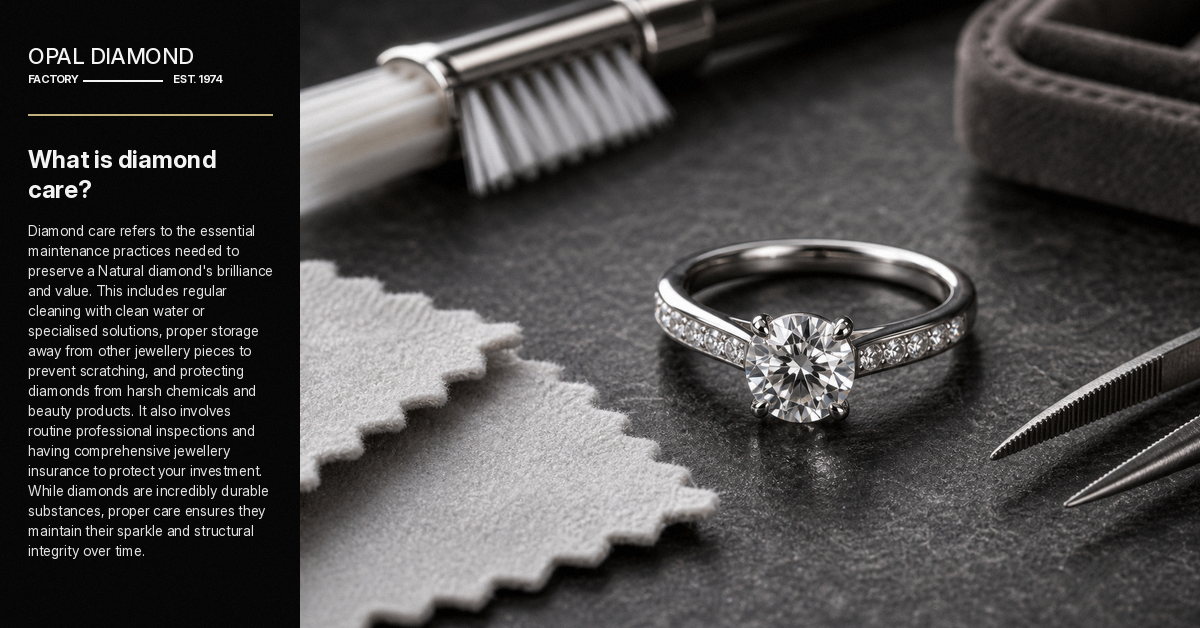
Diamond care refers to the essential maintenance practices needed to preserve a Natural diamond’s brilliance and value. This includes regular cleaning with clean water or specialised solutions, proper storage away from other jewellery pieces to prevent scratching, and protecting diamonds from harsh chemicals and beauty products. It also involves routine professional inspections and having comprehensive jewellery insurance to protect your investment. While diamonds are incredibly durable substances, proper care ensures they maintain their sparkle and structural integrity over time.
What is hydrocarbon removal on diamonds?
Hydrocarbon removal is an effective method for deep-cleaning diamonds that goes beyond the usual quick wipe or bi-card soda mixture used in routine maintenance. While diamond lovers typically focus on keeping their piece of jewellery safe from becoming dull over time, hydrocarbon removal is a specialised process that tackles stubborn surface contaminants.
This cleaning technique is particularly important for all items of jewellery, from classic diamond studs to elaborate pieces, as it removes oils and impurities that can affect diamonds’ sparkle. The process uses specific solvents in a bowl of solution, making it more thorough than regular diamond care methods using cool water. While it might seem like a burdensome process, it’s essential for maintaining diamond quality, especially for delicate items that are at risk of developing a dull appearance. This professional cleaning method complements regular diamond jewellery safe practices and should be considered as part of a comprehensive diamond guide for keeping precious stones secure and brilliant.
What are diamond facet coatings?
Diamond facet coatings are specialised treatments applied to the flat, polished surfaces of diamonds that interact with light. These coatings are designed to enhance the diamond’s natural properties, working with the strategic arrangement of facets to maximise brilliance, fire, and sparkle. The effectiveness of these coatings depends on the quality of the diamond’s cut and the precise geometric arrangement of the facets, as these factors determine how well light enters, reflects internally, and disperses back through the diamond’s table. While coatings can enhance a diamond’s appearance, the fundamental sparkle and brilliance primarily come from the quality of the cut and arrangement of the facets themselves.
What are diamond scratch resistance ratings?
Diamonds are the hardest substance known, ranking at the top of the Mohs scale with a perfect 10. They can resist scratches from almost all materials. However, diamond jewellery requires careful care to maintain its brilliance. Avoid abrasive solutions and direct contact with other precious stones to prevent chips. For engagement rings, ensure the setting is secure and protected from everyday wear. With proper care, diamonds will continue to shine and retain their value for years to come.
How to clean a diamond ring?
For regular cleaning at home, create a simple solution of warm water and mild dish soap in a small bowl. Let your ring soak for about 20-30 minutes, then gently brush it with a soft-bristled toothbrush, paying special attention to hard-to-reach areas. Rinse thoroughly with cool water and dry with a lint-free cloth. A quick wipe after wearing can help prevent everyday buildup and keep your diamonds sparkling.
While regular home cleaning is important, professional care every six months is recommended to maintain your diamond jewellery’s beauty. During these visits, jewellers can check the prongs and settings while performing deeper cleaning.
How often should you clean diamonds?
Diamonds should be given a quick daily wipe with a soft cloth after wearing to remove oils and cosmetics. A gentle home cleaning with mild soap and water can be done weekly or bi-weekly to maintain sparkle. Professional cleaning is recommended every six months to ensure thorough maintenance and allow experts to check settings and security.
How to remove dirt from diamonds?
To remove dirt from diamonds effectively, start with a gentle cleaning solution using mild soap and warm water in a small bowl. Soak your diamond jewellery for 20-30 minutes, then use a soft-bristled brush to gently clean around the setting and facets. This helps dislodge accumulated dirt without risking damage to the precious metals or delicate items.
For stubborn dirt, you can use a specialised jewellery cleaner or a bi-carb soda mixture for extra cleaning power. Always rinse thoroughly with cool water and dry with a lint-free cloth. Avoid using harsh chemicals or abrasive materials that could damage your diamond jewellery.
What not to use on diamonds?
Here’s a comprehensive list of items and substances that can potentially damage your diamond jewellery:
- Harsh Chemicals These can weaken settings and damage precious metals surrounding your diamonds. Avoid bleach, chlorine, acetone, and strong household cleaners.
- Beauty Products Common cosmetics create a filmy residue that dulls diamonds over time. Keep diamonds away from lotions, hairspray, perfumes, sunscreen, and heavy makeup.
- Abrasive Materials These can scratch both the metal settings and potentially the diamond’s surface. Never use rough brushes, paper towels, coarse cloths, or metal scrubbers.
- Unsafe Cleaning Methods Improper cleaning techniques can loosen settings or damage your jewellery. Avoid boiling water, steam cleaners, and untested home remedies.
- Risky Storage Items Poor storage choices can lead to scratches or damage. Don’t use unlined jewellery boxes, metal containers, plastic bags, or store different pieces together without protection.
What are safe detergents for cleaning diamonds?
Safe detergents for cleaning diamonds include mild dish soap mixed with warm water, which is the most recommended and safest option for routine cleaning. Professional jewellery cleaners specifically formulated for diamonds are also effective and safe to use. When choosing cleaning solutions, opt for gentle, ammonia-free cleaners that won’t damage the precious metals or create residue.
Always avoid harsh chemicals, bleach-based cleaners, or abrasive detergents that could potentially harm your diamond jewellery. Remember to rinse thoroughly with cool water after cleaning to prevent any soap residue from dulling the diamond’s sparkle. If unsure about a cleaning product, stick to the simplest option of mild soap and water, or consult a professional jeweller for their recommended cleaning solutions.
What is ultrasonic cleaning frequency for diamonds?
The optimal ultrasonic cleaning frequency for diamonds is 45,000 Hz (45 kHz), which is considered the gold standard for cleaning jewellery. This specific frequency provides the perfect balance between effective cleaning and gentle treatment of your precious pieces.
Most ultrasonic cleaners operate between 35 and 45 kHz, with different frequencies serving different purposes:
- 20-40 kHz works for heavy-duty cleaning
- 40-80 kHz is ideal for general cleaning and removing small particles
- 45,000 Hz is specifically optimal for jewellery and diamonds
This frequency creates gentle yet effective cleaning action that’s safe for diamonds and their settings. The cleaning waves are small enough to reach into crevices while being gentle enough not to damage the precious metals or loosen stones. For delicate pieces, higher frequencies (above 40 kHz) are recommended as they provide more gentle cleaning action while still being effective at removing contaminants.
What is polish retention after diamond cleaning?
Polish retention refers to how well a diamond maintains its polished finish after cleaning processes. A properly cleaned diamond should maintain its original brilliance and surface characteristics without any degradation. To ensure optimal polish retention, use gentle cleaning solutions, avoid abrasive materials, and have regular professional cleanings. The key is balancing effective cleaning with protective measures to maintain the diamond’s polished surface and brilliant appearance long-term.
How to polish diamonds at home?
Here’s a guide to safely polish your diamonds at home:
• Basic Solution Preparation – Create a gentle cleaning solution using warm water and mild soap, ensuring it’s not too harsh for your precious jewellery.
• Soaking Process – Let your diamond jewellery soak in the solution for 20-30 minutes to loosen dirt and oils effectively.
• Gentle Brushing – Use a soft-bristled toothbrush to carefully clean the diamond, paying special attention to crevices and settings.
• Thorough Rinsing – Clean the jewellery under cool running water to remove all soap residue and loose particles.
• Proper Drying – Use a lint-free cloth to completely dry the piece, followed by a final buff with a jewellery polishing cloth.
How to store diamonds?
Proper diamond storage is essential for maintaining your jewellery’s beauty, protecting diamond clarity, and preventing damage.
Here’s a comprehensive guide to storing your precious pieces safely:
• Separate Storage – Each diamond piece should be stored individually in soft pouches or compartments to prevent scratching against other jewellery items, especially when dealing with diamond studs and delicate settings.
• Ideal Conditions – Keep diamonds in a cool, dry place away from direct sunlight and extreme temperatures. A stable environment helps prevent metal settings from expanding and contracting, which could loosen stones over time.
• Security Solutions – Invest in a proper jewellery box with soft, fabric-lined compartments or a home safe designed for valuable items. This protects against both physical damage and potential theft.
• Travel Protection – When travelling, use designated jewellery rolls or cases with individual compartments. Never store diamonds loose in purses or suitcases where they can get damaged or lost.
• Regular Inspection – Before storing, ensure pieces are clean and dry. Check clasps, settings, and prongs regularly to prevent stones from becoming loose while in storage.
How to stop losing diamonds?
Preventing diamond loss requires regular inspection of settings and prongs, coupled with professional maintenance to ensure stones remain secure. Daily care includes proper cleaning with gentle solutions and avoiding risky activities that could damage or loosen stones. Remove jewellery during household chores, swimming, or sleeping, and store pieces separately to prevent damage. Regular professional check-ups and proper cleaning routines are your best defence against losing precious stones from their settings.
What is humidity control for storing diamonds?
Diamond jewellery, especially engagement rings and classic diamond studs, requires proper humidity control and temperature control to prevent damage. Store pieces in 35-45% relative humidity and 65-75°F temperatures to prevent metal settings from expanding and contracting, especially for gold settings. Clean pieces thoroughly before storage to prevent tarnishing. Ultrasonic jewellery cleaners and professional cleaning help maintain diamonds’ sparkle, but proper storage conditions are equally important.
How to protect diamond settings?
Protecting diamond settings is important in maintaining your jewellery’s security and preventing stone loss. Here’s a guide to safeguarding your precious settings:
• Regular Inspection – Check prongs and settings weekly for signs of wear or looseness using a soft brush to detect any movement.
• Cleaning Protocol – Clean with cold water and mild soap, using a soft bristle brush around settings without applying excessive pressure.
• Activity Precautions – Remove jewellery during risky activities like exercise, swimming, or sleeping to prevent setting damage.
• Professional Maintenance – Schedule jeweller check-ups every six months for cleaning and prong tightening.
• Proper Storage – Keep pieces in separate, fabric-lined compartments to prevent settings from catching on other jewellery.
How to check diamond prongs?
Checking diamond prongs should be done regularly using both visual and physical inspection methods. Use a magnifying glass to look for any worn, bent, or broken prongs, and gently test each prong’s security with a soft brush or wooden probe. The stone shouldn’t wobble or move when lightly touched. Look for symmetry in prong placement and ensure all prongs are the same length and angle. Any signs of white gold wearing thin, missing prongs, or sharp edges require immediate professional attention. Run your finger carefully over the setting to feel for any snags or irregularities.
What is antioxidant storage for diamonds?
Antioxidant storage for diamonds involves using specialised jewellery boxes and materials designed to prevent surface oxidation and protect both the stone and its metal settings. These storage solutions typically include anti-tarnish linings or strips that shield jewellery from environmental contaminants and air pollutants.
While diamonds are naturally resistant to oxidation, proper antioxidant storage helps maintain the integrity of metal settings and preserves the overall beauty of the piece. Keep jewellery in treated storage containers away from direct sunlight and air exposure when not being worn.
What is anti-scratch case design for diamonds?
Anti-scratch case design for diamonds features specialised storage solutions with soft fabric dividers, individual padded compartments, and micro-fiber or velvet lining to prevent contact damage. While diamonds themselves are highly scratch-resistant, these cases protect vulnerable metal settings and prevent jewellery pieces from touching each other.
Modern designs include reinforced compartments, secure closures, and may incorporate humidity control features for comprehensive protection. These cases are essential for maintaining jewellery condition during storage and transport.
What damages diamonds?
While diamonds are among the hardest natural substances, certain factors can damage or diminish their beauty. Here’s what you need to watch out for:
• Impact Damage – Despite their hardness, diamonds can chip or crack if struck at the right angle, particularly along their cleavage planes. Avoid activities that risk sudden impacts or drops.
• Chemical Exposure – Strong household cleaners, chlorine, and bleach can damage both diamonds and their settings. These substances can erode metal settings and leave residue that dulls the stone’s brilliance.
• Heat Stress – Extreme temperature changes or prolonged heat exposure can cause internal stress in diamonds, potentially leading to cracks. Remove jewellery before activities involving high temperatures.
• Abrasive Materials – While diamonds are scratch-resistant, harsh cleaning materials can damage settings and leave residue. Avoid using rough brushes or abrasive cleaners that can harm the overall piece.
• Oil Buildup – Regular exposure to lotions, cosmetics, and natural skin oils can create a film that diminishes sparkle. This buildup can make diamonds appear dull and lifeless over time.
What dulls diamond shine?
Diamond shine becomes dulled primarily through everyday exposure to cosmetics, lotions, soaps, and natural skin oils that create a film on the stone’s surface. Hard water deposits, mineral residue, and environmental factors like dust and pollution can accumulate, affecting light reflection. Improper cleaning methods and beauty product buildup further contribute to diminished brilliance.
How to stop diamond scratches?
Diamond scratches can be prevented by careful handling and proper storage practices. Diamonds can only be scratched by other diamonds, but their metal settings are vulnerable to damage. Store pieces separately in soft-lined boxes or pouches, remove rings during activities that risk impact or abrasion, and use dedicated jewellery cases when travelling. Handle jewellery by bands or chains, avoid stacking rings, and avoid rubbing against each other. Regular professional inspections can identify early signs of wear in settings. Remove jewellery before sleeping to prevent catching on fabrics or unconscious contact with other pieces.
How to keep diamonds shiny?
Maintaining your diamond’s brilliance requires regular care and proper cleaning techniques. Here’s how to keep your diamonds sparkling at their best:
• Regular Cleaning – Create a gentle solution using warm water and mild dish soap, soaking diamonds for 15-20 minutes to dissolve oils and buildup. Gently brush with a soft-bristled toothbrush to remove residue.
• Pre-wear Care – Remove jewelry before applying lotions, perfumes, or cosmetics. Put diamonds on last when getting ready to prevent beauty product buildup that dulls sparkle.
• Post-wear Maintenance – Give diamonds a quick wipe with a clean, soft cloth after each wear to remove daily oils and moisture that can accumulate and diminish shine.
• Professional Service – Schedule professional cleanings every six months. Jewellers have specialised equipment and solutions that provide deeper cleaning than home methods can achieve.
• Proper Storage – Keep diamonds in separate fabric-lined compartments when not worn. This prevents scratching of settings and protects against dust accumulation that can dull appearance.
How to handle diamonds?
Handle diamonds by their band or edges, avoid touching the surface, and clean over a soft surface or closed sink. Avoid handling multiple pieces simultaneously to reduce contact damage. Keep diamonds separate from other jewellery to prevent scratches. Use clean, dry hands during cleaning or inspection, and avoid excessive pressure on prongs or settings. Handle pieces one at a time and maintain focus to prevent dropping or misplacing valuable items.
How to travel with diamonds?
To ensure the safety of diamonds during travel, pack them in carry-on luggage and use a dedicated travel jewellery case. Photograph your pieces for insurance purposes and consider getting an updated appraisal. Store diamonds separately and use specialised travel cases.
When staying in hotels, use room safes or vaults for storage and wear appropriate pieces for your destination and activities. During transit, wear minimal pieces and keep valuable items close to your person. Avoid displaying or handling diamonds in public spaces to avoid unwanted attention.
How to insure a diamond ring?
Insuring a diamond ring starts with obtaining a current professional appraisal that documents the ring’s characteristics, value, and includes detailed photographs. Contact your homeowner’s insurance provider about adding a jewellery rider or seek specialised jewellery insurance that covers loss, theft, and damage. Most policies require regular reappraisals every 2-3 years to maintain accurate coverage. Keep certificates, appraisal documents, and detailed photos in a secure location separate from the ring. Ensure your policy covers international travel and specifies whether repairs must be done by approved jewellers.
How to know if diamond is clean?
A clean diamond exhibits maximum brilliance and fire, with light reflecting clearly through the stone. Check under good lighting – if you notice a cloudy or dull appearance, fingerprints, or visible residue, the diamond needs cleaning. Hold the stone against a dark background to better spot any buildup around facets or settings. The pavilion (bottom) should be transparent and sparkly, not foggy or greasy-looking. Test by breathing on the stone – if condensation doesn’t evaporate quickly, there’s likely an oil film present that needs cleaning.